
Salmon and Sweet Potato Mash (Baby Dinner) - Calorie & Ingredient Breakdown
Original recipe: Salmon and Sweet Potato Puree - Mummy Cooks by Siobhan Berry
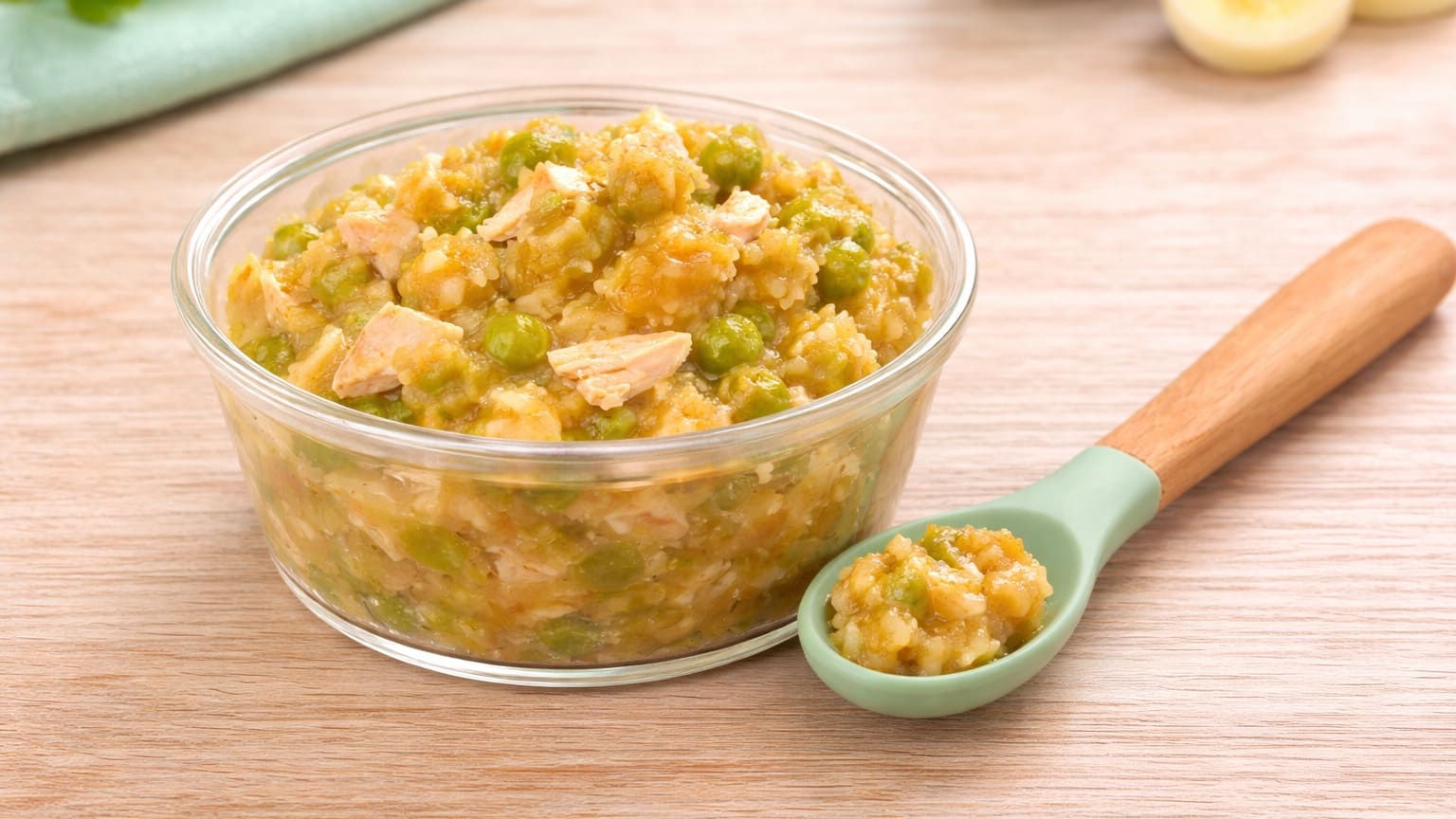
The Recipe
Salmon and Sweet Potato Mash
Prep: 10 min | Cook: 20 min | Serves: 4 baby portions (~3 oz each)
Ingredients
| Ingredient | Amount |
|---|---|
| Salmon fillet (boneless, skinless) | 60g (~2 oz) |
| Sweet potato | 1 small, peeled and diced (~100g) |
| Water | 1/2 cup (120ml) |
| Olive oil | 1/2 teaspoon (~2.5ml) |
| Dill | Tiny pinch, finely chopped (optional) |
Directions
- Check the salmon fillet very carefully for any bones, running your finger along the flesh. Remove any pin bones.
- Peel and dice the sweet potato into small cubes.
- Steam or boil the sweet potato for 12-15 minutes until fork-tender.
- Meanwhile, poach the salmon in gently simmering water for 6-8 minutes until it flakes easily and is fully cooked through.
- Drain the sweet potato. Flake the salmon and check once more for any bones.
- Combine sweet potato, salmon, and olive oil in a bowl. Mash with a fork or blend to desired consistency.
- Add a tiny pinch of dill if desired. Cool before serving.
Key tip: Wild salmon has a milder flavor that babies tend to accept more readily than farmed salmon. Always double-check for bones - run your finger over the fish at least twice before serving to baby.
Nutrient Card
Salmon and Sweet Potato Mash (per serving)
Calories: 54
Protein: 4.0g
Fat: 1.8g
  Saturated: 0.3g
Carbs: 5.6g
  Fiber: 0.8g
  Sugar: 1.7g
Sodium: ~20mg
Iron: ~0.3mg
Omega-3 (DHA+EPA): ~250mg
Vitamin A: ~4,000 IU
Vitamin D: ~1.5mcg
Full Nutrition Breakdown
Here is the ingredient-by-ingredient nutrition breakdown for this omega-3-rich baby dinner, calculated per serving (recipe makes 4 servings).
| Ingredient | Serving (per portion) | Calories | Protein | Fat | Carbs | Fiber | Omega-3 |
|---|---|---|---|---|---|---|---|
| Salmon fillet | 15g | 27 | 3.5g | 1.3g | 0g | 0g | ~250mg |
| Sweet potato | 25g | 22 | 0.4g | 0.01g | 5.1g | 0.8g | 0mg |
| Olive oil | 0.6ml | 5 | 0g | 0.6g | 0g | 0g | 0mg |
| Dill | pinch | 0 | 0g | 0g | 0g | 0g | 0mg |
| TOTAL | ~54 | ~4.0g | ~1.8g | ~5.6g | ~0.8g | ~250mg |
Note: Omega-3 content varies significantly between wild and farmed salmon. Wild salmon tends to be leaner with proportionally more omega-3.
Where Your Calories Actually Come From
| Component | Calories | % of Total |
|---|---|---|
| Salmon | ~27 | 50% |
| Sweet potato | ~22 | 41% |
| Olive oil | ~5 | 9% |
A balanced 50/50 split between the protein source (salmon) and the carb source (sweet potato). The olive oil adds a small but meaningful fat boost for vitamin absorption.
Macro Split
| Macro | Grams | Calories from Macro | % of Total Calories |
|---|---|---|---|
| Protein | 4.0g | 16 cal | 30% |
| Fat | 1.8g | 16 cal | 30% |
| Carbs | 5.6g | 22 cal | 41% |
| Fiber | 0.8g | - | - |
An almost even three-way macro split, which is ideal for a baby dinner. The fat from salmon is particularly valuable because it delivers DHA and EPA omega-3 fatty acids, not just empty calories.
Health Benefits at a Glance
| Ingredient | Key Nutrient/Compound | What Research Says |
|---|---|---|
| Salmon | DHA omega-3 (~250mg per serving) | DHA is the most critical fatty acid for infant brain and retinal development. Research published in Pediatrics shows that infants with higher DHA intake demonstrate improved visual acuity, cognitive processing, and problem-solving skills. DHA literally builds brain cell membranes, and the first two years are the peak window for this development. Salmon is one of the best natural sources. |
| Salmon | Vitamin D + Selenium | Salmon is one of the few food sources of vitamin D, essential for calcium absorption and bone growth. Selenium supports thyroid function and acts as an antioxidant. Research links adequate selenium to better immune response in infants, particularly during cold and flu season. |
| Sweet potato | Beta-carotene (Vitamin A) | Sweet potatoes deliver beta-carotene that converts to vitamin A, supporting vision, immune function, and skin health. The pairing with salmon fat is synergistic - fat dramatically increases beta-carotene absorption. Research shows up to 6x more vitamin A is absorbed when eaten with fat compared to eating sweet potato alone. |
| Olive oil | Polyphenols + Oleic acid | Extra virgin olive oil contains polyphenols with antioxidant properties. The oleic acid supports healthy cell membrane formation. Adding oil to baby purees is a simple way to increase calorie density without adding bulk, which is helpful for smaller babies who fill up quickly. |
This is arguably the single best dinner for infant brain development. The DHA from salmon directly builds neural tissue, while the vitamin A from sweet potato supports the sensory systems that connect to it. If you could only make one dinner recipe for baby, this would be the one.
Smarter Swaps (With Real Numbers)
Swap 1: Use cod for a milder-tasting fish option
| Version | Calories | Omega-3 | Protein |
|---|---|---|---|
| Salmon (per portion) | 54 cal | ~250mg | 4.0g |
| Cod (per portion) | 44 cal | ~30mg | 3.8g |
Cod is milder but has dramatically less omega-3. Salmon is worth the slightly stronger taste.
Swap 2: Add 1 tsp butter for extra calories and vitamin A
| Version | Calories | Fat | Vitamin A |
|---|---|---|---|
| Original (with olive oil) | 54 cal | 1.8g | ~4,000 IU |
| With butter instead | 57 cal | 2.0g | ~4,100 IU |
Swap 3: Add steamed broccoli for extra vitamin C and iron
| Version | Calories | Vitamin C | Iron |
|---|---|---|---|
| Original | 54 cal | ~5mg | 0.3mg |
| + 1 tbsp broccoli | 56 cal | ~11mg | 0.4mg |
Fit It Into Your Baby's Day
| Daily Calorie Context | Recipe % of Day | What That Means |
|---|---|---|
| 600 cal/day (smaller baby) | 9% | A light dinner - add mashed potato or avocado |
| 700 cal/day (average 7-month) | 8% | Good as a dinner alongside a carb side |
| 800 cal/day (larger/active baby) | 7% | Pair with a fuller side and fruit dessert |
Common Pairings and What They Add
| Side | Calories | Running Total |
|---|---|---|
| Salmon mash alone | 54 cal | 54 cal |
| + 2 tbsp mashed potato | +26 cal | 80 cal |
| + 2 tbsp steamed broccoli | +4 cal | 84 cal |
| + 1/4 mashed avocado | +40 cal | 94 cal |
How It Compares
| Version | Calories | Protein | Fat | Omega-3 |
|---|---|---|---|---|
| This salmon + sweet potato | 54 | 4.0g | 1.8g | ~250mg |
| Store-bought salmon baby food | 50 | 2.5g | 1.5g | ~80mg |
| Chicken + sweet potato puree | 47 | 4.7g | 0.5g | ~5mg |
| Cod + potato puree | 44 | 3.8g | 0.5g | ~30mg |
The omega-3 content sets this apart from every alternative. Homemade salmon puree delivers roughly 3x the DHA of store-bought versions, which often dilute with starches and fillers.
A Note for Parents
Fish is a common allergen. Introduce salmon in a small amount first and watch for any reaction for 24-48 hours. Always ensure fish is fully cooked (opaque and flakes easily) and meticulously deboned. Choose wild-caught salmon when possible and avoid high-mercury fish like swordfish, shark, king mackerel, and tilefish for babies.
Related Breakdowns
If you enjoyed this breakdown, check out these related recipes:
- Iron-Rich Lentil Puree (Sweet Potato & Spinach) - Calorie & Ingredient Breakdown
- Egg Yolk Mash with Avocado (Baby Breakfast) - Calorie & Ingredient Breakdown
- Pureed Chicken with Carrots and Peas (Baby Dinner) - Calorie & Ingredient Breakdown
- Steamed Broccoli and Cauliflower with Butter (Baby Dinner) - Calorie & Ingredient Breakdown
- Butternut Squash and Spinach Puree with Olive Oil (Baby Dinner) - Calorie & Ingredient Breakdown
Recipe adapted from Mummy Cooks by Siobhan Berry. Nutrition data sourced from USDA FoodData Central. Individual results vary by fish source and ingredient size.