
Iron-Rich Lentil Puree (Sweet Potato & Spinach) - Calorie & Ingredient Breakdown
Original recipe: Iron-Rich Lentil Puree for Babies (Sweet Potato & Spinach) - Bebe Foodie by Dayana Gomez
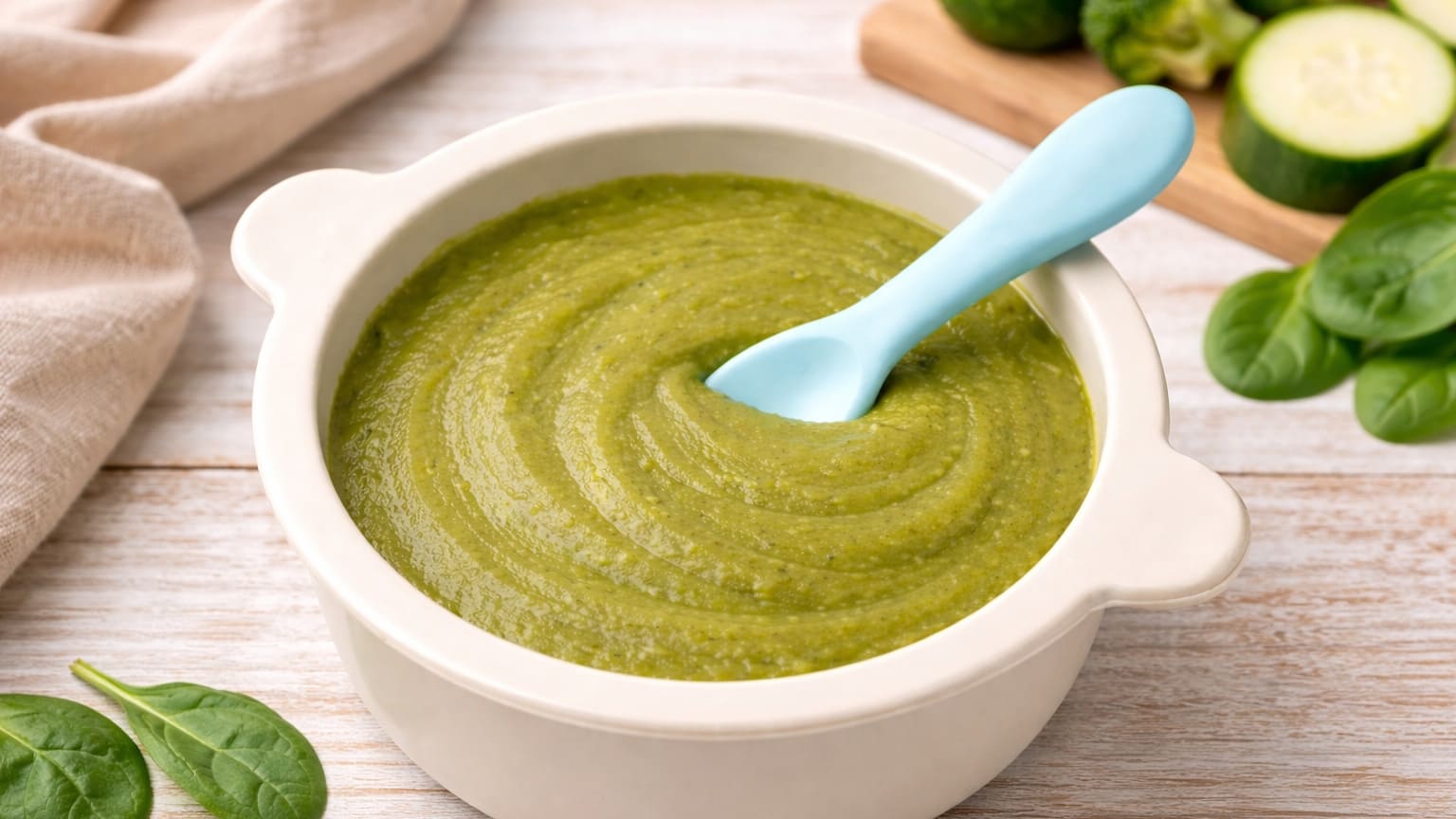
The Recipe
Iron-Rich Lentil Puree (Sweet Potato & Spinach)
Prep: 10 min | Cook: 20 min | Serves: 4 (about 6 oz each)
Ingredients
| Ingredient | Amount |
|---|---|
| Red lentils | 1/4 cup (48g dry) |
| Water | 1 cup (240ml) |
| Sweet potato | 1 small, peeled and diced (~130g) |
| Spinach leaves | 1/2 cup, washed and chopped (~15g) |
| Ground cumin | 1/4 teaspoon (optional) |
| Turmeric | 1/4 teaspoon (optional) |
Directions
- Rinse red lentils thoroughly under cold water and drain.
- Combine lentils and water in a small saucepan. Bring to a boil over medium heat.
- Reduce heat to low, add diced sweet potato. Cover and simmer for 15-20 minutes until lentils and sweet potato are tender.
- Add chopped spinach and cook for 2-3 minutes until wilted.
- Stir in cumin and turmeric if using.
- Remove from heat, cool slightly, then transfer to a blender and blend until smooth and creamy.
- Allow puree to cool completely before serving to baby.
Key tip: Red lentils break down completely when cooked, creating a naturally smooth and creamy texture perfect for babies without needing extra thickeners.
Nutrient Card
Iron-Rich Lentil Puree (per serving, ~6 oz / 170g)
Calories: 82
Protein: 4.5g
Fat: 0.3g
  Saturated: 0.05g
Carbs: 16g
  Fiber: 3.2g
  Sugar: 3.4g
Sodium: ~25mg
Iron: ~2.1mg
Vitamin A: ~4,800 IU
Vitamin C: ~8mg
Full Nutrition Breakdown
Here is the ingredient-by-ingredient nutrition breakdown for this iron-rich baby puree, calculated per serving (recipe makes 4 servings).
| Ingredient | Serving (per portion) | Calories | Protein | Fat | Carbs | Fiber | Iron |
|---|---|---|---|---|---|---|---|
| Red lentils (dry) | 12g (~1 tbsp) | 43 | 3.0g | 0.1g | 7.5g | 1.5g | 0.9mg |
| Sweet potato | 33g (~2 tbsp) | 29 | 0.5g | 0.02g | 6.7g | 1.0g | 0.2mg |
| Spinach | 4g (~1 tbsp) | 1 | 0.1g | 0.02g | 0.1g | 0.1g | 0.1mg |
| Water | 60ml | 0 | 0g | 0g | 0g | 0g | 0mg |
| Ground cumin | pinch | 1 | 0.04g | 0.05g | 0.1g | 0.02g | 0.1mg |
| Turmeric | pinch | 1 | 0.02g | 0.02g | 0.1g | 0.04g | 0.1mg |
| TOTAL | ~75-82 | ~3.7-4.5g | ~0.2-0.3g | ~14.5-16g | ~2.7-3.2g | ~1.4-2.1mg |
Note: Values vary depending on sweet potato size and whether optional spices are included. Nutrition calculated using USDA FoodData Central values for raw ingredients; cooking may slightly affect vitamin content.
Where Your Calories Actually Come From
| Component | Calories | % of Total |
|---|---|---|
| Red lentils | ~43 | 52% |
| Sweet potato | ~29 | 35% |
| Spinach | ~1 | 1% |
| Spices (optional) | ~2 | 2% |
Red lentils are the calorie anchor of this puree, contributing over half the energy despite being a relatively small amount by volume. Sweet potato rounds out the energy profile with natural sugars and starch, making this a balanced and filling meal for baby.
Macro Split
| Macro | Grams | Calories from Macro | % of Total Calories |
|---|---|---|---|
| Protein | 4.5g | 18 cal | 22% |
| Fat | 0.3g | 2.7 cal | 3% |
| Carbs | 16g | 64 cal | 78% |
| Fiber | 3.2g | - | - |
This is a carb-forward puree, which is appropriate for a baby's energy needs. The protein content at 22% is excellent for a plant-based baby meal, with red lentils doing the heavy lifting. The very low fat content means this pairs well with a small drizzle of olive oil or a side of avocado to support fat-soluble vitamin absorption.
Health Benefits at a Glance
This puree combines three nutrient powerhouses that work together to support your baby's rapid growth and development.
| Ingredient | Key Nutrient/Compound | What Research Says |
|---|---|---|
| Red lentils | Iron + Plant protein | Red lentils provide non-heme iron critical for brain development during the 6-12 month window when babies' iron stores from birth begin to deplete. Research from the NIH links adequate infant iron intake to improved cognitive function, attention span, and healthy weight gain. The plant protein also supports muscle and tissue development during this rapid growth phase. |
| Sweet potato | Beta-carotene (Vitamin A) | Sweet potatoes are one of the richest sources of beta-carotene, which the body converts to vitamin A. USDA data shows a small sweet potato can deliver over 100% of a baby's daily vitamin A needs. Research links adequate vitamin A to healthy vision development, strong immune function, and skin health - all critical during the first year. |
| Spinach | Iron + Folate + Vitamin K | Spinach adds an extra iron boost and is rich in folate, which research links to healthy cell division and growth. Vitamin K supports bone mineralization and healthy blood clotting. Even a small amount of spinach adds meaningful micronutrient density to a baby meal. |
| Turmeric (optional) | Curcumin | Research suggests curcumin has gentle anti-inflammatory properties. In small amounts appropriate for babies, turmeric has been used in traditional Indian baby foods for centuries. Studies published in the Journal of Medicinal Food link curcumin to digestive comfort and immune support. |
| Cumin (optional) | Iron + Digestive support | Cumin is surprisingly iron-dense per gram and has been traditionally used to ease digestive discomfort. Research suggests it may help reduce gas and bloating, which can be helpful as babies' digestive systems adapt to solid foods. |
This puree is especially well-suited for babies transitioning to solids who need an iron boost. The combination of vitamin C from the sweet potato with the non-heme iron from lentils and spinach creates a natural iron-absorption enhancer, meaning baby actually absorbs more of the iron than they would from lentils alone. A great choice for plant-forward families or as a complement to meat-based meals throughout the week.
Smarter Swaps (With Real Numbers)
Since this is a baby food recipe, swaps focus on nutritional enhancement rather than calorie reduction. Baby meals should be nutrient-dense, not calorie-restricted.
Swap 1: Add olive oil for fat-soluble vitamin absorption
| Version | Calories | Fat | Benefit |
|---|---|---|---|
| Original (no oil) | 82 cal | 0.3g | - |
| + 1/2 tsp olive oil | 103 cal | 2.5g | Better absorption of vitamin A from sweet potato |
Swap 2: Replace spinach with kale for extra calcium
| Version | Calories | Calcium | Iron |
|---|---|---|---|
| With spinach (1/2 cup) | 82 cal | ~12mg | ~2.1mg |
| With kale (1/2 cup chopped) | 85 cal | ~24mg | ~2.0mg |
Swap 3: Add a squeeze of lemon for iron absorption boost
| Version | Calories | Vitamin C | Iron absorbed |
|---|---|---|---|
| Without lemon | 82 cal | ~8mg | Baseline |
| + 1 tsp lemon juice | 83 cal | ~12mg | Enhanced (vitamin C boosts non-heme iron uptake) |
The Nutrient-Maximized Stack: All Swaps Combined
Adding olive oil, swapping to kale, and adding lemon juice brings the per-serving total to approximately 106 calories with improved fat content (2.5g), enhanced calcium (~24mg), and better iron absorption. This turns an already great puree into a nutritional powerhouse for baby.
Fit It Into Your Baby's Day
Babies aged 7 months typically need 600-800 calories per day (depending on weight, activity, and whether they are breastfed or formula-fed). Breast milk or formula still provides the majority of calories at this age.
| Daily Calorie Context | Recipe % of Day | What That Means |
|---|---|---|
| 600 cal/day (smaller baby) | 14% | A solid contribution alongside 4-5 milk feeds |
| 700 cal/day (average 7-month) | 12% | Comfortable as one of 2-3 solid meals |
| 800 cal/day (larger/active baby) | 10% | Pairs well with a fruit puree or yogurt on the side |
Common Pairings and What They Add
| Side | Calories | Running Total |
|---|---|---|
| Lentil puree alone | 82 cal | 82 cal |
| + 2 tbsp plain whole-milk yogurt | +15 cal | 97 cal |
| + 1/4 mashed banana | +22 cal | 119 cal |
| + 1/2 tsp olive oil stirred in | +21 cal | 140 cal |
Adding yogurt and banana alongside the puree creates a well-rounded meal of about 120 calories with added calcium, potassium, and probiotics - a perfect 7-month-old lunch or dinner.
How It Compares
| Version | Calories | Protein | Fat | Carbs | Iron |
|---|---|---|---|---|---|
| This homemade lentil puree | 82 | 4.5g | 0.3g | 16g | 2.1mg |
| Store-bought lentil baby food (avg jar) | 70 | 3.0g | 0.5g | 13g | 1.2mg |
| Plain sweet potato puree (homemade) | 55 | 1.0g | 0.1g | 13g | 0.4mg |
| Rice cereal with formula (2 tbsp) | 30 | 1.0g | 0.5g | 6g | 3.6mg (fortified) |
This homemade lentil puree delivers significantly more protein and iron than plain sweet potato puree and outperforms most store-bought jars on both protein and iron content. Fortified rice cereal still wins on iron density thanks to industrial fortification, but this recipe provides a much more diverse nutrient profile with real whole-food ingredients.
A Note for Parents
This article provides a nutrition breakdown for educational purposes. Always consult your pediatrician before introducing new foods to your baby, especially potential allergens. Every baby develops at their own pace - some tolerate lentils well from 6 months, while others do better starting around 8-9 months. Watch for signs of allergies when introducing any new food, and offer small portions at first.
Related Breakdowns
If you enjoyed this breakdown, check out these related recipes:
- Butternut Squash and Spinach Puree with Olive Oil (Baby Dinner) - Calorie & Ingredient Breakdown
- Salmon and Sweet Potato Mash (Baby Dinner) - Calorie & Ingredient Breakdown
- Egg Yolk Mash with Avocado (Baby Breakfast) - Calorie & Ingredient Breakdown
- Full-Fat Yogurt with Mashed Banana (Baby Breakfast) - Calorie & Ingredient Breakdown
- Pureed Chicken with Carrots and Peas (Baby Dinner) - Calorie & Ingredient Breakdown
Recipe from Bebe Foodie by Dayana Gomez. Nutrition data sourced from USDA FoodData Central. Individual results vary by ingredient size, brand, and cooking method.