
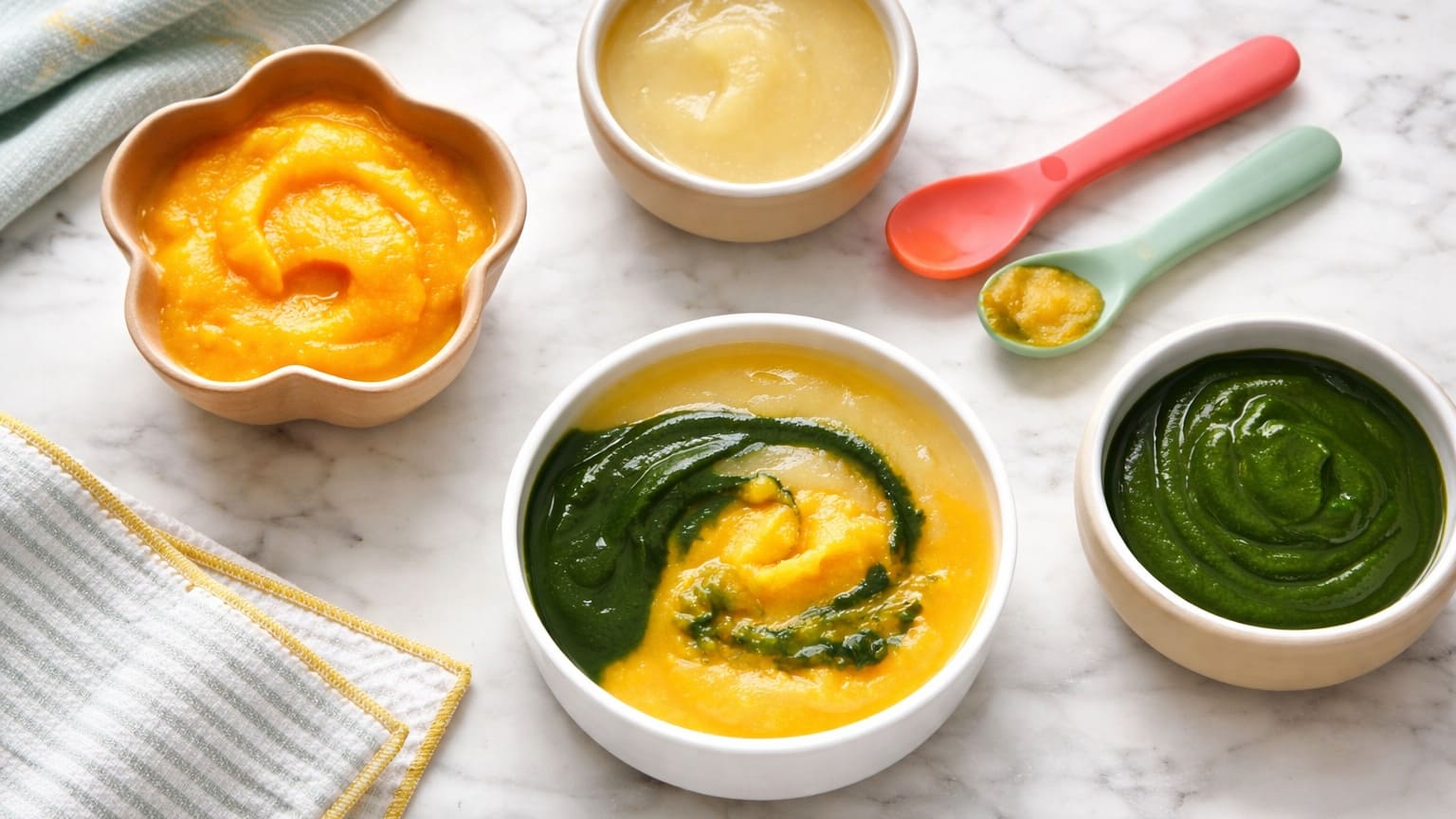
Butternut Squash and Spinach Puree with Olive Oil (Baby Dinner) - Calorie & Ingredient Breakdown
Original recipe: Butternut, Apple & Spinach Baby Food - Food52 by Food52
The Recipe
Butternut Squash and Spinach Puree with Olive Oil
Prep: 10 min | Cook: 15 min | Serves: 4 baby portions (~3 oz each)
Ingredients
| Ingredient | Amount |
|---|---|
| Butternut squash | 1 cup, peeled and diced (~140g) |
| Spinach leaves | 1/2 cup, washed (~15g) |
| Olive oil | 1 teaspoon (~5ml) |
| Water | 1/4 cup (60ml, for steaming/blending) |
| Nutmeg | Tiny pinch (optional) |
Directions
- Peel the butternut squash, scoop out seeds, and dice into small cubes.
- Steam the squash cubes for 12-15 minutes until very tender and easily pierced with a fork.
- Add spinach leaves to the steamer for the last 2 minutes until wilted.
- Transfer squash and spinach to a blender. Add olive oil and a splash of cooking water.
- Blend until smooth, adding more water if needed for desired consistency.
- Add a tiny pinch of nutmeg if desired.
- Cool to a safe temperature before serving.
Key tip: Butternut squash is naturally sweet and creamy when cooked, making it one of the most baby-friendly vegetables. Steaming preserves more nutrients than boiling since the vitamins stay in the food rather than leaching into the water.
Nutrient Card
Butternut Squash and Spinach Puree (per serving)
Calories: 24
Protein: 0.5g
Fat: 1.2g
  Saturated: 0.2g
Carbs: 3.4g
  Fiber: 0.7g
  Sugar: 1.2g
Sodium: ~8mg
Iron: ~0.3mg
Vitamin A: ~4,200 IU
Vitamin K: ~28mcg
Full Nutrition Breakdown
Here is the ingredient-by-ingredient nutrition breakdown for this vitamin-rich vegetable dinner, calculated per serving (recipe makes 4 servings).
| Ingredient | Serving (per portion) | Calories | Protein | Fat | Carbs | Fiber | Iron |
|---|---|---|---|---|---|---|---|
| Butternut squash | 35g | 16 | 0.4g | 0.04g | 4.2g | 0.7g | 0.2mg |
| Spinach | 4g | 1 | 0.1g | 0.02g | 0.1g | 0.1g | 0.1mg |
| Olive oil | 1.25ml | 11 | 0g | 1.2g | 0g | 0g | 0mg |
| Nutmeg | pinch | 0 | 0g | 0g | 0g | 0g | 0mg |
| TOTAL | ~24 | ~0.5g | ~1.2g | ~3.4g | ~0.7g | ~0.3mg |
Note: This is a low-calorie vegetable puree best served as part of a larger meal or paired with a protein source.
Where Your Calories Actually Come From
| Component | Calories | % of Total |
|---|---|---|
| Butternut squash | ~16 | 57% |
| Olive oil | ~11 | 39% |
| Spinach | ~1 | 4% |
The olive oil punches well above its volume, contributing nearly 40% of calories despite being just a teaspoon across 4 servings. This is why adding fat to vegetable purees is so important for baby meals - it significantly boosts energy density.
Macro Split
| Macro | Grams | Calories from Macro | % of Total Calories |
|---|---|---|---|
| Protein | 0.5g | 2 cal | 8% |
| Fat | 1.2g | 11 cal | 46% |
| Carbs | 3.4g | 14 cal | 58% |
| Fiber | 0.7g | - | - |
This is a vegetable-forward side dish with minimal protein. The fat from olive oil is the standout contributor. This puree works best as a dinner accompaniment alongside a protein source like chicken, fish, or yogurt.
Health Benefits at a Glance
| Ingredient | Key Nutrient/Compound | What Research Says |
|---|---|---|
| Butternut squash | Beta-carotene (Vitamin A) | Butternut squash is one of the richest vegetable sources of beta-carotene, delivering over 100% of a baby's daily vitamin A needs per serving. Research links vitamin A to healthy vision, robust immune function, and skin cell turnover. Studies in the American Journal of Clinical Nutrition confirm that beta-carotene from squash is well-absorbed, especially when consumed with fat like olive oil. |
| Spinach | Vitamin K + Iron + Folate | Spinach provides vitamin K essential for blood clotting and bone mineralization. The folate supports DNA synthesis during rapid growth. Even a small amount adds meaningful iron and micronutrient density. Research shows that cooking spinach actually increases the bioavailability of some nutrients, including beta-carotene and iron. |
| Olive oil | Fat-soluble vitamin absorption | This is the functional star of the recipe. Research consistently shows that fat dramatically increases absorption of vitamins A, D, E, and K from vegetables. One study found that adding just a small amount of oil to a vegetable puree increased beta-carotene absorption by up to 6x. Without the oil, baby would absorb significantly less of the squash's vitamin A. |
| Nutmeg (optional) | Myristicin | In tiny amounts, nutmeg has been traditionally used as a digestive aid. Its warm, slightly sweet flavor introduces baby to aromatic spices, supporting palate development. Only a tiny pinch is appropriate for babies. |
This puree is essentially a vitamin A delivery system. The combination of two beta-carotene-rich vegetables with olive oil maximizes absorption of this critical nutrient for baby's vision and immune development. Excellent for babies who need more vegetables in their diet.
Smarter Swaps (With Real Numbers)
Swap 1: Add 1 tbsp pureed chicken for protein
| Version | Calories | Protein | Benefit |
|---|---|---|---|
| Veggie only | 24 cal | 0.5g | - |
| + 1 tbsp chicken | 35 cal | 2.0g | Turns this into a complete meal |
Swap 2: Use butter instead of olive oil for extra vitamin A
| Version | Calories | Fat | Vitamin A |
|---|---|---|---|
| With olive oil | 24 cal | 1.2g | ~4,200 IU |
| With butter (1 tsp) | 27 cal | 1.3g | ~4,300 IU |
Swap 3: Replace spinach with kale for extra calcium
| Version | Calories | Calcium | Vitamin K |
|---|---|---|---|
| With spinach | 24 cal | ~8mg | ~28mcg |
| With kale | 25 cal | ~18mg | ~35mcg |
Fit It Into Your Baby's Day
| Daily Calorie Context | Recipe % of Day | What That Means |
|---|---|---|
| 600 cal/day (smaller baby) | 4% | A light veggie side - must pair with protein |
| 700 cal/day (average 7-month) | 3% | Excellent veggie complement to a protein main |
| 800 cal/day (larger/active baby) | 3% | Pair with chicken, fish, or yogurt for a full dinner |
Common Pairings and What They Add
| Side | Calories | Running Total |
|---|---|---|
| Squash puree alone | 24 cal | 24 cal |
| + 2 tbsp pureed chicken | +17 cal | 41 cal |
| + 2 tbsp whole-milk yogurt | +10 cal | 51 cal |
| + 1/4 mashed avocado | +40 cal | 64 cal |
| + all three sides | +67 cal | 91 cal |
How It Compares
| Version | Calories | Protein | Fat | Vitamin A |
|---|---|---|---|---|
| This squash + spinach puree | 24 | 0.5g | 1.2g | ~4,200 IU |
| Store-bought squash baby food | 30 | 0.5g | 0g | ~2,500 IU |
| Carrot puree (homemade) | 18 | 0.3g | 0.1g | ~5,000 IU |
| Pumpkin puree (homemade) | 15 | 0.4g | 0.1g | ~3,500 IU |
The olive oil addition is what sets this apart from store-bought versions, which typically contain zero added fat. That fat makes a dramatic difference in how much vitamin A baby actually absorbs from the squash.
A Note for Parents
Butternut squash is one of the least allergenic foods and is generally very well tolerated by babies. It can be batch-prepared and frozen in ice cube trays for quick meals. Each cube is roughly one baby portion. Thaw and gently reheat, then stir in fresh olive oil before serving for maximum nutritional benefit.
Related Breakdowns
If you enjoyed this breakdown, check out these related recipes:
- Iron-Rich Lentil Puree (Sweet Potato & Spinach) - Calorie & Ingredient Breakdown
- Paella - Calorie & Ingredient Breakdown
- Shakshuka - Calorie & Ingredient Breakdown
- Chicken Souvlaki - Calorie & Ingredient Breakdown
- Margherita Pizza - Calorie & Ingredient Breakdown
Recipe adapted from Food52. Nutrition data sourced from USDA FoodData Central. Individual results vary by squash size and ingredient brand.