
Steamed Broccoli and Cauliflower with Butter (Baby Dinner) - Calorie & Ingredient Breakdown
Original recipe: Broccoli and Cauliflower Puree - Mummy Cooks by Siobhan Berry
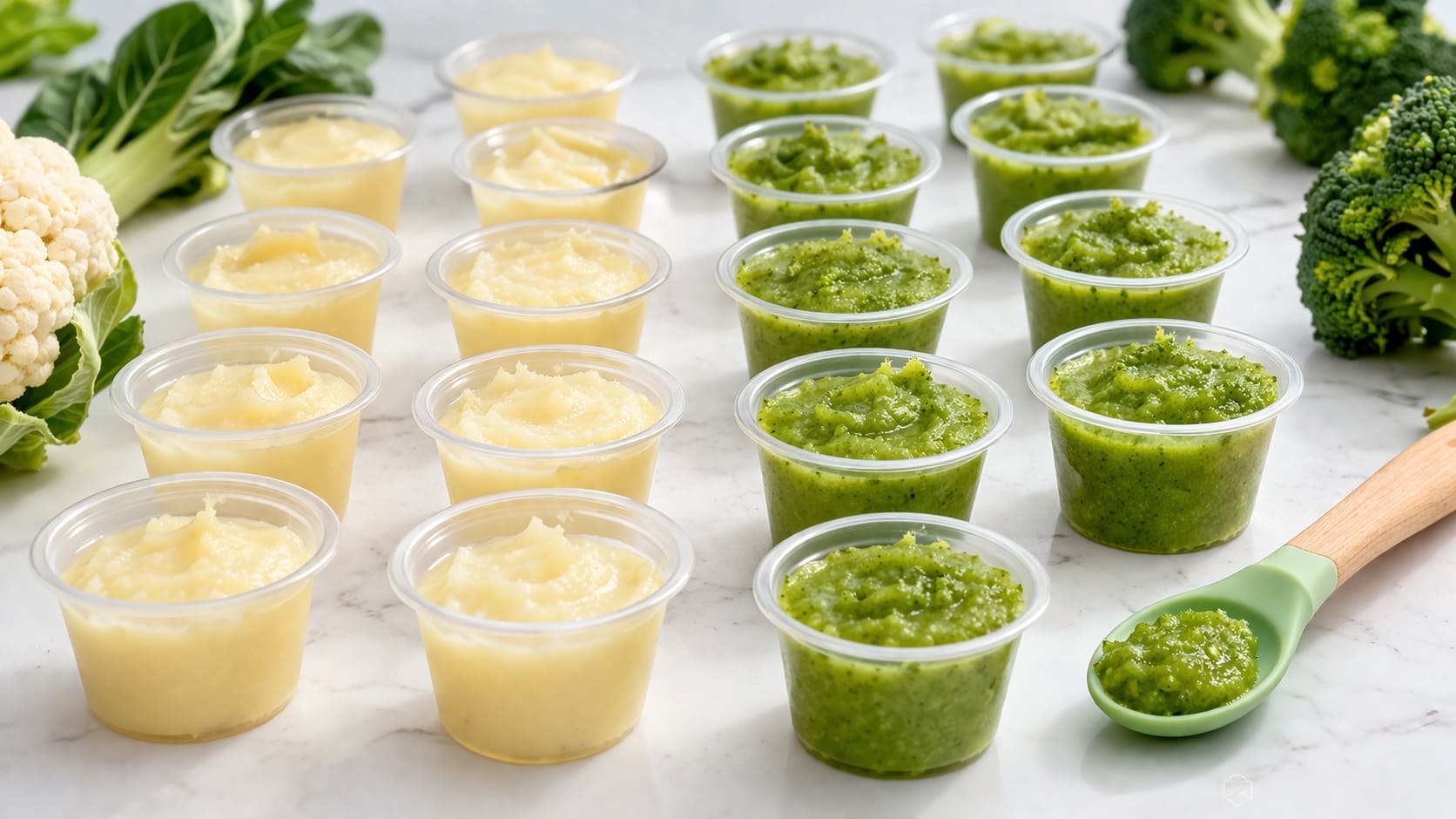
The Recipe
Steamed Broccoli and Cauliflower with Butter
Prep: 5 min | Cook: 10 min | Serves: 4 baby portions (~3 oz each)
Ingredients
| Ingredient | Amount |
|---|---|
| Broccoli florets | 1/2 cup (~45g) |
| Cauliflower florets | 1/2 cup (~50g) |
| Unsalted butter | 1 teaspoon (~5g) |
| Water | For steaming |
Directions
- Wash and cut broccoli and cauliflower into small, even-sized florets.
- Place in a steamer basket over boiling water.
- Steam for 8-10 minutes until very tender and easily pierced with a fork.
- Transfer to a bowl and add butter while still warm, letting it melt.
- Mash with a fork for a chunkier texture or blend for a smooth puree.
- Add a splash of steaming water if needed to reach desired consistency.
- Cool to a safe temperature before serving.
Key tip: Steam rather than boil to preserve the vitamin C content. Broccoli and cauliflower lose up to 50% of their vitamin C when boiled, but retain most of it when steamed. The butter melts into the warm vegetables, creating a naturally creamy texture babies love.
Nutrient Card
Steamed Broccoli and Cauliflower with Butter (per serving)
Calories: 18
Protein: 0.6g
Fat: 1.1g
  Saturated: 0.7g
Carbs: 1.5g
  Fiber: 0.6g
  Sugar: 0.5g
Sodium: ~8mg
Iron: ~0.1mg
Vitamin C: ~16mg
Vitamin K: ~22mcg
Sulforaphane: present
Full Nutrition Breakdown
Here is the ingredient-by-ingredient nutrition breakdown for this cruciferous vegetable dinner, calculated per serving (recipe makes 4 servings).
| Ingredient | Serving (per portion) | Calories | Protein | Fat | Carbs | Fiber | Vitamin C |
|---|---|---|---|---|---|---|---|
| Broccoli | 11g | 4 | 0.3g | 0.04g | 0.7g | 0.3g | 10mg |
| Cauliflower | 13g | 3 | 0.2g | 0.03g | 0.6g | 0.3g | 6mg |
| Unsalted butter | 1.25g | 9 | 0g | 1.0g | 0g | 0g | 0mg |
| TOTAL | ~18 | ~0.6g | ~1.1g | ~1.5g | ~0.6g | ~16mg |
Note: This is a low-calorie vegetable side dish. Always pair with a protein and/or carb source for a complete baby meal.
Where Your Calories Actually Come From
| Component | Calories | % of Total |
|---|---|---|
| Butter | ~9 | 50% |
| Broccoli | ~4 | 22% |
| Cauliflower | ~3 | 17% |
The butter contributes half the calories in this vegetable puree, demonstrating why adding fat to baby vegetables is essential - without it, this would be an extremely low-calorie food that would not sustain a growing baby.
Macro Split
| Macro | Grams | Calories from Macro | % of Total Calories |
|---|---|---|---|
| Protein | 0.6g | 2 cal | 11% |
| Fat | 1.1g | 10 cal | 56% |
| Carbs | 1.5g | 6 cal | 33% |
| Fiber | 0.6g | - | - |
A fat-dominant vegetable side thanks to the butter. This pairs perfectly with a protein source like chicken or fish, and a carb like mashed potato or sweet potato, to create a balanced dinner plate for baby.
Health Benefits at a Glance
| Ingredient | Key Nutrient/Compound | What Research Says |
|---|---|---|
| Broccoli | Sulforaphane | Broccoli contains sulforaphane, one of the most studied plant compounds in nutrition science. Research published in Cancer Prevention Research links sulforaphane to powerful antioxidant and anti-inflammatory effects. For babies, this compound supports the developing immune system and may promote healthy gut flora. Broccoli is also an excellent source of vitamin C, supporting iron absorption and skin health. |
| Broccoli | Vitamin K + Folate | Vitamin K is essential for blood clotting and bone development. Folate supports rapid cell division during growth. Research from the NIH shows that adequate vitamin K in infancy supports healthy bone mineralization and may reduce fracture risk as children grow. |
| Cauliflower | Choline + Vitamin C | Cauliflower is a surprisingly good source of choline, supporting brain development and liver function. Its vitamin C content supports immune defense and collagen formation for healthy skin. Research in the Journal of the American Dietetic Association shows cauliflower's mild flavor makes it one of the best-accepted cruciferous vegetables for infants. |
| Butter | Butyrate + Fat-soluble vitamins | Butter contains butyrate, a short-chain fatty acid that research links to gut lining health and reduced inflammation. It also provides small amounts of vitamins A, D, and K2. For babies, the saturated fat in butter supports brain myelination and hormone production, both essential during rapid development. |
This is an excellent immune-support dinner. The sulforaphane and vitamin C from broccoli combined with the choline from cauliflower target both immune and brain development. The butter ensures these fat-soluble nutrients are absorbed efficiently. A great choice for keeping baby healthy during cold and flu season.
Smarter Swaps (With Real Numbers)
Swap 1: Use olive oil instead of butter (dairy-free option)
| Version | Calories | Fat | Benefit |
|---|---|---|---|
| With butter (1 tsp) | 18 cal | 1.1g | Butyrate for gut health |
| With olive oil (1 tsp) | 21 cal | 1.4g | More monounsaturated fat, dairy-free |
Swap 2: Add a floret of purple cauliflower for anthocyanins
| Version | Calories | Benefit |
|---|---|---|
| White cauliflower | 18 cal | Standard nutrients |
| Purple cauliflower | 18 cal | Adds anthocyanin antioxidants |
Swap 3: Add 1 tbsp cheese sauce for calcium and calories
| Version | Calories | Calcium | Protein |
|---|---|---|---|
| Plain with butter | 18 cal | ~5mg | 0.6g |
| + 1 tbsp mild cheese sauce | 33 cal | ~35mg | 1.4g |
Fit It Into Your Baby's Day
| Daily Calorie Context | Recipe % of Day | What That Means |
|---|---|---|
| 600 cal/day (smaller baby) | 3% | A veggie side - must accompany protein and carbs |
| 700 cal/day (average 7-month) | 3% | Best as part of a three-component dinner plate |
| 800 cal/day (larger/active baby) | 2% | Pair with chicken/fish + starch for a full meal |
Common Pairings and What They Add
| Side | Calories | Running Total |
|---|---|---|
| Broccoli + cauliflower alone | 18 cal | 18 cal |
| + 2 tbsp pureed chicken | +17 cal | 35 cal |
| + 2 tbsp mashed potato | +26 cal | 61 cal |
| + 1 tbsp cheese sauce | +15 cal | 76 cal |
| + all three sides | +58 cal | 76 cal |
How It Compares
| Version | Calories | Protein | Fat | Vitamin C |
|---|---|---|---|---|
| This broccoli + cauliflower | 18 | 0.6g | 1.1g | 16mg |
| Store-bought broccoli baby food | 15 | 0.5g | 0g | 8mg |
| Steamed peas puree | 22 | 1.5g | 0.1g | 4mg |
| Green bean puree | 10 | 0.5g | 0g | 3mg |
The butter addition gives this homemade version a calorie and fat edge over store-bought, and steaming preserves nearly double the vitamin C compared to commercially processed versions.
A Note for Parents
Broccoli and cauliflower can cause gas in some babies due to their raffinose content. Introduce gradually and watch for discomfort. If baby seems gassy, try offering smaller portions and building up over time. These are among the least allergenic foods and are generally very well tolerated once baby's digestive system adapts.
Related Breakdowns
If you enjoyed this breakdown, check out these related recipes:
- Beef and Broccoli Stir-Fry - Calorie & Ingredient Breakdown
- Butter Chicken - Calorie & Ingredient Breakdown
- Salmon and Sweet Potato Mash (Baby Dinner) - Calorie & Ingredient Breakdown
- Iron-Rich Lentil Puree (Sweet Potato & Spinach) - Calorie & Ingredient Breakdown
- Full-Fat Yogurt with Mashed Banana (Baby Breakfast) - Calorie & Ingredient Breakdown