
Egg Yolk Mash with Avocado (Baby Breakfast) - Calorie & Ingredient Breakdown
Original recipe: Egg Yolk, Avocado Sweet Potato Baby Puree +6M - Buona Pappa by Barbara Lamperti
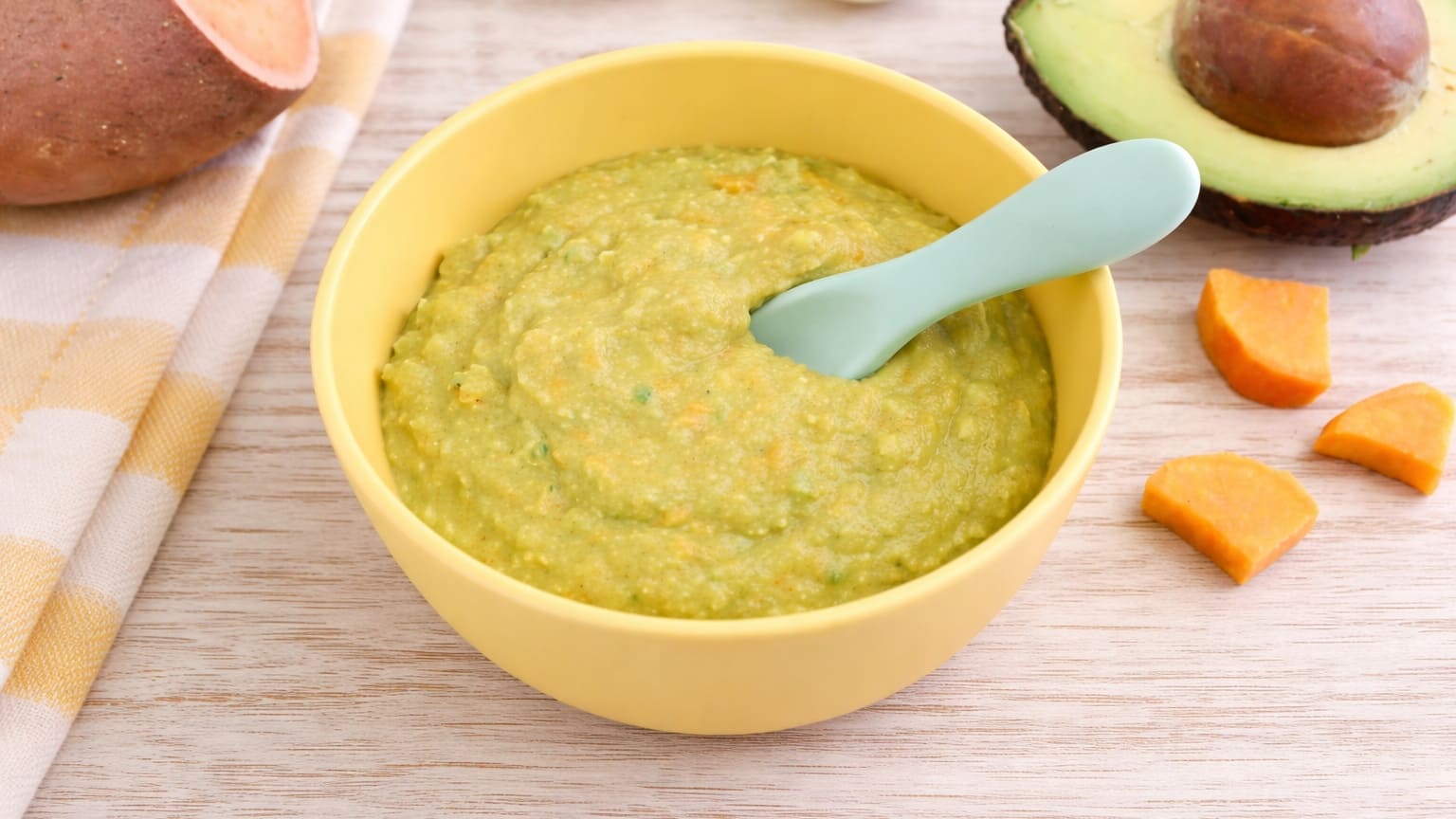
The Recipe
Egg Yolk Mash with Avocado
Prep: 5 min | Cook: 5 min | Serves: 1 baby portion (~3 oz)
Ingredients
| Ingredient | Amount |
|---|---|
| Egg yolk | 1 large (17g) |
| Avocado | 2 tablespoons, mashed (~30g) |
| Breast milk or formula | 1 tablespoon (optional, for texture) |
Directions
- Soft-boil or gently scramble the egg yolk in a small non-stick pan with no added oil (the avocado provides plenty of fat).
- Mash the avocado in a small bowl until smooth.
- Combine the cooked egg yolk with the mashed avocado and mix until creamy.
- Add a splash of breast milk or formula to thin to desired consistency.
- Cool to a safe temperature before serving.
Key tip: Use a ripe, soft avocado for the smoothest texture. If baby prefers a warmer meal, gently warm the avocado portion before mixing with the egg yolk.
Nutrient Card
Egg Yolk Mash with Avocado (per serving)
Calories: 107
Protein: 3.6g
Fat: 9.5g
  Saturated: 2.8g
Carbs: 2.6g
  Fiber: 2.0g
  Sugar: 0.2g
Sodium: ~10mg
Cholesterol: ~186mg
Iron: ~0.5mg
Choline: ~116mg
Vitamin D: ~0.9mcg
Full Nutrition Breakdown
Here is the ingredient-by-ingredient nutrition breakdown for this brain-boosting baby breakfast.
| Ingredient | Amount | Calories | Protein | Fat | Carbs | Fiber | Iron |
|---|---|---|---|---|---|---|---|
| Egg yolk (1 large) | 17g | 55 | 2.7g | 4.5g | 0.6g | 0g | 0.4mg |
| Avocado (mashed) | 30g | 48 | 0.6g | 4.4g | 2.6g | 2.0g | 0.2mg |
| Breast milk/formula | 15ml | ~10 | 0.3g | 0.6g | 1.0g | 0g | 0mg |
| TOTAL | ~107 | ~3.6g | ~9.5g | ~2.6g | ~2.0g | ~0.5mg |
Note: Values vary depending on egg size and avocado ripeness. Nutrition for breast milk is approximate and varies by mother.
Where Your Calories Actually Come From
| Component | Calories | % of Total |
|---|---|---|
| Egg yolk | ~55 | 51% |
| Avocado | ~48 | 45% |
| Breast milk/formula | ~10 | 9% |
The egg yolk and avocado split calories almost evenly, creating a balanced fat-and-protein-rich meal. This is ideal for baby breakfasts since fat is the primary energy source for infants.
Macro Split
| Macro | Grams | Calories from Macro | % of Total Calories |
|---|---|---|---|
| Protein | 3.6g | 14 cal | 13% |
| Fat | 9.5g | 86 cal | 80% |
| Carbs | 2.6g | 10 cal | 9% |
| Fiber | 2.0g | - | - |
This is a high-fat, moderate-protein meal - exactly what growing babies need. Fat is the primary fuel for brain development during the first two years, and this meal delivers it from two excellent whole-food sources.
Health Benefits at a Glance
| Ingredient | Key Nutrient/Compound | What Research Says |
|---|---|---|
| Egg yolk | Choline (116mg per yolk) | Choline is critical for brain development and memory formation. Research from the NIH shows that adequate choline intake during infancy supports neural tube development and cognitive function. One egg yolk provides roughly 40% of a baby's daily choline needs. Also a rare dietary source of vitamin D for bone development. |
| Avocado | Monounsaturated fat + Potassium | Avocados provide heart-healthy monounsaturated fats that support brain myelination - the process of coating nerve fibers for faster signal transmission. Research links adequate healthy fat intake in infancy to better cognitive outcomes. The potassium content also supports healthy blood pressure and muscle function. |
| Egg yolk | Lutein + Zeaxanthin | These carotenoids concentrate in the retina and research suggests they support healthy vision development in infants. Studies published in the American Journal of Clinical Nutrition link dietary lutein to improved visual processing in young children. |
This meal is a powerhouse for brain development. The combination of choline from egg yolk and healthy fats from avocado specifically targets the rapid neural growth happening during the 6-12 month window. A perfect start to baby's day.
Smarter Swaps (With Real Numbers)
Swap 1: Add a pinch of turmeric for anti-inflammatory benefits
| Version | Calories | Benefit |
|---|---|---|
| Original | 107 cal | - |
| + pinch of turmeric | 108 cal | Adds curcumin for gentle anti-inflammatory support |
Swap 2: Use whole egg instead of just yolk (8+ months)
| Version | Calories | Protein | Fat |
|---|---|---|---|
| Yolk only | 107 cal | 3.6g | 9.5g |
| Whole egg | 120 cal | 6.3g | 9.0g |
Swap 3: Add a teaspoon of hemp seeds for omega-3 boost
| Version | Calories | Omega-3 | Protein |
|---|---|---|---|
| Original | 107 cal | Minimal | 3.6g |
| + 1 tsp hemp seeds | 125 cal | ~275mg | 4.7g |
Fit It Into Your Baby's Day
| Daily Calorie Context | Recipe % of Day | What That Means |
|---|---|---|
| 600 cal/day (smaller baby) | 18% | A hearty breakfast - pair with fruit at snack time |
| 700 cal/day (average 7-month) | 15% | Great standalone breakfast alongside morning milk feed |
| 800 cal/day (larger/active baby) | 13% | Can add a side of mashed banana for extra energy |
Common Pairings and What They Add
| Side | Calories | Running Total |
|---|---|---|
| Egg yolk + avocado alone | 107 cal | 107 cal |
| + 2 tbsp mashed banana | +22 cal | 129 cal |
| + 1 tbsp stewed apple | +8 cal | 137 cal |
How It Compares
| Version | Calories | Protein | Fat | Carbs |
|---|---|---|---|---|
| This egg yolk + avocado mash | 107 | 3.6g | 9.5g | 2.6g |
| Store-bought egg-based baby food | 60 | 2.0g | 3.0g | 6.0g |
| Plain avocado puree | 48 | 0.6g | 4.4g | 2.6g |
| Baby oatmeal with formula | 45 | 1.5g | 1.0g | 8.0g |
This homemade version delivers nearly double the calories and triple the healthy fat of store-bought alternatives, with far less added carbs. The fat-to-protein ratio is ideal for a baby breakfast.
A Note for Parents
Eggs are a common allergen. When introducing egg for the first time, offer a small amount and watch for any allergic reaction for 24-48 hours. Current AAP guidance recommends early introduction of allergenic foods including eggs from around 6 months. Always consult your pediatrician with any concerns.
Related Breakdowns
If you enjoyed this breakdown, check out these related recipes:
- Shakshuka - Calorie & Ingredient Breakdown
- Chicken Katsu - Calorie & Ingredient Breakdown
- Iron-Rich Lentil Puree (Sweet Potato & Spinach) - Calorie & Ingredient Breakdown
- Salmon and Sweet Potato Mash (Baby Dinner) - Calorie & Ingredient Breakdown
- Hot and Sour Soup - Calorie & Ingredient Breakdown
Recipe adapted from Buona Pappa by Barbara Lamperti. Nutrition data sourced from USDA FoodData Central. Individual results vary by ingredient size and brand.