
Pureed Chicken with Carrots and Peas (Baby Dinner) - Calorie & Ingredient Breakdown
Original recipe: Chicken Puree for Baby - Healthy Little Foodies by Healthy Little Foodies
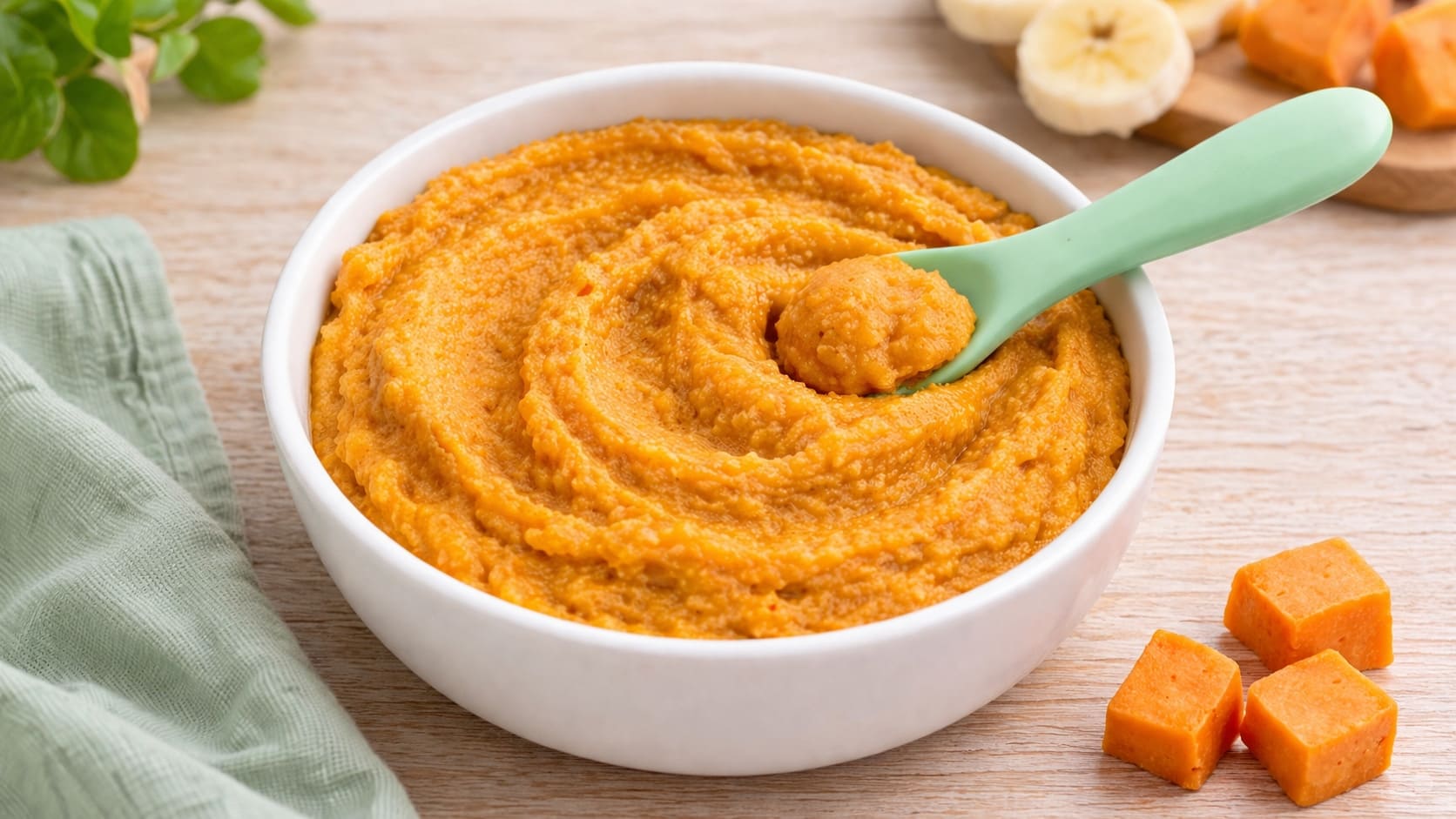
The Recipe
Pureed Chicken with Carrots and Peas
Prep: 10 min | Cook: 20 min | Serves: 4 baby portions (~3 oz each)
Ingredients
| Ingredient | Amount |
|---|---|
| Chicken breast (boneless, skinless) | 60g (~2 oz) |
| Carrots | 1 medium, peeled and diced (~60g) |
| Green peas (fresh or frozen) | 1/4 cup (~35g) |
| Water or low-sodium chicken broth | 1/2 cup (120ml) |
| Olive oil | 1/2 teaspoon (~2.5ml) |
Directions
- Dice the chicken breast into small, even pieces for faster cooking.
- Peel and dice the carrots into small cubes.
- Place chicken, carrots, and water or broth in a small saucepan. Bring to a boil.
- Reduce heat to low, cover, and simmer for 15 minutes until chicken is fully cooked and carrots are tender.
- Add peas in the last 3 minutes of cooking.
- Remove from heat. Drain, reserving the cooking liquid.
- Transfer to a blender with olive oil. Blend until smooth, adding reserved cooking liquid as needed to reach desired consistency.
- Cool to a safe temperature before serving.
Key tip: Chicken breast can become tough and stringy when blended. Adding enough cooking liquid and blending for longer creates a smoother puree. Chicken thigh can also be used for a softer texture and higher fat content.
Nutrient Card
Pureed Chicken with Carrots and Peas (per serving)
Calories: 45
Protein: 5.2g
Fat: 1.3g
  Saturated: 0.2g
Carbs: 3.1g
  Fiber: 1.0g
  Sugar: 1.5g
Sodium: ~30mg
Iron: ~0.4mg
Vitamin A: ~2,500 IU
Zinc: ~0.4mg
Full Nutrition Breakdown
Here is the ingredient-by-ingredient nutrition breakdown for this balanced baby dinner, calculated per serving (recipe makes 4 servings).
| Ingredient | Serving (per portion) | Calories | Protein | Fat | Carbs | Fiber | Iron |
|---|---|---|---|---|---|---|---|
| Chicken breast | 15g | 25 | 4.7g | 0.5g | 0g | 0g | 0.1mg |
| Carrot (diced) | 15g | 6 | 0.1g | 0.04g | 1.4g | 0.4g | 0.05mg |
| Green peas | 9g | 7 | 0.5g | 0.04g | 1.3g | 0.4g | 0.1mg |
| Olive oil | 0.6ml | 5 | 0g | 0.6g | 0g | 0g | 0mg |
| Broth/water | 30ml | ~2 | 0.2g | 0g | 0g | 0g | 0mg |
| TOTAL | ~45 | ~5.2g | ~1.3g | ~3.1g | ~1.0g | ~0.4mg |
Note: Using chicken thigh instead of breast increases fat content by approximately 2g per serving. Broth nutrition varies by brand.
Where Your Calories Actually Come From
| Component | Calories | % of Total |
|---|---|---|
| Chicken breast | ~25 | 56% |
| Green peas | ~7 | 16% |
| Carrot | ~6 | 13% |
| Olive oil | ~5 | 11% |
Chicken dominates the calorie contribution through lean protein, while the vegetables and olive oil round out the energy profile. This is a classic protein-forward dinner.
Macro Split
| Macro | Grams | Calories from Macro | % of Total Calories |
|---|---|---|---|
| Protein | 5.2g | 21 cal | 47% |
| Fat | 1.3g | 12 cal | 27% |
| Carbs | 3.1g | 12 cal | 27% |
| Fiber | 1.0g | - | - |
Nearly half the calories come from protein, making this one of the most protein-dense baby meals. The olive oil provides essential fat for vitamin absorption, and the vegetables contribute just enough carbs for balanced energy.
Health Benefits at a Glance
| Ingredient | Key Nutrient/Compound | What Research Says |
|---|---|---|
| Chicken breast | Complete protein + Zinc | Chicken provides all essential amino acids needed for growth. Zinc from animal protein is highly bioavailable and research links adequate zinc intake to healthy immune function and growth velocity in infants. Studies in the Journal of Nutrition show that meat-based complementary foods support better iron and zinc status than plant-only diets during the weaning period. |
| Carrots | Beta-carotene (Vitamin A) | Carrots are exceptionally rich in beta-carotene, which the body converts to vitamin A. Research links adequate vitamin A to healthy vision development, immune defense, and skin integrity. Even a small serving of carrot provides significant amounts of this essential nutrient for growing babies. |
| Green peas | Plant protein + Folate | Peas add extra protein alongside the chicken and are rich in folate, which supports rapid cell division during growth. Research also shows peas contain unique antioxidants (coumestrol) linked to stomach health. The fiber in peas supports healthy digestion and regular bowel movements. |
| Olive oil | Oleic acid + Vitamin E | Extra virgin olive oil contains oleic acid, a monounsaturated fat that research links to anti-inflammatory effects and brain development. Vitamin E acts as an antioxidant protecting developing cells. Adding fat to vegetable purees also dramatically increases absorption of fat-soluble vitamins A, D, E, and K. |
This is an excellent dinner for supporting baby's muscle and tissue growth. The combination of heme iron from chicken (which is 2-3 times better absorbed than plant iron) with vitamin A from carrots and vitamin C from peas creates a nutritionally complete evening meal.
Smarter Swaps (With Real Numbers)
Swap 1: Use chicken thigh for more fat and iron
| Version | Calories | Fat | Iron |
|---|---|---|---|
| Chicken breast (per portion) | 45 cal | 1.3g | 0.4mg |
| Chicken thigh (per portion) | 52 cal | 2.5g | 0.5mg |
Swap 2: Add sweet potato for extra vitamin A and energy
| Version | Calories | Vitamin A | Carbs |
|---|---|---|---|
| Original (carrot + peas) | 45 cal | ~2,500 IU | 3.1g |
| + 1 tbsp mashed sweet potato | 52 cal | ~3,600 IU | 4.8g |
Swap 3: Add a squeeze of lemon for iron absorption
| Version | Calories | Vitamin C | Benefit |
|---|---|---|---|
| Original | 45 cal | ~2mg | Baseline iron absorption |
| + 1/2 tsp lemon juice | 45 cal | ~3.5mg | Enhanced heme and non-heme iron uptake |
Fit It Into Your Baby's Day
| Daily Calorie Context | Recipe % of Day | What That Means |
|---|---|---|
| 600 cal/day (smaller baby) | 8% | A light protein-rich dinner - add a starchy side |
| 700 cal/day (average 7-month) | 6% | Best paired with mashed potato or rice for a full dinner |
| 800 cal/day (larger/active baby) | 6% | Combine with a carb side and fruit dessert |
Common Pairings and What They Add
| Side | Calories | Running Total |
|---|---|---|
| Chicken puree alone | 45 cal | 45 cal |
| + 2 tbsp mashed potato | +26 cal | 71 cal |
| + 2 tbsp mashed sweet potato | +14 cal | 85 cal |
| + 1/4 mashed banana (dessert) | +22 cal | 93 cal |
How It Compares
| Version | Calories | Protein | Fat | Carbs |
|---|---|---|---|---|
| This homemade chicken puree | 45 | 5.2g | 1.3g | 3.1g |
| Store-bought chicken baby food jar | 50 | 3.0g | 1.5g | 6.0g |
| Turkey and vegetable puree | 42 | 4.8g | 1.0g | 3.5g |
| Beef and carrot puree | 55 | 5.5g | 2.5g | 2.0g |
This homemade version delivers significantly more protein per serving than store-bought jars, which often bulk up with starchy fillers. You get more real chicken per spoonful.
A Note for Parents
Chicken should always be cooked thoroughly to an internal temperature of 165F/74C before pureeing. When making batch portions, refrigerate for up to 2 days or freeze in ice cube trays for up to 2 months. Always reheat thoroughly and check temperature before serving.
Related Breakdowns
If you enjoyed this breakdown, check out these related recipes:
- Paella - Calorie & Ingredient Breakdown
- Doro Wat (Ethiopian Chicken Stew) - Calorie & Ingredient Breakdown
- Chicken Souvlaki - Calorie & Ingredient Breakdown
- Iron-Rich Lentil Puree (Sweet Potato & Spinach) - Calorie & Ingredient Breakdown
- Salmon and Sweet Potato Mash (Baby Dinner) - Calorie & Ingredient Breakdown
Recipe adapted from Healthy Little Foodies. Nutrition data sourced from USDA FoodData Central. Individual results vary by ingredient size and brand.