
Full-Fat Yogurt with Mashed Banana (Baby Breakfast) - Calorie & Ingredient Breakdown
Original recipe: 3-Minute Banana Cinnamon Yogurt - Baby Foode by Baby Foode
The Recipe
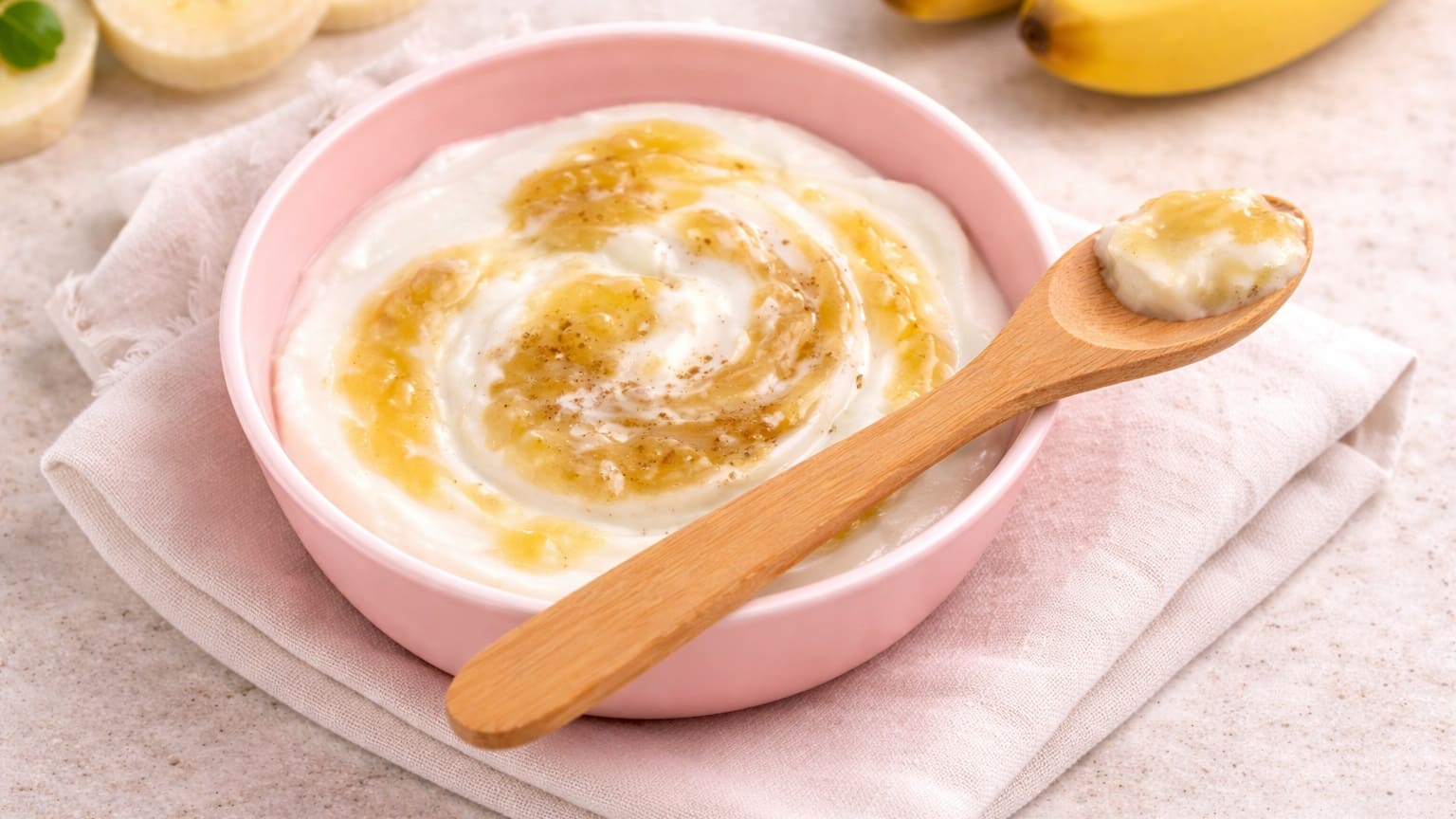
Full-Fat Yogurt with Mashed Banana
Prep: 3 min | Cook: 0 min | Serves: 1 baby portion (~4 oz)
Ingredients
| Ingredient | Amount |
|---|---|
| Plain whole-milk yogurt | 3 tablespoons (~45g) |
| Ripe banana | 1/4 medium, mashed (~30g) |
| Cinnamon | Tiny pinch (optional) |
Directions
- Spoon plain whole-milk yogurt into a small bowl.
- Mash the banana quarter with a fork until smooth.
- Stir the mashed banana into the yogurt until well combined.
- Add a tiny pinch of cinnamon if desired.
- Serve immediately at room temperature.
Key tip: Choose plain yogurt with no added sugar - the banana provides all the natural sweetness baby needs. Greek yogurt works well too and has extra protein, but regular whole-milk yogurt has a thinner texture some babies prefer.
Nutrient Card
Full-Fat Yogurt with Mashed Banana (per serving)
Calories: 55
Protein: 2.2g
Fat: 1.7g
  Saturated: 1.0g
Carbs: 8.8g
  Fiber: 0.8g
  Sugar: 6.5g
Sodium: ~25mg
Calcium: ~65mg
Potassium: ~175mg
Full Nutrition Breakdown
Here is the ingredient-by-ingredient nutrition breakdown for this probiotic-rich baby breakfast.
| Ingredient | Amount | Calories | Protein | Fat | Carbs | Fiber | Calcium |
|---|---|---|---|---|---|---|---|
| Whole-milk yogurt | 45g | 28 | 1.6g | 1.5g | 2.1g | 0g | 55mg |
| Banana (mashed) | 30g | 27 | 0.3g | 0.1g | 6.8g | 0.8g | 2mg |
| Cinnamon | pinch | 0 | 0g | 0g | 0g | 0g | 0mg |
| TOTAL | ~55 | ~2.2g | ~1.7g | ~8.8g | ~0.8g | ~65mg |
Note: Values vary by yogurt brand and banana ripeness. More ripe bananas have higher sugar content.
Where Your Calories Actually Come From
| Component | Calories | % of Total |
|---|---|---|
| Banana | ~27 | 49% |
| Whole-milk yogurt | ~28 | 51% |
An almost perfect 50/50 split between the two ingredients. The banana brings natural carb energy while the yogurt contributes protein and fat - a well-balanced combo.
Macro Split
| Macro | Grams | Calories from Macro | % of Total Calories |
|---|---|---|---|
| Protein | 2.2g | 9 cal | 16% |
| Fat | 1.7g | 15 cal | 27% |
| Carbs | 8.8g | 35 cal | 64% |
| Fiber | 0.8g | - | - |
This is a lighter, carb-forward meal that works well as a breakfast starter. The natural sugars from banana provide quick energy, while yogurt fat and protein give it staying power. If baby needs more calories, adding a drizzle of nut butter or olive oil shifts the ratio toward more fat.
Health Benefits at a Glance
| Ingredient | Key Nutrient/Compound | What Research Says |
|---|---|---|
| Whole-milk yogurt | Probiotics (Live cultures) | Yogurt contains live bacterial cultures (Lactobacillus, Streptococcus thermophilus) that research links to improved gut health and immune function. Studies in the Journal of Pediatric Gastroenterology and Nutrition show that early probiotic exposure may reduce the incidence of eczema and digestive discomfort in infants. The culturing process also pre-digests lactose, making it gentler on baby's tummy than plain cow's milk. |
| Whole-milk yogurt | Calcium + Phosphorus | These minerals work together to build strong bones and teeth - critical during the rapid skeletal growth of the first year. A 3-tablespoon serving provides about 8-10% of a baby's daily calcium needs. |
| Banana | Potassium + Vitamin B6 | Bananas are one of the best natural sources of potassium, which supports healthy heart rhythm and muscle function. Vitamin B6 aids in brain development and helps the body convert food into energy. Research suggests adequate B6 intake supports healthy sleep patterns in infants. |
| Cinnamon (optional) | Cinnamaldehyde | In tiny amounts, cinnamon has been traditionally used to soothe digestive discomfort. Research suggests it has mild antimicrobial properties. It also introduces baby to warm spice flavors, supporting palate development. |
A gentle, easy-to-digest meal that introduces beneficial bacteria to baby's developing gut microbiome. The combination of probiotics from yogurt and prebiotic fiber from banana creates a synbiotic effect - feeding the good bacteria as you introduce them. Especially good for babies prone to constipation or digestive sensitivity.
Smarter Swaps (With Real Numbers)
Swap 1: Use Greek yogurt for extra protein
| Version | Calories | Protein | Fat |
|---|---|---|---|
| Regular whole-milk yogurt | 55 cal | 2.2g | 1.7g |
| Greek whole-milk yogurt | 62 cal | 3.8g | 2.2g |
Swap 2: Replace banana with stewed apple for less sugar
| Version | Calories | Sugar | Fiber |
|---|---|---|---|
| With banana (1/4 medium) | 55 cal | 6.5g | 0.8g |
| With stewed apple (2 tbsp) | 44 cal | 3.8g | 0.5g |
Swap 3: Add 1/2 tsp ground flaxseed for omega-3
| Version | Calories | Omega-3 | Fiber |
|---|---|---|---|
| Original | 55 cal | Minimal | 0.8g |
| + 1/2 tsp flaxseed | 64 cal | ~190mg ALA | 1.2g |
Fit It Into Your Baby's Day
| Daily Calorie Context | Recipe % of Day | What That Means |
|---|---|---|
| 600 cal/day (smaller baby) | 9% | A light breakfast - good alongside a milk feed |
| 700 cal/day (average 7-month) | 8% | Works as breakfast or an afternoon snack |
| 800 cal/day (larger/active baby) | 7% | Pair with toast fingers or egg for a fuller meal |
Common Pairings and What They Add
| Side | Calories | Running Total |
|---|---|---|
| Yogurt + banana alone | 55 cal | 55 cal |
| + 1 scrambled egg yolk | +55 cal | 110 cal |
| + 1 tbsp smooth peanut butter | +94 cal | 149 cal |
| + 2 tbsp mashed avocado | +48 cal | 103 cal |
Pairing this with an egg yolk or nut butter turns a light snack into a complete, calorie-dense breakfast for baby.
How It Compares
| Version | Calories | Protein | Fat | Carbs |
|---|---|---|---|---|
| This homemade yogurt + banana | 55 | 2.2g | 1.7g | 8.8g |
| Store-bought baby yogurt pouch | 60 | 1.5g | 1.0g | 11.0g |
| Plain banana puree | 27 | 0.3g | 0.1g | 6.8g |
| Baby rice cereal with formula | 45 | 1.5g | 1.0g | 8.0g |
The homemade version has more protein and less sugar than store-bought baby yogurt pouches, which often contain added fruit concentrates and sweeteners. You control exactly what goes in.
A Note for Parents
Dairy is a common allergen. When introducing yogurt for the first time, start with a small amount and monitor for any reaction. Choose plain yogurt with live active cultures and no added sugar. Cow's milk yogurt is safe from around 6 months as a food, even though cow's milk as a drink is not recommended until 12 months.
Related Breakdowns
If you enjoyed this breakdown, check out these related recipes:
- Banana and Peanut Butter Puree (Baby Breakfast) - Calorie & Ingredient Breakdown
- Chicken Souvlaki - Calorie & Ingredient Breakdown
- Iron-Rich Lentil Puree (Sweet Potato & Spinach) - Calorie & Ingredient Breakdown
- Steamed Broccoli and Cauliflower with Butter (Baby Dinner) - Calorie & Ingredient Breakdown
- Egg Yolk Mash with Avocado (Baby Breakfast) - Calorie & Ingredient Breakdown