
Banana and Peanut Butter Puree (Baby Breakfast) - Calorie & Ingredient Breakdown
Original recipe: Peanut Butter and Banana Puree - Organix by Organix
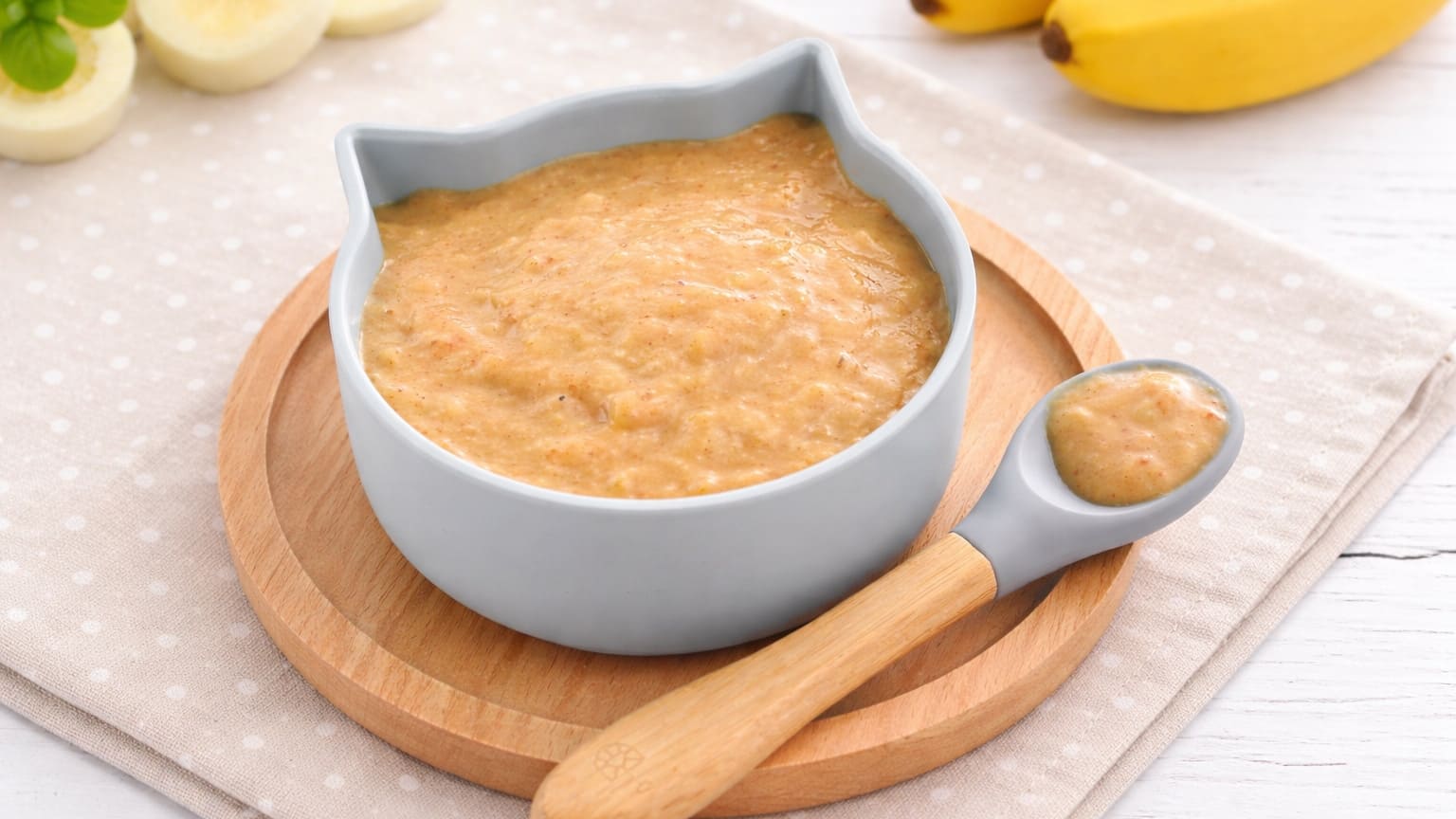
The Recipe
Banana and Peanut Butter Puree
Prep: 3 min | Cook: 0 min | Serves: 1 baby portion (~3 oz)
Ingredients
| Ingredient | Amount |
|---|---|
| Ripe banana | 1/4 medium, mashed (~30g) |
| Smooth peanut butter (no salt, no sugar) | 1/2 teaspoon (~3g) |
| Breast milk or formula | 1 tablespoon (optional, for texture) |
Directions
- Mash the banana quarter in a small bowl until very smooth.
- Add the smooth peanut butter and mix thoroughly until fully incorporated - no lumps.
- If needed, thin with a splash of breast milk or formula.
- Serve immediately at room temperature.
Key tip: Use a natural peanut butter with no added salt, sugar, or palm oil. The thin layer of peanut butter should be completely blended into the banana - never serve peanut butter in a glob, as it can be a choking hazard for babies.
Nutrient Card
Banana and Peanut Butter Puree (per serving)
Calories: 45
Protein: 1.1g
Fat: 1.6g
  Saturated: 0.3g
Carbs: 7.4g
  Fiber: 1.0g
  Sugar: 4.2g
Sodium: ~2mg
Potassium: ~140mg
Vitamin E: ~0.3mg
Full Nutrition Breakdown
Here is the ingredient-by-ingredient nutrition breakdown for this allergen-introduction breakfast.
| Ingredient | Amount | Calories | Protein | Fat | Carbs | Fiber | Iron |
|---|---|---|---|---|---|---|---|
| Banana (mashed) | 30g | 27 | 0.3g | 0.1g | 6.8g | 0.8g | 0.1mg |
| Peanut butter (smooth) | 3g | 18 | 0.8g | 1.5g | 0.6g | 0.2g | 0.02mg |
| TOTAL | ~45 | ~1.1g | ~1.6g | ~7.4g | ~1.0g | ~0.1mg |
Note: Nutrition varies by peanut butter brand. Values based on natural, unsalted smooth peanut butter. Breast milk/formula not included in totals as it is optional.
Where Your Calories Actually Come From
| Component | Calories | % of Total |
|---|---|---|
| Banana | ~27 | 60% |
| Peanut butter | ~18 | 40% |
The banana provides the bulk of calories through natural carbs, while the peanut butter packs a calorie punch from healthy fats and protein despite its small amount. Even half a teaspoon contributes meaningfully.
Macro Split
| Macro | Grams | Calories from Macro | % of Total Calories |
|---|---|---|---|
| Protein | 1.1g | 4 cal | 9% |
| Fat | 1.6g | 14 cal | 31% |
| Carbs | 7.4g | 30 cal | 67% |
| Fiber | 1.0g | - | - |
A carb-led meal with a good fat contribution from the peanut butter. This is a lighter portion designed for early allergen introduction. As baby tolerates peanut well, you can gradually increase the peanut butter amount to boost the protein and fat content.
Health Benefits at a Glance
| Ingredient | Key Nutrient/Compound | What Research Says |
|---|---|---|
| Peanut butter | Early allergen exposure | The landmark LEAP study (Learning Early About Peanut Allergy) published in the New England Journal of Medicine found that early, regular introduction of peanut in infancy reduced the risk of peanut allergy by up to 81% compared to avoidance. Current AAP and NIAID guidelines now recommend introducing peanut-containing foods from around 6 months. |
| Peanut butter | Vitamin E + Niacin | Peanuts are rich in vitamin E, a powerful antioxidant that supports skin health and immune function. Niacin (vitamin B3) aids in energy metabolism and nervous system development. Research links adequate niacin to healthy skin and brain function in growing infants. |
| Banana | Potassium + Resistant starch | Bananas provide potassium for heart and muscle function, plus resistant starch (especially in less-ripe bananas) that acts as a prebiotic to feed beneficial gut bacteria. Research in the British Journal of Nutrition links prebiotic intake to improved gut microbiome diversity in infants. |
| Banana | Vitamin B6 | B6 is essential for brain development and helps produce neurotransmitters like serotonin and dopamine. Research suggests adequate B6 supports healthy sleep-wake cycles in infants, which every parent can appreciate. |
This recipe serves a dual purpose - it is both a nutritious meal and an important allergen introduction tool. The LEAP study changed pediatric guidance worldwide, and regular peanut exposure from infancy is now considered one of the most effective allergy prevention strategies available.
Smarter Swaps (With Real Numbers)
Swap 1: Use almond butter instead for tree nut exposure
| Version | Calories | Protein | Benefit |
|---|---|---|---|
| Peanut butter (1/2 tsp) | 45 cal | 1.1g | Peanut allergen introduction |
| Almond butter (1/2 tsp) | 46 cal | 1.0g | Tree nut allergen introduction + more vitamin E |
Swap 2: Increase peanut butter to 1 tsp (after tolerance confirmed)
| Version | Calories | Protein | Fat |
|---|---|---|---|
| 1/2 tsp peanut butter | 45 cal | 1.1g | 1.6g |
| 1 tsp peanut butter | 63 cal | 1.9g | 3.1g |
Swap 3: Add 1 tbsp mashed avocado for extra fat
| Version | Calories | Fat | Benefit |
|---|---|---|---|
| Original | 45 cal | 1.6g | - |
| + 1 tbsp avocado | 69 cal | 3.8g | More monounsaturated fat for brain development |
Fit It Into Your Baby's Day
| Daily Calorie Context | Recipe % of Day | What That Means |
|---|---|---|
| 600 cal/day (smaller baby) | 8% | A light breakfast or snack - pair with yogurt |
| 700 cal/day (average 7-month) | 6% | Best as part of a larger breakfast |
| 800 cal/day (larger/active baby) | 6% | Combine with egg or yogurt for a full meal |
Common Pairings and What They Add
| Side | Calories | Running Total |
|---|---|---|
| Banana + PB alone | 45 cal | 45 cal |
| + 3 tbsp whole-milk yogurt | +28 cal | 73 cal |
| + 1 scrambled egg yolk | +55 cal | 100 cal |
| + 2 tbsp mashed avocado | +48 cal | 93 cal |
This is intentionally a lighter portion for allergen introduction. Once baby has confirmed peanut tolerance, increasing the peanut butter to a full teaspoon creates a more substantial meal.
How It Compares
| Version | Calories | Protein | Fat | Carbs |
|---|---|---|---|---|
| This banana + PB puree | 45 | 1.1g | 1.6g | 7.4g |
| Store-bought peanut puff snack | 25 | 1.0g | 1.0g | 3.0g |
| Plain banana puree | 27 | 0.3g | 0.1g | 6.8g |
| Banana + oatmeal puree | 55 | 1.5g | 0.5g | 11.0g |
This homemade version is a simple, no-cook option that delivers healthy fats and protein alongside the banana's natural energy, with complete control over peanut butter quality and amount.
A Note for Parents
Peanuts are one of the top allergens. If this is baby's first exposure to peanut, start with a very thin smear mixed thoroughly into the banana. Watch closely for 2 hours after feeding for any signs of allergic reaction (hives, swelling, vomiting, difficulty breathing). If your baby has severe eczema or an existing egg allergy, consult your pediatrician before introducing peanut. Call emergency services immediately if you observe signs of anaphylaxis.
Related Breakdowns
If you enjoyed this breakdown, check out these related recipes:
- Full-Fat Yogurt with Mashed Banana (Baby Breakfast) - Calorie & Ingredient Breakdown
- Iron-Rich Lentil Puree (Sweet Potato & Spinach) - Calorie & Ingredient Breakdown
- Pureed Chicken with Carrots and Peas (Baby Dinner) - Calorie & Ingredient Breakdown
- Butternut Squash and Spinach Puree with Olive Oil (Baby Dinner) - Calorie & Ingredient Breakdown
- Egg Yolk Mash with Avocado (Baby Breakfast) - Calorie & Ingredient Breakdown