
Shakshuka - Calorie & Ingredient Breakdown
Original recipe: Shakshuka - Downshiftology by Lisa Bryan
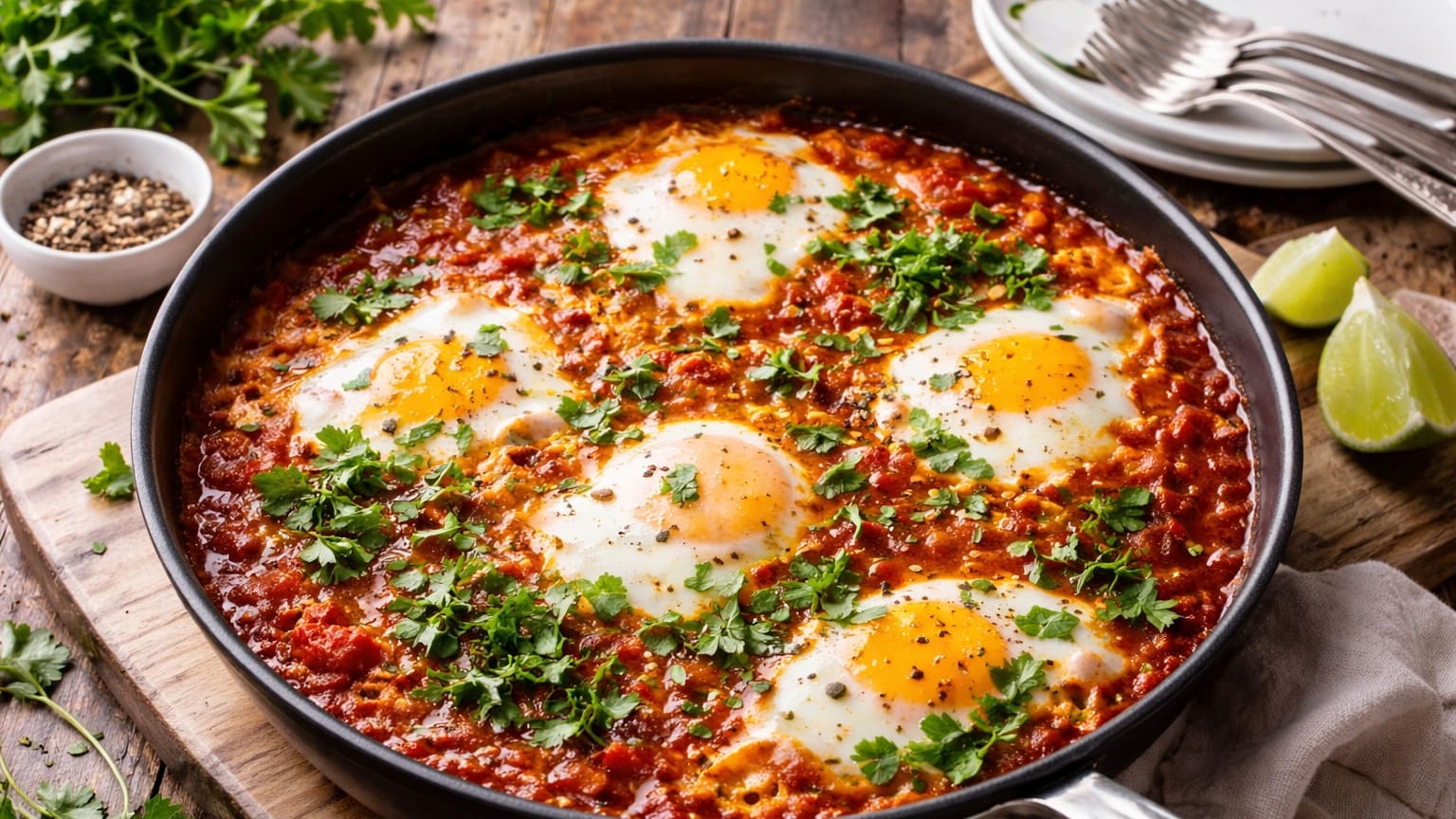
The Recipe
Shakshuka
Prep: 10 min | Cook: 20 min | Serves: 6
Ingredients
| Ingredient | Amount |
|---|---|
| Olive oil | 2 tablespoons |
| Onion, diced | 1 medium |
| Red bell pepper, diced | 1 |
| Garlic cloves, minced | 4 |
| Paprika | 2 teaspoons |
| Cumin | 1 teaspoon |
| Chili powder | 1/4 teaspoon |
| Whole peeled tomatoes (canned) | 28 ounces |
| Large eggs | 6 |
| Salt | To taste |
| Pepper | To taste |
| Fresh cilantro, chopped | 1 small bunch |
| Fresh parsley, chopped | 1 small bunch |
Directions
- Heat olive oil in a large sauté pan over medium heat.
- Add the diced bell pepper and onion, cooking for 5 minutes until onions become translucent.
- Add minced garlic and spices (paprika, cumin, chili powder), stirring for 1 minute until fragrant.
- Pour in the can of tomatoes with juice, breaking them down with a spoon.
- Season with salt and pepper, bringing the sauce to a simmer.
- Create small wells in the sauce with a spoon and crack eggs into each well.
- Cook eggs for 5-8 minutes until cooked to your preferred doneness.
- Garnish with chopped cilantro and parsley before serving.
Key tip: Make small wells in the simmering sauce before cracking eggs in to help them cook evenly and stay in place while poaching.
Nutrient Card
Shakshuka (per serving)
Calories: 146
Protein: 7g
Fat: 9g
  Saturated: 2g
Carbs: 10g
  Fiber: 2g
  Sugar: 5g
Sodium: ~256mg
Cholesterol: ~164mg
Full Nutrition Breakdown
This ingredient-by-ingredient breakdown shows where the calories and nutrients come from in each serving of this Mediterranean classic.
| Ingredient | Serving (per person) | Calories | Protein | Fat | Carbs | Fiber |
|---|---|---|---|---|---|---|
| Olive oil | 0.33 tbsp | 39 | 0g | 4.5g | 0g | 0g |
| Onion | 0.17 medium | 8 | 0.1g | 0g | 2g | 0.2g |
| Red bell pepper | 0.17 pepper | 5 | 0.2g | 0.1g | 1g | 0.2g |
| Garlic | 0.67 cloves | 3 | 0.1g | 0g | 0.7g | 0g |
| Paprika | 0.33 tsp | 3 | 0.1g | 0.1g | 0.6g | 0.1g |
| Cumin | 0.17 tsp | 2 | 0.1g | 0.1g | 0.3g | 0g |
| Chili powder | 0.04 tsp | 1 | 0g | 0g | 0.2g | 0g |
| Canned tomatoes | 4.67 oz | 15 | 0.7g | 0.1g | 3g | 0.6g |
| Large eggs | 1 egg | 70 | 6g | 5g | 0.4g | 0g |
| Cilantro | 0.17 bunch | 0.5 | 0g | 0g | 0.1g | 0g |
| Parsley | 0.17 bunch | 0.5 | 0g | 0g | 0.1g | 0g |
| TOTAL | ~146 | ~7g | ~9g | ~10g | ~2g |
Note: Nutrition data from USDA FoodData Central. Egg cooking method (poaching) does not add calories. Optional additions like feta cheese or olive oil drizzle will increase totals. Salt content varies by brand and personal taste preference.
Where Your Calories Actually Come From
| Component | Calories | % of Total |
|---|---|---|
| Eggs | 70 | 48% |
| Olive oil | 39 | 27% |
| Tomatoes | 15 | 10% |
| Vegetables & spices | 22 | 15% |
Nearly half the calories in shakshuka come from the protein-rich eggs, while the healthy monounsaturated fats from olive oil provide sustained energy. The rest is primarily nutrient-dense vegetables and aromatic spices with minimal caloric impact.
Macro Split
| Macro | Grams | Calories from Macro | % of Total Calories |
|---|---|---|---|
| Protein | 7g | 28 cal | 19% |
| Fat | 9g | 81 cal | 55% |
| Carbs | 10g | 40 cal | 27% |
| Fiber | 2g | - | - |
Shakshuka is a moderate-protein, higher-fat meal with balanced carbohydrates from vegetables and tomatoes. The fat profile is healthier than it appears, with mostly monounsaturated fats from olive oil. The fiber keeps you satisfied longer despite the relatively low carb count.
Health Benefits at a Glance
Shakshuka combines nutrient-dense eggs, lycopene-rich tomatoes, and anti-inflammatory spices into one satisfying meal. Research suggests this combination supports cardiovascular health, stable energy, and sustained fullness.
| Ingredient | Key Nutrient/Compound | What Research Says |
|---|---|---|
| Eggs | Choline & lutein | Linked to brain health and eye protection. Daily egg consumption is associated with improved cognitive function and may reduce age-related macular degeneration risk. Practical benefit: supports focus and mental clarity. |
| Tomatoes | Lycopene | Research suggests lycopene (especially when cooked) may reduce prostate cancer risk and support heart health. Studies show cooked tomato products provide more bioavailable lycopene than raw. Practical benefit: heart protection and cellular defense. |
| Garlic | Allicin | Research indicates garlic compounds may help regulate blood pressure and cholesterol levels. Studies suggest 1-2 cloves daily supports immune function. Practical benefit: natural immune support and cardiovascular health. |
| Red bell peppers | Vitamin C & capsaicinoids | One pepper provides over 150% of daily vitamin C, which supports collagen production and immune function. Capsaicinoids may slightly boost metabolism. Practical benefit: skin health and immune support. |
| Cumin & paprika | Antioxidants | These spices contain compounds linked to reduced inflammation and better glucose control. Research suggests spice-rich diets correlate with lower insulin resistance. Practical benefit: stable blood sugar and anti-inflammatory effects. |
Shakshuka is ideal for anyone seeking a protein-rich breakfast that keeps you satisfied until lunch. It's perfect for those following Mediterranean diet principles, managing blood sugar naturally, or looking for nutrient-dense vegetarian meals. The combination of complete protein (eggs) and fiber-rich vegetables makes this a nutritionist-approved choice.
Smarter Swaps (With Real Numbers)
Swap 1: Reduce Eggs (Weight Loss Friendly)
| Version | Calories | Protein | Fat | Carbs |
|---|---|---|---|---|
| Standard (6 eggs) | 146 | 7g | 9g | 10g |
| Lighter (4 eggs + 2 egg whites) | 108 | 8g | 5.5g | 10g |
| Savings per serving | -38 cal | +1g | -3.5g | Same |
Using mostly egg whites reduces calories while maintaining protein. You get a lighter meal without sacrificing the hearty feel.
Swap 2: Use Fresh Tomatoes & Less Oil
| Version | Calories | Protein | Fat | Carbs |
|---|---|---|---|---|
| Standard (canned, 2 tbsp oil) | 146 | 7g | 9g | 10g |
| Fresh tomatoes, 1 tbsp oil | 110 | 7g | 5.5g | 11g |
| Savings per serving | -36 cal | Same | -3.5g | +1g |
Fresh tomatoes have more water content, reducing concentrated calories. Using half the oil still allows good flavor without excess fat.
Swap 3: Add Vegetables (Volume & Nutrients)
| Version | Calories | Protein | Fat | Carbs |
|---|---|---|---|---|
| Standard | 146 | 7g | 9g | 10g |
| + 1/2 cup spinach + mushrooms | 165 | 8.5g | 9g | 14g |
| Increase per serving | +19 cal | +1.5g | Same | +4g |
Adding leafy greens and mushrooms increases satiety and micronutrients with minimal calorie impact. You feel fuller longer for just 19 extra calories.
Swap 4: Add Feta Cheese (Flavor Boost)
| Version | Calories | Protein | Fat | Carbs |
|---|---|---|---|---|
| Standard (no cheese) | 146 | 7g | 9g | 10g |
| + 2 tbsp crumbled feta | 185 | 9g | 14g | 11g |
| Increase per serving | +39 cal | +2g | +5g | +1g |
Feta adds tangy flavor and extra protein but increases saturated fat. Use sparingly if watching fat intake.
The Ultra-Lean Stack: All Swaps Combined
| Element | Details |
|---|---|
| Base | 4 eggs + 2 egg whites |
| Oil | 1 tablespoon olive oil |
| Tomatoes | Fresh (12 oz) instead of canned |
| Additions | 1/2 cup spinach + 1/4 cup mushrooms |
| Total Calories | ~138 |
| Protein | ~9g |
| Fat | ~5.5g |
| Carbs | ~16g |
This leaner version maintains the satisfying, vegetable-forward nature of shakshuka while trimming 8 calories and 3.5g fat. It actually has more protein and fiber due to added vegetables.
Fit It Into Your Day
| Daily Target | Recipe % of Day | Remaining Calories | What That Leaves You |
|---|---|---|---|
| 1,500 cal | 10% | 1,354 cal | Perfect light breakfast; budget 500-600 cal for lunch, 400-500 for dinner, 150-200 for snacks |
| 2,000 cal | 7% | 1,854 cal | Light start to your day; easily fits into any meal pattern |
| 2,500 cal | 6% | 2,354 cal | Minimal impact; room for a larger lunch or two snacks |
| 3,000 cal | 5% | 2,854 cal | Excellent choice for athletic recovery or high-activity days |
Common Pairings and What They Add
| Side | Calories | Running Total |
|---|---|---|
| Shakshuka (base) | 146 | 146 |
| + 1 slice whole wheat pita | 85 | 231 |
| + 1/2 cup hummus | 200 | 431 |
| + 1 cup fresh fruit (berries/citrus) | 50-80 | 196-226 |
| + Greek yogurt (6 oz, plain) | 100 | 246 |
Shakshuka pairs beautifully with pita bread for scooping (adds 85 cal) or fresh fruit on the side (adds 50-80 cal). A full Mediterranean breakfast with pita and fresh juice totals around 280-300 calories.
How It Compares
| Version | Calories | Protein | Fat | Carbs |
|---|---|---|---|---|
| Traditional shakshuka (this recipe) | 146 | 7g | 9g | 10g |
| Shakshuka with feta & pita | 270 | 11g | 14g | 28g |
| Scrambled eggs with toast | 250 | 10g | 15g | 20g |
| Oatmeal with berries | 280 | 8g | 6g | 47g |
| Greek yogurt parfait | 220 | 12g | 5g | 28g |
Shakshuka is one of the lowest-calorie, highest-protein breakfast options available. Unlike carb-heavy oatmeal or granola, it keeps you satisfied with minimal blood sugar impact. Compared to scrambled eggs, shakshuka adds fiber and lycopene from tomatoes with essentially the same protein.
Related Breakdowns
If you enjoyed this breakdown, check out these related recipes:
- Lomo Saltado (Peruvian Beef Stir-Fry) - Calorie & Ingredient Breakdown
- Doro Wat (Ethiopian Chicken Stew) - Calorie & Ingredient Breakdown
- Beef and Broccoli Stir-Fry - Calorie & Ingredient Breakdown
- Butter Chicken - Calorie & Ingredient Breakdown
- Egg Yolk Mash with Avocado (Baby Breakfast) - Calorie & Ingredient Breakdown
Recipe from Downshiftology by Lisa Bryan. Nutrition data sourced from USDA FoodData Central. Individual results vary by brand, cooking method, and portion accuracy. When in doubt, weigh your ingredients.