
Doro Wat (Ethiopian Chicken Stew) - Calorie & Ingredient Breakdown
Original recipe: Doro Wat - Chef Lola's Kitchen by Lola Osinkolu
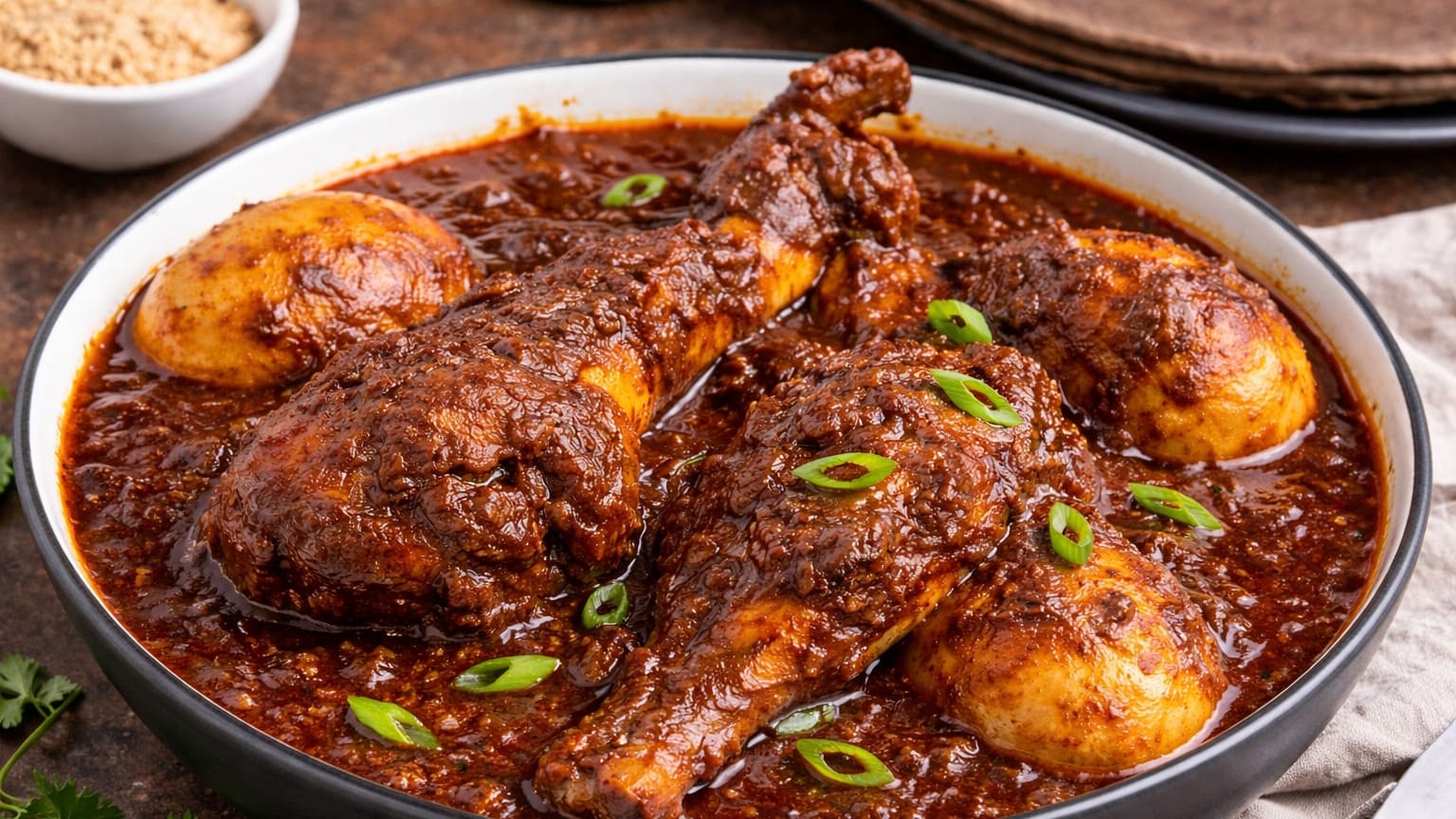
The Recipe
Doro Wat (Ethiopian Chicken Stew)
Prep: 15 min | Cook: 2 hours | Serves: 8
Ingredients
| Ingredient | Amount |
|---|---|
| Red onions, finely diced | 4 medium |
| Chicken (skinless legs and thighs) | 4 pounds |
| Vegetable oil | 3/4 to 1 cup |
| Niter kibbeh (Ethiopian spiced butter) | 2 tablespoons |
| Tomato paste | 2 tablespoons |
| Hard-boiled eggs | 6 |
| Garlic, minced | 2 tablespoons |
| Ginger, grated | 2 tablespoons |
| Water | 1/4 cup |
| Salt | To taste |
| Berbere spice | 1/2 cup |
| Vinegar (for cleaning chicken) | 1 cup |
Directions
- Clean the chicken and soak in water and vinegar mixture. Rinse and drain when ready to use.
- Boil the eggs, peel, and set aside.
- Finely dice the onions using a food processor or knife.
- Add onions to a pot over low-medium heat, stirring for 30-40 minutes until light pink, sweating out water as they caramelize.
- Stir in oil, minced garlic, ginger, salt, and berbere spice. Mix well.
- Add niter kibbeh (spiced butter) and tomato paste, stirring to combine.
- Slash the chicken in 2-3 places and add to the stew. Stir to coat.
- Add 1/4 cup water and cook on medium heat for 30-40 minutes, stirring occasionally until chicken is tender and stew thickens.
- Stir in hard-boiled eggs and cook for 15-20 minutes more.
- Serve over injera bread or rice.
Key tip: Don't rush the onion caramelization step - this takes 30-40 minutes and builds the deep, complex flavor base that makes doro wat distinctive.
Nutrient Card
Doro Wat (per serving)
Calories: 402
Protein: 26g
Fat: 23g
  Saturated: 8g
Carbs: 12g
  Fiber: 6g
  Sugar: 3g
Sodium: ~1,605mg
Cholesterol: ~229mg
Full Nutrition Breakdown
This ingredient-by-ingredient breakdown reveals where the substantial calories and protein in this Ethiopian stew come from - dominated by the chicken and oil needed to build the rich sauce base.
| Ingredient | Serving (per person) | Calories | Protein | Fat | Carbs | Fiber |
|---|---|---|---|---|---|---|
| Chicken (skinless legs) | 0.5 lb | 280 | 32g | 15g | 0g | 0g |
| Vegetable oil | 1.5 tbsp | 90 | 0g | 10g | 0g | 0g |
| Onions | 0.5 medium | 11 | 0.3g | 0.1g | 2.5g | 0.4g |
| Niter kibbeh | 0.25 tbsp | 11 | 0g | 1.2g | 0g | 0g |
| Tomato paste | 0.25 tbsp | 4 | 0.2g | 0g | 0.8g | 0.2g |
| Hard-boiled egg | 0.75 egg | 53 | 4.5g | 4g | 0.3g | 0g |
| Garlic | 0.25 tbsp | 2 | 0.1g | 0g | 0.5g | 0g |
| Ginger | 0.25 tbsp | 1 | 0g | 0g | 0.2g | 0g |
| Berbere spice | 0.06 cup | 8 | 0.3g | 0.2g | 1.5g | 0.5g |
| TOTAL | ~402 | ~26g | ~23g | ~12g | ~6g |
Note: Nutrition based on USDA FoodData Central and recipe yields. The long slow cooking process breaks down vegetables and collagen in chicken, improving nutrient bioavailability. Actual sodium will vary based on salt added and berbere spice brand used.
Where Your Calories Actually Come From
| Component | Calories | % of Total |
|---|---|---|
| Chicken | 280 | 70% |
| Oil | 90 | 22% |
| Eggs | 53 | 13% |
| Spices, onions & tomato paste | 11 | 3% |
Doro wat derives its calories primarily from protein-rich chicken and the cooking oil used to develop the deeply flavored sauce base. This is fundamentally a high-protein, high-fat stew with minimal carbohydrates - typical of protein-forward Ethiopian dishes.
Macro Split
| Macro | Grams | Calories from Macro | % of Total Calories |
|---|---|---|---|
| Protein | 26g | 104 cal | 26% |
| Fat | 23g | 207 cal | 51% |
| Carbs | 12g | 48 cal | 12% |
| Fiber | 6g | - | - |
Doro wat is a high-fat, high-protein stew reflecting traditional Ethiopian cooking. The protein content is exceptional (26g per serving), while fat comes from cooking oil and chicken skin alternatives. Carbohydrates are minimal and primarily from onions and spices. The 6g fiber comes from these same ingredients plus the spice blend's ground chili and aromatics.
Health Benefits at a Glance
Doro wat combines slow-cooked chicken, aromatic spices, and caramelized onions into a deeply nourishing stew. The unique spice blend (berbere) contains compounds linked to anti-inflammatory effects, improved digestion, and metabolic benefits. Traditional preparation methods maximize nutrient availability.
| Ingredient | Key Nutrient/Compound | What Research Says |
|---|---|---|
| Chicken (slow-cooked) | Amino acids & collagen | Research shows slow-cooking poultry breaks down collagen into bioavailable gelatin, supporting joint and gut health. Bone broth studies suggest benefits for collagen synthesis and intestinal permeability. Practical benefit: improved joint flexibility and skin elasticity. |
| Berbere spice | Capsaicinoids & piperine | Studies indicate chili peppers (main ingredient) boost metabolism by 3-5% and may reduce appetite. Fenugreek and cardamom (also in berbere) linked to improved blood sugar control. Practical benefit: natural appetite suppression and stable energy levels. |
| Onions (caramelized) | Quercetin & sulfur compounds | Research suggests caramelized onions may have stronger antioxidant properties than raw onions. Sulfur compounds support detoxification pathways and may reduce inflammation. Practical benefit: anti-inflammatory effects and liver support. |
| Ginger | Gingerols & shogaols | Studies indicate ginger reduces nausea, aids digestion, and decreases inflammation markers. Ginger may improve nutrient absorption in the gut. Practical benefit: improved digestion and reduced bloating. |
| Garlic | Allicin | Research shows aged garlic has cardiovascular benefits and may support immune function. Studies suggest garlic reduces cholesterol and blood pressure in regular consumers. Practical benefit: natural immune support and heart health. |
Doro wat is ideal for anyone seeking a deeply satisfying protein-rich meal with immune-supporting spices. It's excellent for those following ancestral or traditional diets, managing blood sugar with protein and fiber, or seeking anti-inflammatory meals. The high protein content (26g) makes it perfect for muscle recovery and sustained satiety.
Smarter Swaps (With Real Numbers)
Swap 1: Reduce Oil (Lighter Version)
| Version | Calories | Protein | Fat | Carbs |
|---|---|---|---|---|
| Standard (3/4-1 cup oil) | 402 | 26g | 23g | 12g |
| Reduced oil (1/2 cup) | 355 | 26g | 18g | 12g |
| Savings per serving | -47 cal | Same | -5g | Same |
Using less cooking oil reduces calories while maintaining the essential flavor development. The caramelized onions provide plenty of flavor without requiring maximum oil.
Swap 2: Use Skinless Chicken Breasts
| Version | Calories | Protein | Fat | Carbs |
|---|---|---|---|---|
| Standard (legs & thighs with skin) | 402 | 26g | 23g | 12g |
| Skinless breasts | 360 | 32g | 12g | 12g |
| Difference | -42 cal | +6g | -11g | Same |
Chicken breasts are leaner but contain more protein per ounce. The flavor will be slightly lighter, so consider adding extra ginger or garlic to compensate.
Swap 3: Add More Vegetables
| Version | Calories | Protein | Fat | Carbs |
|---|---|---|---|---|
| Standard | 402 | 26g | 23g | 12g |
| + 1 cup carrots & sweet potatoes | 442 | 27g | 23g | 22g |
| Increase per serving | +40 cal | +1g | Same | +10g |
Adding root vegetables increases satiety and fiber without requiring additional oil. You get more volume for minimal calorie increase.
Swap 4: Use Coconut Milk Instead of Oil
| Version | Calories | Protein | Fat | Carbs |
|---|---|---|---|---|
| Standard (oil-based) | 402 | 26g | 23g | 12g |
| Coconut milk (1 can) | 425 | 26g | 25g | 14g |
| Difference per serving | +23 cal | Same | +2g | +2g |
Coconut milk provides similar richness with slightly different flavor. Use full-fat coconut milk (1 can per 8 servings) as a 1-to-1 replacement for some of the oil.
The Ultra-Lean Stack: All Swaps Combined
| Element | Details |
|---|---|
| Base | Skinless chicken breasts |
| Oil | Reduced to 1/2 cup |
| Additions | 1 cup carrots + sweet potatoes |
| Eggs | Reduce to 4 (or use egg whites for 2) |
| Total Calories | ~340 |
| Protein | ~32g |
| Fat | ~15g |
| Carbs | ~18g |
This leaner version saves 62 calories while gaining 6g protein. The added vegetables increase fiber to 8g and create more volume for better satiety.
Fit It Into Your Day
| Daily Target | Recipe % of Day | Remaining Calories | What That Leaves You |
|---|---|---|---|
| 1,500 cal | 27% | 1,098 cal | Substantial meal; plan lighter breakfast (300-400 cal) and evening snacks carefully |
| 2,000 cal | 20% | 1,598 cal | Good main meal; room for other courses and snacks |
| 2,500 cal | 16% | 2,098 cal | Flexible fit; pairs well with side dishes and multiple meals |
| 3,000 cal | 13% | 2,598 cal | Minimal impact; perfect for active individuals or athletes |
Common Pairings and What They Add
| Side | Calories | Running Total |
|---|---|---|
| Doro wat (1 serving) | 402 | 402 |
| + Injera bread (2 pieces) | 240 | 642 |
| + Mixed greens salad (dressed) | 80 | 722 |
| + Tej (Ethiopian honey wine, 4 oz) | 120 | 822 |
| + Shiro (chickpea sauce, 1/2 cup) | 180 | 582 |
A traditional Ethiopian meal with doro wat plus injera and a vegetable side totals around 600-700 calories. Adding honey wine or additional sides brings a full meal to 700-850 calories.
How It Compares
| Version | Calories | Protein | Fat | Carbs |
|---|---|---|---|---|
| Traditional doro wat (this recipe) | 402 | 26g | 23g | 12g |
| Doro wat with rice (1 cup) | 550 | 28g | 23g | 60g |
| Chicken curry (Thai-style) | 380 | 24g | 18g | 16g |
| Beef stew (traditional) | 420 | 28g | 18g | 22g |
| Grilled chicken with vegetables | 350 | 35g | 12g | 10g |
Doro wat is comparable in calories to a beef stew but delivers more protein thanks to the hard-boiled eggs. Compared to a grilled chicken plate, it has similar protein but significantly more fat from cooking oil - this is the trade-off for the complex, developed spice flavor that defines Ethiopian cuisine.
Smart Ingredient Spotlight: Berbere Spice
Berbere (the signature spice blend) is a powerful anti-inflammatory tool. Made from chili peppers, fenugreek, cardamom, and other aromatics, it delivers:
- Capsaicinoids: Proven to increase fat oxidation and reduce appetite
- Fenugreek: May improve insulin sensitivity and blood glucose control
- Cardamom: Supports digestion and may have antimicrobial properties
Using traditional African spices builds health benefits beyond basic nutrition. A 1/2 cup berbere contains more antioxidants than many vegetables gram-for-gram.
Related Breakdowns
If you enjoyed this breakdown, check out these related recipes:
- Butter Chicken - Calorie & Ingredient Breakdown
- Jerk Chicken - Calorie & Ingredient Breakdown
- Spicy Shoyu Ramen - Calorie & Ingredient Breakdown
- Shakshuka - Calorie & Ingredient Breakdown
- Beef and Broccoli Stir-Fry - Calorie & Ingredient Breakdown
Recipe from Chef Lola's Kitchen by Lola Osinkolu. Nutrition data sourced from USDA FoodData Central. Individual results vary by brand, cooking method, and spice blend strength. When in doubt, weigh your ingredients.