
Pad Thai - Calorie & Ingredient Breakdown
Original recipe: Pad Thai - The Woks of Life by Kaitlin
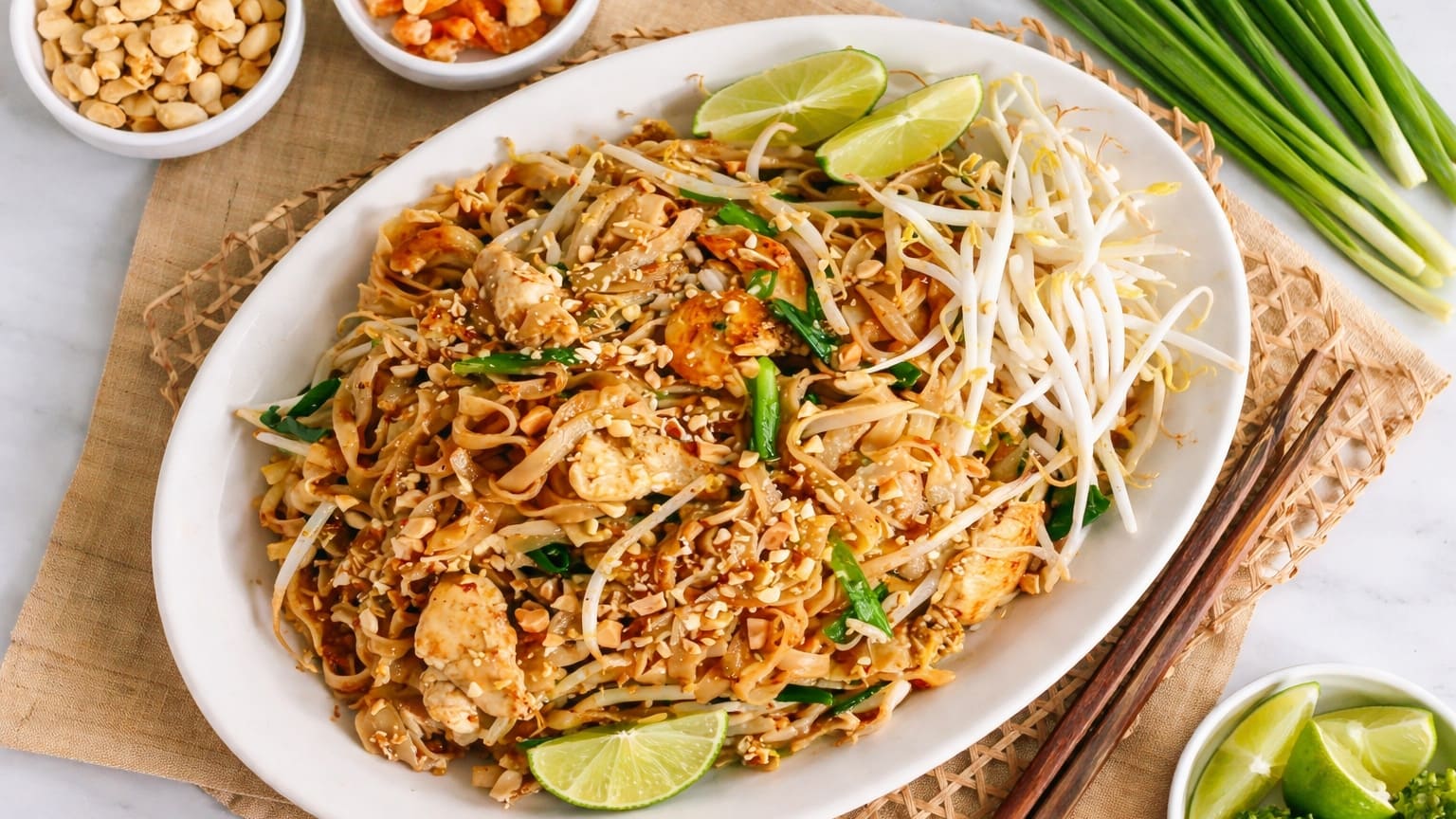
The Recipe
Pad Thai
Prep: 40 min | Cook: 10 min | Serves: 4
Ingredients
| Ingredient | Amount |
|---|---|
| Dried Pad Thai rice noodles | 8 oz |
| Chicken breast (thinly sliced) | 8 oz |
| Tamarind pulp | 1.5 oz |
| Dark brown sugar | 3 tbsp |
| Fish sauce | 3 tbsp |
| Thai black soy sauce | 2 tbsp |
| Thai sweet soy sauce | 1 tsp |
| White pepper | 1/4 tsp |
| Dried shrimp (minced) | 1/4 cup |
| Garlic (sliced) | 3 cloves |
| Shallots (thinly sliced) | 2 large |
| Preserved Thai salted radish | 2 tbsp |
| Eggs (beaten) | 3 large |
| Mung bean sprouts | 2 cups |
| Chinese garlic chives | 1 cup |
| Roasted peanuts (finely chopped) | 2 tbsp |
| Vegetable oil | 6 tbsp |
| Lime wedges | For serving |
Directions
- Soak tamarind pulp in 1/2 cup boiling water for 10 minutes, then strain through a fine sieve to extract the pulp, discarding seeds and fibers.
- In a bowl, mix tamarind liquid, brown sugar, fish sauce, black soy sauce, sweet soy sauce, and white pepper until sugar dissolves completely.
- Toss chicken breast slices with thin soy sauce and cornstarch; let sit for 10 minutes.
- Soak dried rice noodles in room-temperature water for 30-40 minutes until pliable but still firm, then drain well.
- Heat 3 tbsp oil in a large wok over high heat; sear marinated chicken until cooked through (about 3-4 minutes), then set aside.
- Add remaining 3 tbsp oil to the wok and stir-fry garlic, shallots, and preserved radish for 30 seconds until fragrant.
- Pour beaten eggs into the center and scramble lightly, then add drained noodles and sauce; toss continuously for 2-3 minutes until noodles absorb the sauce.
- Return chicken to the wok, add bean sprouts and garlic chives, toss for 1 minute, then plate and garnish with peanuts and lime wedges.
Key tip: Don't oversoak the noodles - they should still have a slight firmness before cooking, as they'll soften further in the wok with the sauce.
Nutrient Card
Pad Thai (per serving)
Calories: 485
Protein: 28g
Fat: 18g
  Saturated: 3.2g
Carbs: 54g
  Fiber: 4g
  Sugar: 11g
Sodium: ~1,240mg
Cholesterol: ~95mg
Full Nutrition Breakdown
Here's the ingredient-by-ingredient calorie and macronutrient breakdown for one serving of Pad Thai:
| Ingredient | Serving (per person) | Calories | Protein | Fat | Carbs | Fiber |
|---|---|---|---|---|---|---|
| Dried rice noodles | 2 oz | 190 | 3.5g | 0.4g | 43g | 1.2g |
| Chicken breast | 2 oz | 55 | 12g | 1.2g | 0g | 0g |
| Tamarind pulp | 0.4 oz | 28 | 0.3g | 0.1g | 7.2g | 0.8g |
| Dark brown sugar | 0.75 tbsp | 48 | 0g | 0g | 12.4g | 0g |
| Fish sauce | 0.75 tbsp | 18 | 3g | 0g | 1.2g | 0g |
| Dried shrimp | 1 tbsp | 32 | 6.2g | 0.5g | 0.8g | 0g |
| Garlic | 1 clove | 4 | 0.2g | 0g | 1g | 0.1g |
| Shallots | 0.5 large | 10 | 0.3g | 0.05g | 2.3g | 0.3g |
| Preserved radish | 0.5 tbsp | 5 | 0.4g | 0.1g | 0.6g | 0.1g |
| Eggs | 0.75 large | 56 | 5g | 4.3g | 0.4g | 0g |
| Mung bean sprouts | 0.5 cup | 8 | 1.2g | 0.1g | 1.4g | 0.8g |
| Garlic chives | 0.25 cup | 6 | 0.6g | 0.1g | 1.2g | 0.6g |
| Roasted peanuts | 0.5 tbsp | 44 | 1.8g | 3.8g | 1.6g | 0.8g |
| Vegetable oil | 1.5 tbsp | 180 | 0g | 20.4g | 0g | 0g |
| TOTAL | ~485 | ~28g | ~18g | ~54g | ~4g |
Note: Nutrition values calculated from USDA FoodData Central using standard serving sizes. Actual values vary by brand and cooking method. Fish sauce and soy sauce contribute significant sodium; fresh lime adds vitamin C. Tamarind provides tartaric acid and antioxidants.
Where Your Calories Actually Come From
| Component | Calories | % of Total |
|---|---|---|
| Noodles | 190 | 39% |
| Vegetable oil | 180 | 37% |
| Eggs | 56 | 12% |
| Chicken | 55 | 11% |
| Shrimp & seasonings | 55 | 1% |
The bulk of Pad Thai's calories come from two sources: the rice noodles (which provide the carbohydrate backbone) and the cooking oil (which creates the silky texture). The protein contributions from chicken, eggs, and dried shrimp are meaningful but modest relative to the overall energy density.
Macro Split
| Macro | Grams | Calories from Macro | % of Total Calories |
|---|---|---|---|
| Protein | 28g | 112 cal | 23% |
| Fat | 18g | 162 cal | 33% |
| Carbs | 54g | 216 cal | 44% |
| Fiber | 4g | - | - |
Pad Thai is a moderately balanced dish, with carbs as the dominant macro (mostly from noodles), followed by fat (from oil and eggs) and protein (from chicken, shrimp, and eggs). The 4g of fiber helps with satiety, though a side vegetable would boost this further.
Health Benefits at a Glance
| Ingredient | Key Nutrient/Compound | What Research Says |
|---|---|---|
| Mung bean sprouts | Folate & antioxidants | Research suggests sprouts contain high levels of folate (B vitamin) linked to energy metabolism and mental focus. Antioxidants may support immune function and reduce inflammation. Practically: a good source of plant-based vitamins without many calories. |
| Tamarind | Tartaric acid & polyphenols | Studies show tamarind's tartaric acid supports digestive health and may aid nutrient absorption. Polyphenol content is linked to antioxidant activity. Practically: supports gut health and may help your body absorb iron and other minerals from the meal. |
| Garlic & shallots | Allicin & organosulfur compounds | Research indicates these compounds have anti-inflammatory and potential immune-supporting properties. Linked to cardiovascular health in regular consumption. Practically: may help reduce inflammation and support heart health over time. |
| Eggs | Choline & lutein | Eggs are rich in choline, essential for brain function and memory. Lutein supports eye health. Research shows egg consumption is linked to improved cognitive function. Practically: supports focus and vision, plus provides complete protein. |
| Dried shrimp | Astaxanthin & selenium | These crustaceans contain astaxanthin, a powerful antioxidant linked to skin elasticity and joint health. Selenium supports thyroid function. Practically: the umami-rich powder provides protein and micronutrients without needing whole shrimp. |
Pad Thai is ideal for those seeking a balanced, flavorful meal with protein, carbs, and diverse phytonutrients. The combination of fermented (fish sauce) and fresh (sprouts, herbs) elements supports a healthy microbiome. It's satisfying enough for lunch or dinner and flexible enough for various dietary preferences.
Smarter Swaps (With Real Numbers)
Swap 1: Brown Rice Noodles Instead of White Rice Noodles
| Metric | White Rice Noodles | Brown Rice Noodles | Difference |
|---|---|---|---|
| Per serving | 2 oz | 2 oz | - |
| Calories | 190 | 185 | -5 |
| Fiber | 1.2g | 2.8g | +1.6g |
| Protein | 3.5g | 4.2g | +0.7g |
Brown rice noodles add minimal calorie difference but nearly double the fiber content for better satiety and blood sugar stability.
Swap 2: Extra-Firm Tofu Instead of Chicken
| Metric | Chicken (2 oz) | Extra-firm Tofu (2.5 oz) | Difference |
|---|---|---|---|
| Calories | 55 | 58 | +3 |
| Protein | 12g | 7g | -5g |
| Fat | 1.2g | 3.2g | +2g |
Tofu offers a lighter fat profile and works well for vegetarians, though chicken provides more protein. If using tofu, you might add an extra egg for more protein.
Swap 3: Almond Butter Instead of Peanuts
| Metric | Peanuts (0.5 tbsp) | Almond Butter (0.5 tbsp) | Difference |
|---|---|---|---|
| Calories | 44 | 48 | +4 |
| Protein | 1.8g | 1.7g | -0.1g |
| Fiber | 0.8g | 1.1g | +0.3g |
| Magnesium | 25mg | 42mg | +17mg |
Almond butter provides slightly more magnesium (great for muscle recovery and sleep) with nearly identical calories and protein.
Swap 4: Coconut Aminos Instead of Fish Sauce
| Metric | Fish Sauce (0.75 tbsp) | Coconut Aminos (0.75 tbsp) | Difference |
|---|---|---|---|
| Calories | 18 | 12 | -6 |
| Sodium | 800mg | 290mg | -510mg |
| Protein | 3g | 0g | -3g |
Coconut aminos dramatically cut sodium (better for blood pressure) and work well for those avoiding seafood, though you lose the protein contribution from fish sauce.
The Ultra-Lean Stack: All Swaps Combined
| Metric | Original | All Swaps | Difference |
|---|---|---|---|
| Calories | 485 | 458 | -27 |
| Protein | 28g | 23g | -5g |
| Fiber | 4g | 7.4g | +3.4g |
| Sodium | 1,240mg | 720mg | -520mg |
By combining all four swaps (brown rice noodles, tofu, almond butter, and coconut aminos), you save 27 calories, add 3.4g of fiber for better satiety, and cut sodium by over 40% - helpful for those managing blood pressure. You do trade 5g of protein, so adding a side vegetable or extra egg would offset this.
Fit It Into Your Day
| Daily Target | Recipe % of Day | Remaining Calories | What That Leaves You |
|---|---|---|---|
| 1,500 cal | 32% | 1,015 cal | Breakfast (300-400 cal) + snacks/drinks (300-400 cal) + another light meal (300-350 cal) |
| 2,000 cal | 24% | 1,515 cal | Breakfast (400 cal) + 2-3 snacks (400-600 cal) + another meal (600-700 cal) |
| 2,500 cal | 19% | 2,015 cal | Breakfast (500 cal) + lunch (500 cal) + 2-3 snacks (500-600 cal) + flexible calories (300-400 cal) |
| 3,000 cal | 16% | 2,515 cal | Full day of normal meals (breakfast/lunch/dinner/snacks) with 300-400 cal margin for drinks/treats |
Common Pairings and What They Add
| Side | Calories | Running Total |
|---|---|---|
| Pad Thai alone | 485 | 485 |
| + 1 cup Thai iced tea (sweetened) | 140 | 625 |
| + Spring rolls (2, fried) | 180 | 805 |
| + Cucumber slices with fish sauce dip | 30 | 835 |
| + Mango sticky rice (small serving) | 200 | 1,035 |
Pad Thai is naturally light at under 500 calories per serving. A complete Thai meal (noodles + spring rolls + dessert + beverage) typically lands at 800-1,050 calories, making it ideal for lighter lunches or as part of a balanced dinner when paired with protein-forward sides rather than additional carbs.
How It Compares
| Version | Calories | Protein | Fat | Carbs |
|---|---|---|---|---|
| Homemade Pad Thai (classic recipe) | 485 | 28g | 18g | 54g |
| Restaurant Pad Thai (typical serving) | 650-750 | 22g | 32g | 75g |
| Pad Thai with shrimp instead of chicken | 510 | 31g | 18g | 52g |
| Vegetarian Pad Thai (tofu + extra veggies) | 420 | 18g | 14g | 58g |
| Pad See Ew (soy sauce noodles, similar prep) | 520 | 26g | 22g | 54g |
Homemade Pad Thai tends to be leaner than restaurant versions, which often use more oil for flavor and to feed a crowd. Shrimp versions offer a slight protein bump over chicken. Restaurant servings are typically larger (1.5-2 cups noodles vs. 2 oz dry) and use significantly more oil for texture, adding 150-250 extra calories.
Related Breakdowns
If you enjoyed this breakdown, check out these related recipes:
- Cabbage Carbonara - Calorie & Ingredient Breakdown
- Chicken Katsu - Calorie & Ingredient Breakdown
- Pho Bo (Beef Pho) - Calorie & Ingredient Breakdown
- Doro Wat (Ethiopian Chicken Stew) - Calorie & Ingredient Breakdown
- Spicy Shoyu Ramen - Calorie & Ingredient Breakdown
Recipe from The Woks of Life (https://thewoksoflife.com/pad-thai/) by Kaitlin. Nutrition data sourced from USDA FoodData Central. Individual results vary by brand, cooking method, and portion accuracy. When in doubt, weigh your ingredients.