
Cabbage Carbonara - Calorie & Ingredient Breakdown
Original recipe: Cabbage Carbonara - Serious Eats by Serious Eats
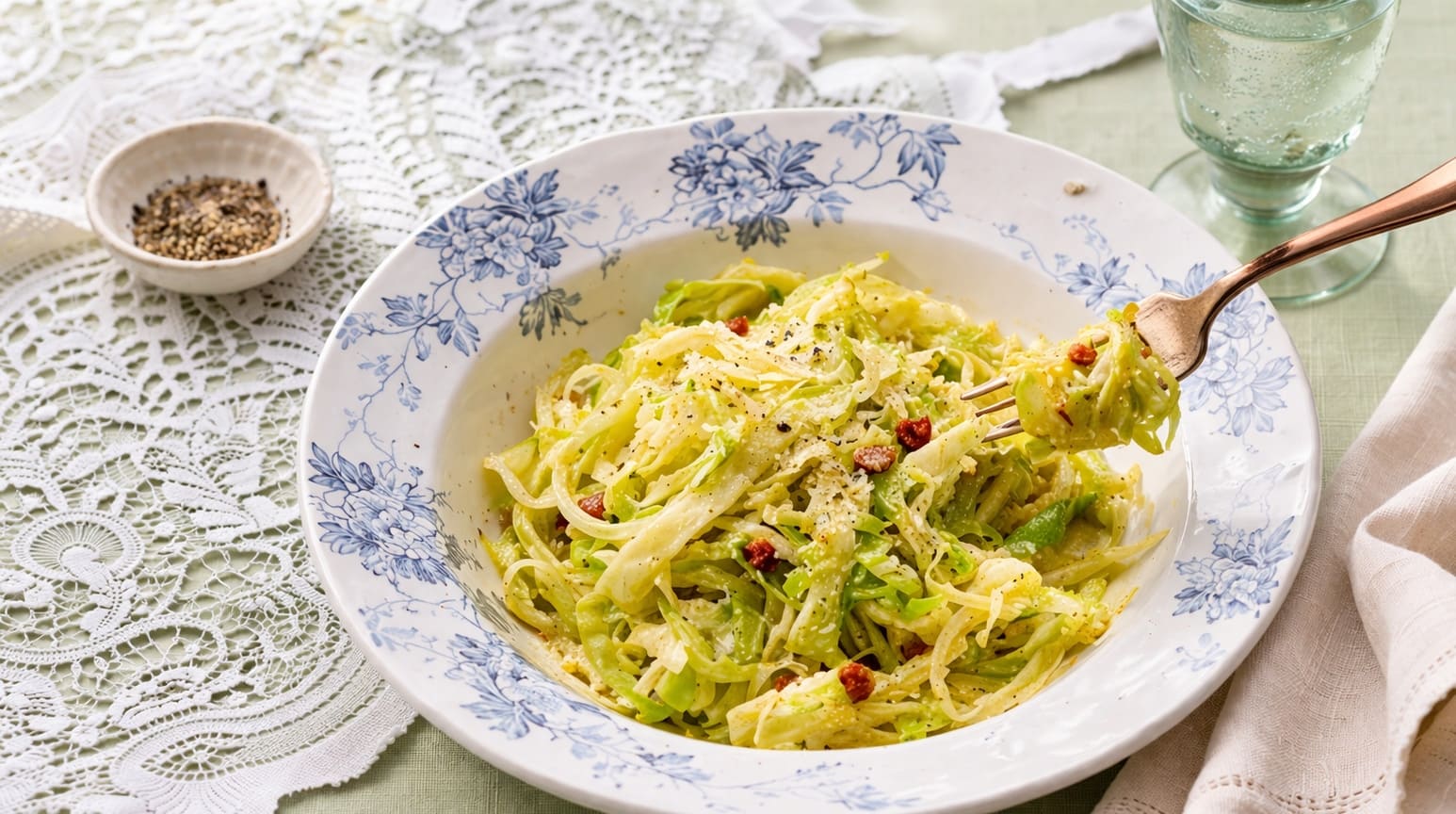
The Recipe
Cabbage Carbonara
Prep: 15 min | Cook: 25 min | Serves: 4
Ingredients
| Ingredient | Amount |
|---|---|
| Green cabbage, core removed, sliced 1/4-inch thick | 1 small head (about 2 lbs / 900g) |
| Guanciale (or pancetta), cut into 1/4-inch cubes | 4 oz (115g) |
| Large eggs | 2 whole |
| Egg yolks | 3 |
| Pecorino Romano, finely grated | 2 oz (about 1 cup / 57g) |
| Parmigiano-Reggiano, finely grated | 1 oz (about 1/2 cup / 28g) |
| Freshly cracked black pepper | 1 tsp, plus more to serve |
| Kosher salt | To taste |
Directions
- Whisk together the whole eggs, egg yolks, Pecorino Romano, Parmigiano-Reggiano, and black pepper in a medium bowl until smooth. Set aside.
- Add the guanciale to a large, cold skillet and set over medium heat. Cook, stirring occasionally, until the fat has rendered and the guanciale is golden and crisp, about 6 to 8 minutes. Transfer the guanciale to a small bowl using a slotted spoon, leaving the rendered fat in the pan.
- Increase heat to medium-high. Add the sliced cabbage to the skillet with the rendered fat, season with a generous pinch of kosher salt, and toss to coat. Cook, stirring every couple of minutes, until the cabbage is deeply wilted, lightly caramelized, and tender throughout, about 12 to 15 minutes.
- Remove the skillet from the heat and let it cool for 60 to 90 seconds - this step is critical to prevent scrambling the eggs.
- Pour the egg and cheese mixture over the warm cabbage. Toss vigorously and continuously, adding 1 to 2 tablespoons of water if the sauce seems too thick, until the sauce is glossy and creamy and coats every ribbon of cabbage.
- Add the reserved crispy guanciale back in and toss once more. Taste and adjust seasoning with salt and additional black pepper.
- Divide among bowls and finish with extra grated Pecorino Romano and cracked black pepper. Serve immediately.
Key tip: The off-heat rest before adding the egg mixture is non-negotiable. A skillet that is too hot will scramble the eggs instantly - wait the full 60 to 90 seconds and toss fast once the eggs go in.
Nutrient Card
Cabbage Carbonara (per serving)
Calories: 370
Protein: 16g
Fat: 26g
  Saturated: 11g
Carbs: 14g
  Fiber: 5g
  Sugar: 6g
Sodium: ~730mg
Cholesterol: ~225mg
Full Nutrition Breakdown
Here is every ingredient in the Serious Eats Cabbage Carbonara broken down by what each one contributes per person across 4 servings.
| Ingredient | Serving (per person) | Calories | Protein | Fat | Carbs | Fiber |
|---|---|---|---|---|---|---|
| Green cabbage | 225g (8 oz) | 56 | 3g | 0.3g | 13g | 5g |
| Guanciale (cooked, fat included) | 29g (1 oz) | 154 | 2g | 13g | 0g | 0g |
| Whole eggs (2 eggs total / 4 servings) | 0.5 egg | 36 | 3g | 2.5g | 0.2g | 0g |
| Egg yolks (3 yolks total / 4 servings) | 0.75 yolk | 41 | 2g | 3.4g | 0.5g | 0g |
| Pecorino Romano | 14g (0.5 oz) | 54 | 3.6g | 4.3g | 0.3g | 0g |
| Parmigiano-Reggiano | 7g (0.25 oz) | 27 | 2.3g | 2g | 0.2g | 0g |
| Black pepper + salt | Negligible | 2 | 0g | 0g | 0.5g | 0.2g |
| TOTAL | ~370 | ~16g | ~26g | ~14g | ~5g |
Note: Calorie values vary based on how much rendered guanciale fat is drained vs. left in the pan. Leaving all rendered fat in for the cabbage cook adds more calories; draining half cuts roughly 50 to 70 calories per serving. Cheese amounts also shift with grating style - weigh on a scale for precision.
Where Your Calories Actually Come From
| Component | Calories | % of Total |
|---|---|---|
| Guanciale (rendered, fat included) | 154 | 42% |
| Cheese (Pecorino + Parmigiano) | 81 | 22% |
| Eggs (whole + yolks) | 77 | 21% |
| Green cabbage | 56 | 15% |
The cabbage - the ingredient that replaces every strand of pasta - contributes only 15% of the calories in this dish. Guanciale alone accounts for more than four in ten calories. This is fundamentally a cheese, egg, and cured pork dish that happens to be served on vegetables instead of carbohydrates. That is not a criticism; it is just a useful thing to know before you tell yourself it is a light meal.
Macro Split
| Macro | Grams | Calories from Macro | % of Total Calories |
|---|---|---|---|
| Protein | 16g | 64 cal | 17% |
| Fat | 26g | 234 cal | 63% |
| Carbs | 14g | 56 cal | 15% |
| Fiber | 5g | - | - |
At 63% of calories from fat, this is one of the most fat-forward meals in the Italian repertoire - and that is with pasta removed entirely. Traditional spaghetti carbonara sits around 55% fat with pasta making up a large share of carb calories. The cabbage swap cuts net carbs from roughly 55g down to 9g while keeping the fat profile nearly identical. If you are eating keto or low-carb, this is a genuine win. If you are watching saturated fat (11g per serving), this is a dish to enjoy in moderation rather than every night.
Health Benefits at a Glance
| Ingredient | Key Nutrient/Compound | What Research Says |
|---|---|---|
| Green cabbage | Vitamin C, glucosinolates, sulforaphane | One serving of cabbage at this quantity delivers roughly 50% of your daily vitamin C - a nutrient the NIH links directly to collagen production, which supports skin elasticity, faster wound healing, and joint cartilage repair. Glucosinolates in cabbage are studied for gut-protective and anti-inflammatory effects, and research published in Frontiers in Nutrition links regular cruciferous vegetable intake to a reduced risk of chronic inflammation. |
| Guanciale | Oleic acid, B vitamins (B1 and B3) | Guanciale is predominantly monounsaturated fat - the same fat type found in olive oil. A 2020 meta-analysis in the Journal of the American College of Cardiology found that replacing saturated fats with monounsaturated sources was associated with improved cardiovascular risk markers. The B-vitamin content supports energy metabolism, helping your body convert food into usable fuel. |
| Eggs and egg yolks | Choline, lutein, complete protein | The NIH identifies choline (found almost exclusively in egg yolks) as essential for liver function, brain signaling, and muscle control - and most people do not get enough. Lutein in yolks is associated with reduced risk of age-related vision decline. For muscle recovery, whole eggs provide all nine essential amino acids, making them one of the highest-quality protein sources available. |
| Pecorino Romano | Calcium, conjugated linoleic acid (CLA) | Sheep's milk cheeses like Pecorino Romano are significantly richer in CLA than most cow's milk cheeses. Multiple randomized trials link CLA supplementation to modest reductions in body fat percentage and improved insulin sensitivity. The calcium content (around 200mg per ounce) actively supports bone density - particularly relevant for women over 40. |
| Black pepper | Piperine | Piperine, the compound responsible for pepper's heat, has been shown in clinical research to dramatically improve nutrient bioavailability. Studies show it can enhance absorption of certain vitamins and compounds by up to 20x. It also stimulates digestive enzymes, which helps your gut process the rich fat and protein load in this meal more efficiently. |
This recipe is a particularly good fit if you are cutting carbs without wanting to feel deprived. The fat and protein combination keeps you full for three to four hours, which makes overeating at the next meal much less likely. The vitamin C from the cabbage also supports collagen, which means your skin and joints are quietly benefiting from what looks like an indulgent dinner. Strong pick for keto eaters, low-carb followers, or anyone who wants a restaurant-quality meal at roughly 370 calories.
Smarter Swaps (With Real Numbers)
Swap 1: Guanciale to Turkey Bacon
| Calories | Protein | Fat | Carbs | |
|---|---|---|---|---|
| Original (29g guanciale per serving) | 154 | 2g | 13g | 0g |
| Turkey bacon (29g, about 2 strips) | 72 | 6g | 4g | 0.5g |
| Difference | -82 cal | +4g | -9g | +0.5g |
You sacrifice the deep savory pork fat flavor but pick up meaningful protein and slash 82 calories and nearly 10g of fat per serving. With all swaps applied, this move alone brings the dish under 300 calories.
Swap 2: Whole Eggs + Extra Yolks to 3 Whole Eggs Only
| Calories | Protein | Fat | Carbs | |
|---|---|---|---|---|
| Original (2 whole eggs + 3 yolks / 4 servings) | 77 | 5g | 5.9g | 0.7g |
| 3 whole eggs / 4 servings (0.75 egg per serving) | 54 | 4.5g | 3.8g | 0.3g |
| Difference | -23 cal | -0.5g | -2.1g | -0.4g |
Removing the extra yolks makes the sauce slightly less glossy and rich. You save 23 calories per serving and cut cholesterol by roughly 110mg - a meaningful reduction if your doctor has flagged dietary cholesterol.
Swap 3: Pecorino Romano to Nutritional Yeast (dairy-free)
| Calories | Protein | Fat | Carbs | |
|---|---|---|---|---|
| Original (14g Pecorino per serving) | 54 | 3.6g | 4.3g | 0.3g |
| Nutritional yeast (14g) | 50 | 7g | 0.6g | 5g |
| Difference | -4 cal | +3.4g | -3.7g | +4.7g |
Minimal calorie change but a dramatic fat reduction. Nutritional yeast delivers a nutty, cheese-adjacent flavor with a significant protein bump. The carbs go up modestly, but net carbs remain very low.
The Ultra-Lean Stack: All Swaps Combined
| Version | Calories | Protein | Fat | Carbs |
|---|---|---|---|---|
| Original Cabbage Carbonara | ~370 | 16g | 26g | 14g |
| All Swaps Applied | ~267 | 21g | 12g | 19g |
| Total Savings | -103 cal | +5g | -14g | +5g |
At roughly 267 calories with 21g of protein, the swapped version becomes one of the more impressive calorie-to-satiety ratios in low-carb cooking.
Fit It Into Your Day
| Daily Target | Recipe % of Day | Remaining Calories | What That Leaves You |
|---|---|---|---|
| 1,500 cal | 25% | 1,130 cal | Two solid meals plus a small snack - tight but workable |
| 2,000 cal | 19% | 1,630 cal | Comfortable room for breakfast, lunch, and a snack |
| 2,500 cal | 15% | 2,130 cal | Plenty of budget, easy to fit multiple meals around it |
| 3,000 cal | 12% | 2,630 cal | Very manageable even for active or athletic people |
Common Pairings and What They Add
| Side | Calories | Running Total |
|---|---|---|
| Simple green salad with olive oil and lemon | 85 | ~455 |
| Crusty sourdough bread (1 slice, 50g) | 130 | ~500 |
| Glass of dry white wine (150ml) | 120 | ~490 |
| Extra Pecorino Romano at the table (15g) | 58 | ~428 |
Even with a glass of wine and a side salad, this meal stays under 480 calories - a level that feels genuinely surprising for something that tastes this indulgent.
How It Compares
| Version | Calories | Protein | Fat | Carbs |
|---|---|---|---|---|
| Cabbage Carbonara (this recipe) | ~370 | 16g | 26g | 14g |
| Traditional Spaghetti Carbonara (home, per serving) | ~560 | 22g | 24g | 58g |
| Restaurant Fettuccine Alfredo | ~720 | 20g | 42g | 68g |
| Cabbage Carbonara - All Swaps Version | ~267 | 21g | 12g | 19g |
| Zucchini Noodle Carbonara | ~295 | 18g | 23g | 9g |
The fat content between this cabbage version and traditional spaghetti carbonara is virtually the same - but carbs drop by 44g per serving. That is the entire calorie difference between the two. The dish does not taste lighter, it does not look lighter, and it definitely does not feel lighter in the stomach. The calorie savings are entirely driven by removing pasta, which means you can eat something that feels like a full carbonara while staying 190 calories under the original.
Related Breakdowns
If you enjoyed this breakdown, check out these related recipes:
- Pad Thai - Calorie & Ingredient Breakdown
- Chicken Katsu - Calorie & Ingredient Breakdown
- Doro Wat (Ethiopian Chicken Stew) - Calorie & Ingredient Breakdown
- Margherita Pizza - Calorie & Ingredient Breakdown
- Spicy Shoyu Ramen - Calorie & Ingredient Breakdown
Recipe from Serious Eats by Serious Eats. Nutrition data sourced from USDA FoodData Central. Individual results vary by brand, cooking method, and portion accuracy. When in doubt, weigh your ingredients.