
Spicy Shoyu Ramen - Calorie & Ingredient Breakdown
Original recipe: Spicy Shoyu Ramen - Just One Cookbook by Nami (Just One Cookbook)
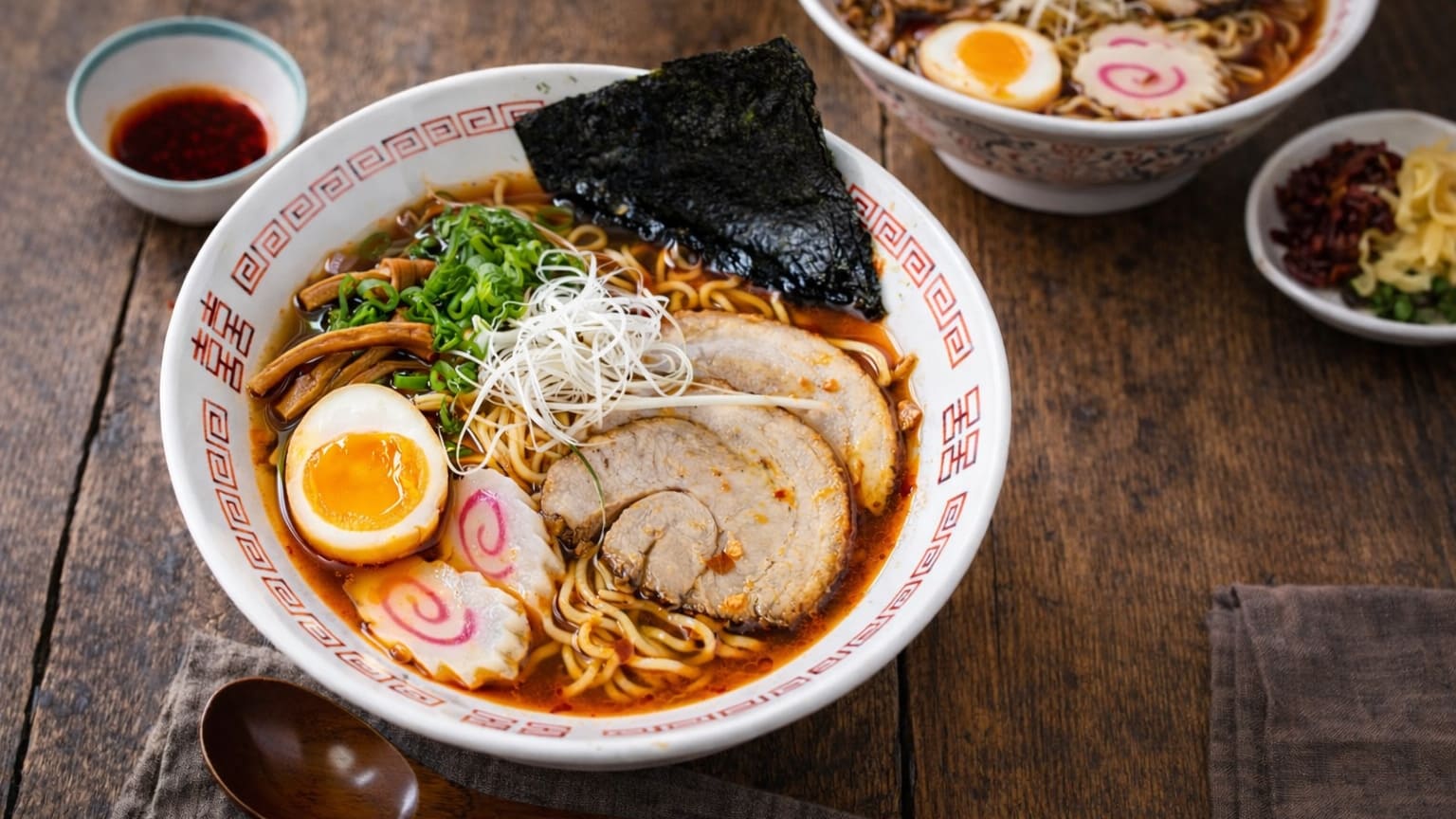
The Recipe
Spicy Shoyu Ramen
Prep: 15 min | Cook: 15 min | Serves: 2
Ingredients
| Ingredient | Amount |
|---|---|
| Fresh ramen noodles | 2 servings (~260g total) |
| Chicken stock/broth | 1 1/2 cups |
| Dashi (Japanese soup stock) | 1 1/2 cups |
| Doubanjiang (spicy chili bean paste) | 2 tsp |
| Soy sauce | 2 1/2 Tbsp |
| Fresh ginger | 1 tsp, grated |
| Garlic | 2 cloves, minced |
| Toasted sesame oil | 1 Tbsp |
| Diamond Crystal kosher salt | 1 tsp |
| White pepper powder | 1/8 tsp |
| Chashu (braised pork belly) | 4 slices |
| Ramen egg (ajitsuke tamago) | 1, halved |
| Narutomaki (fish cake) | 4 slices |
| Menma (seasoned bamboo shoots) | 1/4 cup |
| Shiraga negi (julienned green onion) | to garnish |
| Green onion/scallion, chopped | 1 |
| Nori seaweed | 1/2 sheet, halved |
| La-yu (Japanese chili oil) | optional drizzle |
Directions
- Prepare ramen toppings (chashu and ramen eggs) a day in advance for best results.
- Bring a large pot of water to a boil for the noodles. While the water heats, peel and grate the ginger and mince the garlic.
- Heat a small saucepan over medium-low heat. Add the sesame oil, garlic, and ginger. Cook until fragrant, about 1-2 minutes.
- Add the doubanjiang and stir for 15 seconds.
- Pour in the chicken stock, dashi, and soy sauce. Bring to a boil, then reduce heat and simmer for a few minutes.
- Season the broth with salt and white pepper. Cover and keep at a gentle simmer.
- Cook the fresh ramen noodles in the boiling water according to package directions. Drain well, shaking off excess water.
- Divide noodles between two bowls. Pour about 1 1/2 cups of hot broth into each bowl.
- Arrange the chashu, ramen egg halves, narutomaki, menma, green onions, and nori on top. Finish with a drizzle of la-yu if desired. Serve immediately.
Key tip: Drain the noodles thoroughly before adding them to the broth. Excess water dilutes the carefully seasoned soup and weakens the overall flavor.
Nutrient Card
Spicy Shoyu Ramen (per serving)
Calories: 404
Protein: 15g
Fat: 24g
  Saturated: 8g
Carbs: 37g
  Fiber: 2g
  Sugar: 5g
Sodium: ~1,522mg
Cholesterol: ~141mg
Full Nutrition Breakdown
Here is every ingredient in a single serving of spicy shoyu ramen, broken down by its calorie and macro contribution.
| Ingredient | Serving (per person) | Calories | Protein | Fat | Carbs | Fiber |
|---|---|---|---|---|---|---|
| Fresh ramen noodles | 1 serving (~130g) | 160 | 5g | 1.5g | 32g | 1g |
| Toasted sesame oil | 1/2 Tbsp (~7ml) | 60 | 0g | 7g | 0g | 0g |
| Chashu pork (braised belly) | 2 slices (~50g) | 100 | 3g | 9g | 0g | 0g |
| Ramen egg | 1/2 egg | 35 | 3g | 2.5g | 0g | 0g |
| Chicken broth | 3/4 cup | 8 | 1g | 0g | 0g | 0g |
| Dashi | 3/4 cup | 7 | 1g | 0g | 0g | 0g |
| Soy sauce | 1.25 Tbsp | 11 | 1.5g | 0g | 1g | 0g |
| Doubanjiang | 1 tsp | 5 | 0g | 0.5g | 0.5g | 0g |
| Narutomaki (fish cake) | 2 slices (~20g) | 13 | 1g | 0g | 2g | 0g |
| Menma (bamboo shoots) | 2 Tbsp | 5 | 0.5g | 0g | 1g | 0.5g |
| Ginger + garlic | 1/2 tsp + 1 clove | 4 | 0g | 0g | 1g | 0g |
| Green onions | ~1 Tbsp | 3 | 0g | 0g | 0.5g | 0.5g |
| Nori seaweed | 1/4 sheet | 1 | 0g | 0g | 0g | 0g |
| TOTAL | ~412 | ~16g | ~20.5g | ~38g | ~2g |
Note: Totals are approximate and may differ slightly from the recipe site's published values (404 kcal) due to brand variability, chashu fat rendering during braising, and portion sizes. La-yu (chili oil) drizzle not included as it is optional.
Where Your Calories Actually Come From
| Component | Calories | % of Total |
|---|---|---|
| Ramen noodles | 160 | 39% |
| Chashu pork | 100 | 24% |
| Sesame oil | 60 | 15% |
| Ramen egg | 35 | 9% |
| Broth & seasonings (broth, dashi, soy sauce, doubanjiang, ginger, garlic, salt) | 35 | 9% |
| Toppings (narutomaki, menma, green onions, nori) | 22 | 5% |
The noodles and the chashu pork together account for nearly two-thirds of the calories in this bowl. The sesame oil - just half a tablespoon per serving - quietly adds another 60 calories of pure fat. Meanwhile, the entire broth base with all its rich flavor contributes fewer calories than two slices of pork belly.
Macro Split
| Macro | Grams | Calories from Macro | % of Total Calories |
|---|---|---|---|
| Protein | 15g | 60 cal | 15% |
| Fat | 24g | 216 cal | 53% |
| Carbs | 37g | 148 cal | 37% |
| Fiber | 2g | - | - |
This is a fat-forward bowl, with over half the calories coming from fat (mainly the sesame oil and fatty chashu pork). Compared to a typical balanced meal (30% fat), this leans richer, which is part of what makes ramen so satisfying. The protein content is modest at 15g, so pairing it with a side of edamame or adding an extra egg would help round things out.
Health Benefits at a Glance
| Ingredient | Key Nutrient/Compound | What Research Says |
|---|---|---|
| Ginger | Gingerol (bioactive compound) | Research links gingerol to reduced nausea and anti-inflammatory effects. Practically, it supports digestion after a heavy meal and may help ease bloating - useful when eating a rich bowl of ramen. Some studies also suggest it supports circulation, which is good news for anyone with cold hands and feet. |
| Garlic | Allicin | Allicin is associated with cardiovascular benefits including supporting healthy blood pressure. It also has antimicrobial properties that may support immune function during cold and flu season. Two cloves split across two servings is a small dose, but consistent garlic consumption adds up. |
| Sesame oil | Sesamol + vitamin E | Sesame oil is rich in antioxidants, particularly sesamol, which research links to anti-inflammatory and heart-protective effects. The vitamin E content supports skin elasticity and may help protect against UV-related skin damage - a real everyday benefit. |
| Nori seaweed | Iodine + minerals | Nori is one of the best natural sources of iodine, essential for thyroid function and metabolism. Even a quarter sheet provides meaningful iodine. It also contains vitamin B12 (rare in plant foods) and minerals like iron and manganese that support energy levels. |
| Menma (bamboo shoots) | Dietary fiber + potassium | Bamboo shoots are low in calories but rich in fiber and potassium. Research suggests potassium helps regulate blood pressure, and the fiber supports gut health by feeding beneficial bacteria. A small but useful addition to an otherwise low-fiber meal. |
This bowl is a solid pick if you want a warming, satisfying meal without going overboard on calories. The ginger and garlic combination supports digestion and immunity, while the sesame oil brings skin-friendly antioxidants. If you are watching protein intake for muscle maintenance, consider adding a full egg rather than half to bump it closer to 20g per serving.
Smarter Swaps (With Real Numbers)
Swap 1: Chicken breast chashu instead of pork belly chashu
| Calories | Protein | Fat | |
|---|---|---|---|
| Pork belly chashu (2 slices) | 100 | 3g | 9g |
| Chicken breast chashu (2 slices) | 50 | 8g | 1g |
| Savings | -50 cal | +5g protein | -8g fat |
Swap 2: Zucchini noodles (zoodles) instead of ramen noodles
| Calories | Protein | Fat | Carbs | |
|---|---|---|---|---|
| Fresh ramen noodles (1 serving) | 160 | 5g | 1.5g | 32g |
| Zucchini noodles (1.5 cups) | 25 | 2g | 0g | 4g |
| Savings | -135 cal | -3g | -1.5g | -28g carbs |
Swap 3: Skip the sesame oil, use cooking spray
| Calories | Fat | |
|---|---|---|
| Toasted sesame oil (1/2 Tbsp) | 60 | 7g |
| Cooking spray + 1/4 tsp sesame oil for aroma | 10 | 1g |
| Savings | -50 cal | -6g fat |
Swap 4: Egg whites instead of whole ramen egg
| Calories | Protein | Fat | |
|---|---|---|---|
| Half a ramen egg | 35 | 3g | 2.5g |
| Sliced egg whites (from 1 egg) | 17 | 3.5g | 0g |
| Savings | -18 cal | +0.5g protein | -2.5g fat |
The Ultra-Lean Stack: All Swaps Combined
| Original | Swapped | Difference | |
|---|---|---|---|
| Calories | 404 | 151 | -253 cal |
| Protein | 15g | 19.5g | +4.5g |
| Fat | 24g | 6.5g | -17.5g |
| Carbs | 37g | 9g | -28g |
The full swap stack brings this bowl down to just 151 calories with nearly 20g of protein. That said, swapping out ramen noodles entirely changes the dish fundamentally. A more realistic middle ground: keep the noodles but switch to chicken breast chashu and reduce the sesame oil. That brings you to about 304 calories with better protein.
Fit It Into Your Day
| Daily Target | Recipe % of Day | Remaining Calories | What That Leaves You |
|---|---|---|---|
| 1,500 cal | 27% | 1,096 cal | A solid lunch or dinner - leaves enough for two lighter meals and a snack |
| 2,000 cal | 20% | 1,596 cal | Very manageable as one of three meals with room for sides and snacks |
| 2,500 cal | 16% | 2,096 cal | A light main - you will likely want a side or a more substantial breakfast and lunch |
| 3,000 cal | 13% | 2,596 cal | Barely a dent - pair with gyoza and edamame and you are still well within budget |
Common Pairings and What They Add
| Side | Calories | Running Total |
|---|---|---|
| Gyoza (4 pieces, pan-fried) | 180 | 584 |
| Edamame (1/2 cup, shelled) | 95 | 499 |
| Karaage (3 pieces, fried chicken) | 210 | 614 |
| Rice ball (onigiri, 1 piece) | 180 | 584 |
| Japanese beer (350ml can) | 140 | 544 |
Adding gyoza and a beer turns this into a 724-calorie meal, which is still reasonable for a dinner on a 2,000-calorie day. Stick with edamame if you want to keep things lean and add an extra 6g of plant protein.
How It Compares
| Version | Calories | Protein | Fat | Carbs |
|---|---|---|---|---|
| This recipe (Spicy Shoyu Ramen) | 404 | 15g | 24g | 37g |
| Tonkotsu ramen (pork bone broth, restaurant avg.) | 650 | 22g | 30g | 65g |
| Instant ramen (Nissin Top Ramen, 1 packet) | 380 | 8g | 14g | 52g |
| Miso ramen (homemade, similar recipe) | 420 | 16g | 22g | 40g |
| Restaurant shoyu ramen (chain average) | 520 | 20g | 25g | 50g |
This homemade spicy shoyu ramen comes in lighter than most restaurant versions, mainly because you control the oil and pork portions. Instant ramen is similar in calories but has nearly double the carbs and half the protein - plus significantly more sodium. Making it at home is a meaningful upgrade in both nutrition and flavor.
Related Breakdowns
If you enjoyed this breakdown, check out these related recipes:
- Doro Wat (Ethiopian Chicken Stew) - Calorie & Ingredient Breakdown
- Beef and Broccoli Stir-Fry - Calorie & Ingredient Breakdown
- Butter Chicken - Calorie & Ingredient Breakdown
- Chicken Adobo - Calorie & Ingredient Breakdown
- Chicken Katsu - Calorie & Ingredient Breakdown
Recipe from Just One Cookbook by Nami. Nutrition data sourced from USDA FoodData Central. Individual results vary by brand, cooking method, and portion accuracy. When in doubt, weigh your ingredients.