
Japchae (Glass Noodle Stir-Fry) - Calorie & Ingredient Breakdown
Original recipe: Japchae (Korean Glass Noodle Stir-Fry) - Beyond Kimchee by Beyond Kimchee
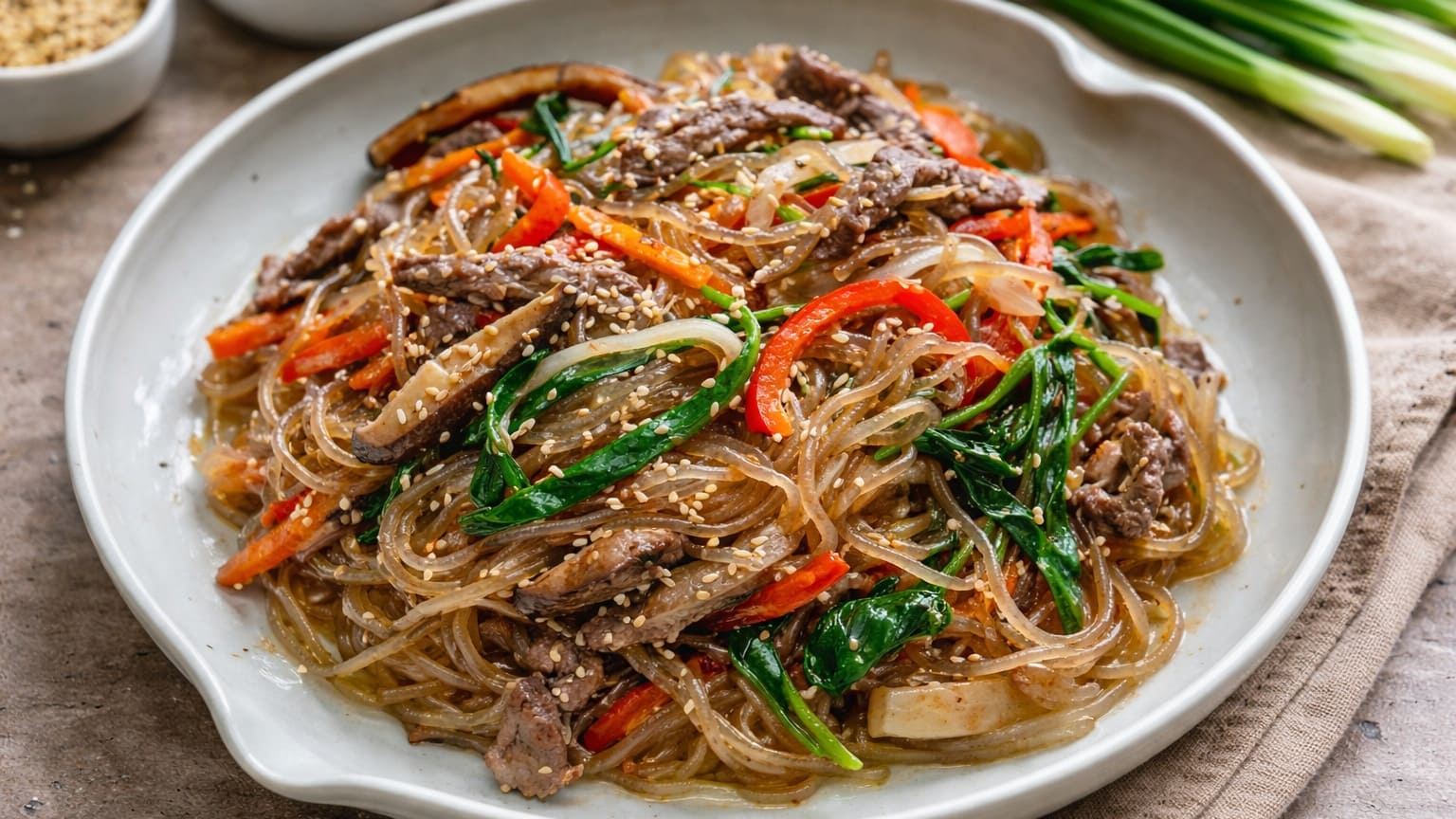
The Recipe
Japchae
Prep: 25 min | Cook: 20 min | Serves: 4
Ingredients
| Ingredient | Amount |
|---|---|
| Sweet potato glass noodles (dangmyeon) | 8 oz (dry) |
| Beef sirloin (thinly sliced) | 8 oz |
| Shiitake mushrooms (sliced) | 6 oz |
| Carrots (julienned) | 1 medium |
| Bell peppers (julienned) | 1 medium |
| Onion (sliced) | 1 small |
| Spinach (fresh) | 2 cups |
| Soy sauce | 3 tbsp |
| Sugar | 2 tbsp |
| Sesame oil | 3 tbsp |
| Garlic (minced) | 4 cloves |
| Rice vinegar | 1 tbsp |
| Vegetable oil | 2 tbsp |
| Sesame seeds | 2 tbsp |
| Salt and pepper | To taste |
Directions
- Bring a large pot of water to a boil and cook glass noodles for 5-6 minutes until just tender; drain and rinse with cold water, then toss with 1 tbsp sesame oil to prevent sticking.
- In a small bowl, combine soy sauce, sugar, 2 tbsp sesame oil, and 2 cloves minced garlic; set aside.
- Heat 1 tbsp vegetable oil in a large skillet or wok over medium-high heat; stir-fry marinated beef until cooked through (about 3-4 minutes), then remove and set aside.
- Add remaining 1 tbsp oil to the skillet; stir-fry mushrooms, carrots, bell peppers, and onion for 3-4 minutes until just tender-crisp, then remove and set aside.
- Blanch spinach in boiling salted water for 2 minutes, then squeeze dry and toss with remaining 2 cloves minced garlic and a pinch of salt.
- Add cooked noodles to the empty skillet along with the sauce, beef, vegetables, and spinach; toss everything together over medium heat for 2-3 minutes until well combined and heated through.
- Remove from heat, add rice vinegar, and toss to combine; taste and adjust salt and pepper as needed.
- Transfer to a serving platter and garnish generously with sesame seeds; serve at room temperature or warm.
Key tip: Don't overcook the glass noodles - they should be tender but still slightly chewy. Rinsing them immediately after cooking stops the cooking process and prevents clumping.
Nutrient Card
Japchae (per serving)
Calories: 385
Protein: 24g
Fat: 14g
  Saturated: 3.5g
Carbs: 42g
  Fiber: 3g
  Sugar: 8g
Sodium: ~720mg
Cholesterol: ~45mg
Full Nutrition Breakdown
Here's the ingredient-by-ingredient calorie and macronutrient breakdown for one serving of Japchae:
| Ingredient | Serving (per person) | Calories | Protein | Fat | Carbs | Fiber |
|---|---|---|---|---|---|---|
| Glass noodles (cooked) | 1.5 cups | 160 | 0.4g | 0.1g | 39g | 1.4g |
| Beef sirloin | 2 oz | 125 | 18.5g | 5.4g | 0g | 0g |
| Shiitake mushrooms | 1.5 oz | 12 | 0.9g | 0.2g | 1.8g | 0.4g |
| Carrots | 0.25 medium | 12 | 0.3g | 0.1g | 2.8g | 0.6g |
| Bell peppers | 0.25 medium | 8 | 0.3g | 0.05g | 1.8g | 0.4g |
| Onion | 0.25 small | 8 | 0.2g | 0.05g | 1.8g | 0.3g |
| Spinach | 0.5 cup | 3 | 0.45g | 0.05g | 0.5g | 0.35g |
| Soy sauce | 0.75 tbsp | 11 | 1.6g | 0g | 0.9g | 0g |
| Sugar | 0.5 tbsp | 24 | 0g | 0g | 6g | 0g |
| Sesame oil | 0.75 tbsp | 60 | 0g | 6.8g | 0g | 0g |
| Garlic | 1 clove | 4 | 0.2g | 0g | 1g | 0.1g |
| Rice vinegar | 0.25 tbsp | 1 | 0g | 0g | 0.1g | 0g |
| Vegetable oil | 0.5 tbsp | 60 | 0g | 6.8g | 0g | 0g |
| Sesame seeds | 0.5 tbsp | 24 | 0.8g | 2.1g | 1g | 0.7g |
| TOTAL | ~385 | ~24g | ~14g | ~42g | ~3g |
Note: Nutrition values calculated from USDA FoodData Central. Glass noodles are made from sweet potato starch and are lower in protein but excellent for gluten-free diets. Sesame oil adds polyphenol antioxidants and a distinct nutty flavor.
Where Your Calories Actually Come From
| Component | Calories | % of Total |
|---|---|---|
| Glass noodles | 160 | 42% |
| Oils (sesame & vegetable) | 120 | 31% |
| Beef | 125 | 32% |
| Vegetables & seasonings | 20 | 5% |
Japchae's calorie distribution emphasizes noodles and beef more evenly than many stir-fries. The oils contribute significant flavor and healthy fats without excessive calories. The relatively modest vegetable contribution (only 5%) means adding extra vegetables can boost nutrition without huge calorie increases.
Macro Split
| Macro | Grams | Calories from Macro | % of Total Calories |
|---|---|---|---|
| Protein | 24g | 96 cal | 25% |
| Fat | 14g | 126 cal | 33% |
| Carbs | 42g | 168 cal | 44% |
| Fiber | 3g | - | - |
Japchae offers balanced macros with a slight emphasis on carbohydrates from the glass noodles. The 25% protein-to-calorie ratio is solid for a noodle dish, while fat provides satiety and nutrient absorption. The 3g of fiber is modest, making vegetable side dishes a smart complement.
Health Benefits at a Glance
| Ingredient | Key Nutrient/Compound | What Research Says |
|---|---|---|
| Sweet potato glass noodles | Resistant starch | Research shows that sweet potato starch noodles have a lower glycemic impact than regular wheat noodles. The starch structure resists digestion, supporting stable blood sugar and feeding beneficial gut bacteria. Practically: steadier energy without blood sugar crashes, improved satiety. |
| Beef sirloin | Creatine & zinc | Beef provides creatine (supports muscle energy) and zinc (immune function, wound healing). Studies show beef consumption linked to improved strength, immune resilience, and faster injury recovery. Practically: builds muscle, supports immunity, and aids recovery from training. |
| Shiitake mushrooms | Lentinan & polysaccharides | These compounds support immune function and may enhance natural killer cell activity. Research suggests shiitakes support recovery during high-stress periods. Practically: boosts immunity, reduces infection risk, supports faster recovery from illness. |
| Sesame oil & seeds | Sesamin & sesamol | These lignans have anti-inflammatory properties and support blood vessel health. Research links sesame to improved cholesterol profiles and reduced inflammation markers. Practically: supports heart health, reduces joint inflammation, promotes skin elasticity. |
| Garlic | Allicin & sulfur compounds | Raw and cooked garlic both provide compounds linked to cardiovascular health, immune support, and anti-inflammatory effects. Studies show regular garlic consumption may lower blood pressure and cholesterol. Practically: heart health, immune boost, natural anti-inflammatory. |
Japchae is ideal for those seeking a lighter Asian noodle option that won't spike blood sugar. The combination of lean beef, antioxidant-rich mushrooms, and heart-healthy sesame makes it excellent for active individuals, those managing blood sugar, and anyone supporting cardiovascular health. It's naturally gluten-free (when using tamari instead of soy sauce).
Smarter Swaps (With Real Numbers)
Swap 1: Extra Vegetables Instead of Some Beef
| Metric | Current (2 oz beef) | Reduced Beef + Extra Veggies (1 oz beef + 1 cup mushrooms/peppers) | Difference |
|---|---|---|---|
| Calories | 385 | 330 | -55 |
| Protein | 24g | 18g | -6g |
| Volume/Satiety | Moderate | High | Improved |
Doubling the vegetable portion while halving the beef saves 55 calories and adds volume for similar satiety, though you trade 6g of protein (easily offset with an egg side).
Swap 2: Tofu Instead of Beef
| Metric | Beef Sirloin (2 oz) | Firm Tofu (3 oz) | Difference |
|---|---|---|---|
| Calories | 125 | 72 | -53 |
| Protein | 18.5g | 9.5g | -9g |
| Fat | 5.4g | 4.3g | -1.1g |
| Saturated fat | 2.1g | 0.6g | -1.5g |
Tofu cuts 53 calories and saturated fat but loses 9g of protein - pair with edamame or add an extra egg to compensate.
Swap 3: Peanut Oil Instead of Sesame Oil (Neutral Flavor Option)
| Metric | Sesame Oil (0.75 tbsp) | Peanut Oil (0.75 tbsp) | Difference |
|---|---|---|---|
| Calories | 60 | 62 | +2 |
| Smoke point | 350F | 450F | Better for high-heat cooking |
| Flavor | Strong nutty | Neutral | Less assertive |
Peanut oil works well if you prefer less sesame intensity and need higher heat tolerance, though both are calorically similar.
Swap 4: Tamari Instead of Soy Sauce (Gluten-Free)
| Metric | Soy Sauce (0.75 tbsp) | Tamari (0.75 tbsp) | Difference |
|---|---|---|---|
| Calories | 11 | 11 | 0 |
| Sodium | 560mg | 600mg | +40mg |
| Gluten | Contains | None | Gluten-free |
| Flavor | Standard | Fuller body | Slightly richer |
Tamari offers an identical nutritional profile while being safe for gluten-sensitive individuals, with no calorie penalty.
The Ultra-Lean Stack: All Swaps Combined
| Metric | Original | All Swaps | Difference |
|---|---|---|---|
| Calories | 385 | 310 | -75 |
| Protein | 24g | 15g | -9g |
| Fiber | 3g | 5g | +2g |
| Saturated fat | 3.5g | 1.5g | -2g |
| Cooking flexibility | Moderate | High | Better for wok cooking |
By combining reduced beef, extra vegetables, and peanut oil, you save 75 calories, cut saturated fat in half, and improve cooking performance for high-heat wok work. Add a side protein (egg, edamame, or fish) to recoup the lost 9g of protein.
Fit It Into Your Day
| Daily Target | Recipe % of Day | Remaining Calories | What That Leaves You |
|---|---|---|---|
| 1,500 cal | 26% | 1,115 cal | Breakfast (400 cal) + snacks (300-400 cal) + light second meal (300-400 cal) |
| 2,000 cal | 19% | 1,615 cal | Breakfast (400-500 cal) + 2-3 snacks (400-500 cal) + another meal (600-700 cal) |
| 2,500 cal | 15% | 2,115 cal | Full day of normal meals with room for a second serving or dessert |
| 3,000 cal | 13% | 2,615 cal | Complete flexibility for multiple meals, snacks, and beverages throughout the day |
Common Pairings and What They Add
| Side | Calories | Running Total |
|---|---|---|
| Japchae alone | 385 | 385 |
| + Vegetable kimchi side dish (1/3 cup) | 25 | 410 |
| + Egg fried rice (small side) | 150 | 560 |
| + Korean spinach side (sigeumchi namul) | 45 | 605 |
| + Small serving gyeran-mari (egg rolls) | 110 | 715 |
| + Ginger dessert (yujacha) | 50 | 765 |
Japchae works well as a main with light sides, creating a balanced meal around 600-750 calories. Adding a rice-based side turns it into a heartier lunch; sticking to vegetable sides keeps it lean and vegetable-forward.
How It Compares
| Version | Calories | Protein | Fat | Carbs |
|---|---|---|---|---|
| Japchae with beef (classic) | 385 | 24g | 14g | 42g |
| Japchae with shrimp | 340 | 26g | 11g | 42g |
| Japchae with tofu | 330 | 15g | 14g | 44g |
| Japchae with extra vegetables | 340 | 20g | 12g | 48g |
| Japchae at Korean restaurant (larger serving) | 520 | 28g | 22g | 58g |
The classic beef version lands in the moderate calorie range for a main dish. Shrimp versions cut calories slightly while boosting protein. Restaurant portions are typically 40-50% larger, pushing calories to 500+. Vegetarian versions are lighter but require strategic protein additions. The modest 385-calorie count makes Japchae an excellent choice for lighter lunches or as a side to a protein-focused meal.
Related Breakdowns
If you enjoyed this breakdown, check out these related recipes:
- Bibimbap - Calorie & Ingredient Breakdown
- Beef and Broccoli Stir-Fry - Calorie & Ingredient Breakdown
- Pho Bo (Beef Pho) - Calorie & Ingredient Breakdown
- Chicken Adobo - Calorie & Ingredient Breakdown
- Lomo Saltado (Peruvian Beef Stir-Fry) - Calorie & Ingredient Breakdown
Recipe from Beyond Kimchee (https://www.beyondkimchee.com/japchae/). Nutrition data sourced from USDA FoodData Central. Individual results vary by brand, cooking method, and portion accuracy. When in doubt, weigh your ingredients.