
Bibimbap - Calorie & Ingredient Breakdown
Original recipe: Bibimbap (Korean Mixed Rice Bowl) - The Kitchn by The Kitchn Staff
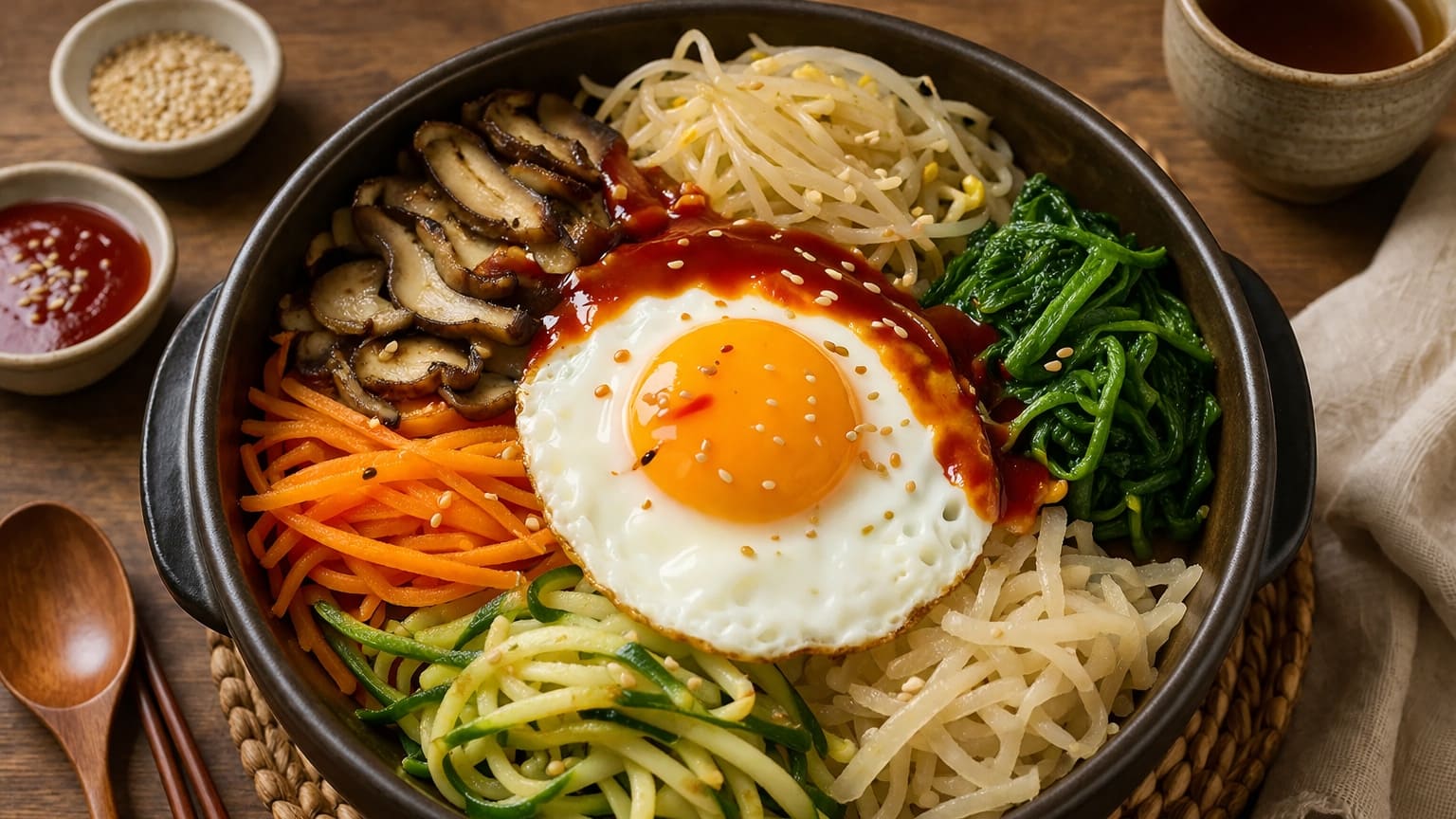
The Recipe
Bibimbap
Prep: 30 min | Cook: 25 min | Serves: 4
Ingredients
| Ingredient | Amount |
|---|---|
| Short-grain white rice (uncooked) | 2 cups |
| Beef sirloin (thinly sliced) | 12 oz |
| Soy sauce | 3 tbsp |
| Sugar | 2 tbsp |
| Sesame oil | 3 tbsp |
| Garlic (minced) | 4 cloves |
| Spinach (fresh) | 4 cups |
| Carrots (julienned) | 1 cup |
| Zucchini (julienned) | 1 cup |
| Shiitake mushrooms (sliced) | 8 oz |
| Bean sprouts (blanched) | 2 cups |
| Eggs | 4 large |
| Gochujang (Korean red chili paste) | 3 tbsp |
| Mirin | 1 tbsp |
| Sesame seeds | 2 tbsp |
| Vegetable oil | 3 tbsp |
| Salt and pepper | To taste |
Directions
- Cook rice in a rice cooker or pot according to package directions; set aside and keep warm.
- In a bowl, combine soy sauce, 1 tbsp sugar, 1 tbsp sesame oil, and 1 clove minced garlic; marinate sliced beef for 15-20 minutes.
- Blanch spinach in boiling salted water for 2 minutes, then squeeze dry and dress with 0.5 tbsp sesame oil, 1 clove minced garlic, and a pinch of salt.
- Sauté carrots, zucchini, and mushrooms separately in a large skillet over medium-high heat with 1 tbsp oil and 1 clove minced garlic each; season with salt and pepper, cook until tender-crisp (about 4-5 minutes per batch).
- Blanch bean sprouts in boiling salted water for 2 minutes, then drain and dress with 0.5 tbsp sesame oil, remaining 1 clove minced garlic, salt, and pepper.
- Cook marinated beef in the same skillet over high heat until browned (about 2-3 minutes); set aside.
- Fry 4 eggs sunny-side up in a separate skillet until whites are set but yolks remain runny.
- Divide warm rice into 4 bowls, then arrange beef, spinach, carrots, zucchini, mushrooms, and bean sprouts on top in sections; crown each bowl with a fried egg.
- Mix gochujang, remaining 1 tbsp sugar, 1 tbsp mirin, and 1 tbsp sesame oil in a small bowl; drizzle over the top.
- Sprinkle sesame seeds over each bowl and serve immediately, stirring everything together before eating.
Key tip: Keep the rice piping hot when assembling bowls so the vegetables and beef stay warm; the runny egg yolk acts as a sauce when mixed in.
Nutrient Card
Bibimbap (per serving)
Calories: 615
Protein: 38g
Fat: 22g
  Saturated: 5.8g
Carbs: 62g
  Fiber: 5g
  Sugar: 12g
Sodium: ~980mg
Cholesterol: ~210mg
Full Nutrition Breakdown
Here's the ingredient-by-ingredient calorie and macronutrient breakdown for one serving of Bibimbap:
| Ingredient | Serving (per person) | Calories | Protein | Fat | Carbs | Fiber |
|---|---|---|---|---|---|---|
| Cooked short-grain rice | 1.5 cups | 260 | 4.5g | 0.5g | 58g | 0.6g |
| Beef sirloin | 3 oz | 185 | 28g | 8g | 0g | 0g |
| Soy sauce | 0.75 tbsp | 11 | 1.6g | 0g | 0.9g | 0g |
| Sesame oil | 0.75 tbsp | 60 | 0g | 6.8g | 0g | 0g |
| Garlic | 1 clove | 4 | 0.2g | 0g | 1g | 0.1g |
| Spinach | 1 cup | 7 | 0.9g | 0.1g | 1.1g | 0.7g |
| Carrots | 0.25 cup | 12 | 0.3g | 0.1g | 2.8g | 0.6g |
| Zucchini | 0.25 cup | 4 | 0.3g | 0.05g | 0.8g | 0.3g |
| Shiitake mushrooms | 2 oz | 14 | 1.2g | 0.2g | 2.1g | 0.4g |
| Bean sprouts | 0.5 cup | 8 | 1.2g | 0.1g | 1.4g | 0.8g |
| Eggs | 1 large | 70 | 6.3g | 5g | 0.4g | 0g |
| Gochujang paste | 0.75 tbsp | 30 | 0.8g | 0.2g | 5.7g | 1.1g |
| Mirin | 0.25 tbsp | 12 | 0g | 0g | 3g | 0g |
| Sesame seeds | 0.5 tbsp | 24 | 0.8g | 2.1g | 1g | 0.7g |
| Vegetable oil | 0.75 tbsp | 90 | 0g | 10.2g | 0g | 0g |
| TOTAL | ~615 | ~38g | ~22g | ~62g | ~5g |
Note: Nutrition values calculated from USDA FoodData Central. Bibimbap's nutrition varies based on vegetable sizes and rice type. Gochujang adds capsaicin (metabolism-boosting compound) and fermented probiotic benefits. The egg yolk contributes choline and lutein.
Where Your Calories Actually Come From
| Component | Calories | % of Total |
|---|---|---|
| Rice | 260 | 42% |
| Beef | 185 | 30% |
| Oils & sesame | 84 | 14% |
| Egg | 70 | 11% |
| Vegetables & sauce | 16 | 3% |
Bibimbap's calorie distribution is notably protein-forward compared to many Asian rice bowls. The beef provides a substantial protein boost, while rice remains the dominant carbohydrate source. Sesame oil and vegetable oil contribute significant healthy fats for nutrient absorption and satiety.
Macro Split
| Macro | Grams | Calories from Macro | % of Total Calories |
|---|---|---|---|
| Protein | 38g | 152 cal | 25% |
| Fat | 22g | 198 cal | 32% |
| Carbs | 62g | 248 cal | 40% |
| Fiber | 5g | - | - |
Bibimbap is a more protein-rich bowl compared to typical Asian noodle dishes, thanks to its substantial beef and egg. The 25% protein-to-calorie ratio makes it filling and muscle-supporting. Carbs and fat are well-balanced, creating a satiating meal suitable for lunch or dinner.
Health Benefits at a Glance
| Ingredient | Key Nutrient/Compound | What Research Says |
|---|---|---|
| Beef sirloin | Iron & carnosine | Beef provides heme iron (highly absorbable form) linked to sustained energy and oxygen transport. Carnosine supports muscle recovery and may reduce exercise-induced fatigue. Practically: excellent for preventing anemia and supporting athletic performance or strength training. |
| Spinach | Lutein & nitrates | Fresh spinach is rich in lutein (eye health) and dietary nitrates that support blood vessel function and oxygen delivery. Research shows regular spinach consumption linked to cognitive benefits and cardiovascular health. Practically: boosts brain function, vision, and endurance. |
| Gochujang (fermented) | Capsaicin & probiotics | The red chili paste provides capsaicin, shown to temporarily boost metabolism and reduce inflammation. Fermentation creates beneficial bacteria. Studies suggest capsaicin may support weight management and joint health. Practically: adds metabolism boost and gut-friendly probiotics. |
| Sesame oil & seeds | Lignans & vitamin E | Sesame is rich in lignans (plant compounds with antioxidant properties) and vitamin E, supporting skin elasticity and immune function. Linked to anti-inflammatory effects. Practically: supports skin health, immune function, and may help reduce inflammation from training. |
| Shiitake mushrooms | Beta-glucans & ergothioneine | These mushrooms contain beta-glucans shown to support immune function and polysaccharides that may enhance recovery. Ergothioneine is a rare antioxidant. Practically: boosts immunity during high-stress periods and supports faster recovery. |
Bibimbap is ideal for active individuals, strength trainers, and those managing plant-based diets (easily made vegetarian). The combination of lean protein, fermented flavoring, and diverse vegetables supports muscle recovery, sustained energy, and gut health. The egg yolk's choline supports brain function, making it a smart pre-study or pre-work meal.
Smarter Swaps (With Real Numbers)
Swap 1: Brown Rice Instead of White Rice
| Metric | White Rice (1.5 cups cooked) | Brown Rice (1.5 cups cooked) | Difference |
|---|---|---|---|
| Calories | 260 | 245 | -15 |
| Fiber | 0.6g | 3.5g | +2.9g |
| Protein | 4.5g | 5.8g | +1.3g |
Brown rice nearly quintuples the fiber content, promoting better digestion and more stable blood sugar without significant calorie cost.
Swap 2: Ground Turkey Breast Instead of Beef Sirloin
| Metric | Beef Sirloin (3 oz) | Ground Turkey Breast (3.5 oz) | Difference |
|---|---|---|---|
| Calories | 185 | 130 | -55 |
| Protein | 28g | 28g | 0g |
| Fat | 8g | 1.8g | -6.2g |
Ground turkey offers the same protein with far less fat and 55 fewer calories - ideal for those managing weight or cholesterol, though beef offers better micronutrient density.
Swap 3: Extra Vegetables Instead of Oil
| Metric | Current (3 tbsp oil) | Extra Vegetables (add 0.5 cups mushrooms + zucchini) | Difference |
|---|---|---|---|
| Calories | 270 (oils) | 180 (oils) + 15 (extra veg) = 195 | -75 |
| Volume | 3 tbsp | 3 tbsp + 0.5 cup | +0.5 cup |
| Fiber | 0g | 2.5g | +2.5g |
Reducing oil slightly and adding extra vegetables saves 75 calories while adding volume and fiber for the same satisfying bowl.
Swap 4: Gochujang Powder Instead of Paste
| Metric | Gochujang Paste (0.75 tbsp) | Gochujang Powder (1.5 tsp) | Difference |
|---|---|---|---|
| Calories | 30 | 16 | -14 |
| Sodium | 380mg | 260mg | -120mg |
| Flavor intensity | Standard | +30% (more concentrated) | - |
Gochujang powder provides the same spicy kick with less salt and liquid, reducing overall sodium and calories while intensifying flavor.
The Ultra-Lean Stack: All Swaps Combined
| Metric | Original | All Swaps | Difference |
|---|---|---|---|
| Calories | 615 | 510 | -105 |
| Protein | 38g | 38g | 0g |
| Fiber | 5g | 10.4g | +5.4g |
| Sodium | 980mg | 740mg | -240mg |
| Satiety | Good | Excellent | Improved |
By combining all four swaps (brown rice, ground turkey, extra vegetables, and gochujang powder), you save 105 calories and double the fiber content - resulting in a lighter, more filling bowl. You maintain full protein while cutting sodium by nearly 25%, perfect for those managing blood pressure or weight loss goals.
Fit It Into Your Day
| Daily Target | Recipe % of Day | Remaining Calories | What That Leaves You |
|---|---|---|---|
| 1,500 cal | 41% | 885 cal | Breakfast (350-400 cal) + 1-2 snacks (250-400 cal) + light dinner (300 cal) |
| 2,000 cal | 31% | 1,385 cal | Breakfast (400 cal) + snacks (400-500 cal) + lighter second meal (500-600 cal) |
| 2,500 cal | 25% | 1,885 cal | Normal breakfast + snacks + full dinner with side, or 2 Bibimbap bowls + other meals |
| 3,000 cal | 21% | 2,385 cal | Full day of normal meals with room for beverages, desserts, and extras |
Common Pairings and What They Add
| Side | Calories | Running Total |
|---|---|---|
| Bibimbap alone | 615 | 615 |
| + Korean miso soup | 60 | 675 |
| + Kimchi side dish (1/4 cup) | 20 | 695 |
| + 1 glass Korean barley tea | 2 | 697 |
| + Gyeran-mari (egg roll appetizer) | 110 | 807 |
| + Green tea ice cream (small) | 140 | 947 |
A complete Korean meal with Bibimbap, soup, sides, and dessert typically totals 800-950 calories, making it an excellent choice for lunch with all the trimmings. The fermented sides (kimchi, miso) aid digestion and add probiotics.
How It Compares
| Version | Calories | Protein | Fat | Carbs |
|---|---|---|---|---|
| Bibimbap with beef (classic) | 615 | 38g | 22g | 62g |
| Bibimbap with ground turkey | 530 | 38g | 12g | 62g |
| Bibimbap with tofu | 520 | 26g | 20g | 65g |
| Vegetarian bibimbap (no meat/egg) | 380 | 14g | 12g | 64g |
| Dolsot bibimbap (stone bowl, added oil) | 750 | 38g | 32g | 62g |
The classic beef bibimbap lands in the middle of the spectrum. Dolsot bibimbap (cooked in a heated stone bowl) adds significant oil for flavor and texture, boosting calories to 750. Ground turkey and tofu versions reduce fat but maintain protein. A fully vegetarian version (no beef or egg) cuts calories dramatically but loses substantial protein unless supplemented with legumes or an extra egg.
Related Breakdowns
If you enjoyed this breakdown, check out these related recipes:
- Japchae (Glass Noodle Stir-Fry) - Calorie & Ingredient Breakdown
- Chicken Katsu - Calorie & Ingredient Breakdown
- Banh Mi Bowl - Calorie & Ingredient Breakdown
- Paella - Calorie & Ingredient Breakdown
- Classic Smashed Cheeseburger - Calorie & Ingredient Breakdown
Recipe from The Kitchn (https://www.thekitchn.com/bibimbap-recipe-23652213). Nutrition data sourced from USDA FoodData Central. Individual results vary by brand, cooking method, and portion accuracy. When in doubt, weigh your ingredients.